
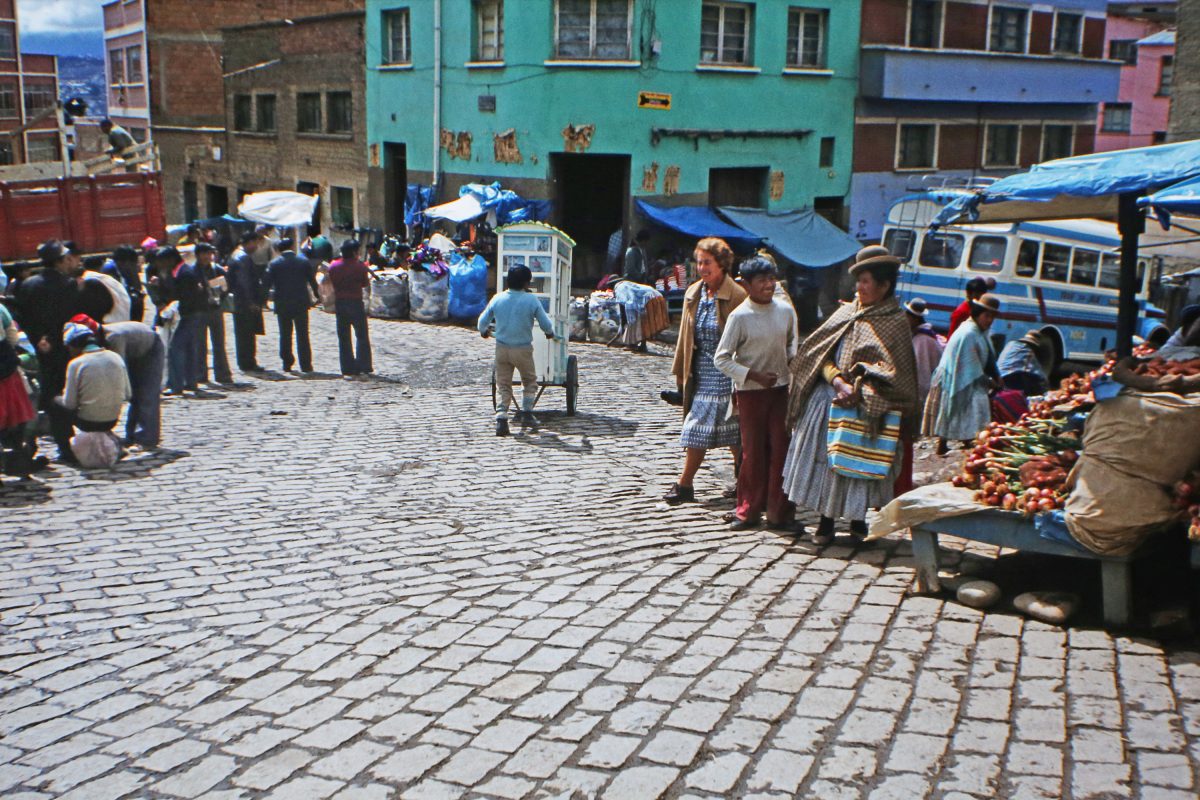
- Lead. Bolivia’s President Rodrigo Paz, barely six months in office, faces a national blockade that has put the political capital under siege and tested whether his fragile government can survive its first major crisis.
- Fact. Two weeks of road closures led by the Bolivian Workers’ Central, peasant unions, and miners have stranded roughly 5,000 vehicles, depleted hospital oxygen reserves, caused at least three deaths when ambulances were blocked, and are draining more than $50 million per day from the economy.
- Stake. Eight Latin American governments have issued a joint statement supporting democratic order as Argentina launches a humanitarian airlift and the United States affirms its support for Paz’s government — but the underlying grievances over fuel shortages and near-20% inflation remain unresolved.
Bolivia’s political capital has been effectively cut off. For more than two weeks, road blockades organized by the Bolivian Workers’ Central (COB), peasant unions, and the country’s powerful miner federations have choked supply lines into La Paz, the seat of government perched in the Andes at 3,640 meters above sea level. Markets have emptied. Hospital oxygen reserves have run critically low. And at least three people died after emergency vehicles were prevented from reaching medical centers — a detail that crystallized the human cost of a standoff that began as labor grievances and has become something closer to a siege.
A president without a floor
Rodrigo Paz won the presidency last year in a shift that punished incumbents and established movements across the continent — a pattern visible from Peru’s fragmented presidential runoff to Bolivia’s own decisive rejection of the Movement Toward Socialism. His victory was real, but the structure beneath it was not. The Christian Democratic Party that carried him to office fractured almost immediately in the legislature, leaving Paz without a reliable majority. He is also in an open feud with Vice President Edman Lara, a former police officer whose political interests have diverged sharply from the executive’s.
Paz has framed the moment in stark terms. “Those seeking to destroy democracy will go to jail,” he told reporters this week, though he has offered few concrete proposals to break the impasse. In his telling, he inherited a “bankrupt state” — a characterization his opponents reject as an excuse for sluggish governance in the face of what they describe as Bolivia’s worst economic crisis in 40 years.
Evo Morales from the shadows
Behind the blockades stands a familiar figure, even if he is nowhere near La Paz. Former President Evo Morales — holed up in Bolivia’s remote lowland tropics for more than a year, evading an arrest warrant on charges relating to the alleged sexual abuse of a 15-year-old girl — has been coordinating the latest marches from hiding. Morales built his political career on exactly this kind of mass mobilization, and the unions and peasant federations that powered his movement for nearly two decades remain loyal even as the party itself lost the presidency.
The protesters’ demands are specific and overlapping: wage increases for urban workers, a steady gasoline supply for rural communities hit by persistent fuel shortages, expanded mining concessions, and salary improvements for teachers. Running beneath those grievances is accumulated anger over the “junk gasoline” scandal that has plagued Bolivia’s fuel distribution system and helped push inflation near 20% in the year since Paz took office.
Regional pressure and an uncertain equilibrium
The international response has been measured but pointed. Eight Latin American governments signed a joint declaration supporting constitutional order, while Argentina launched a humanitarian airlift to relieve pressure on La Paz’s supply chains. Washington affirmed support for Paz without offering specific assistance.
Business groups have put a number on the daily toll: more than $50 million leaving the economy with roughly 5,000 vehicles stranded on Bolivia’s main arterial routes. If the blockades hold for another week, cumulative damage will exceed half a billion dollars — a figure that is difficult for any government to absorb, and particularly one that came to power promising fiscal stability.
The Paz government has so far refused to negotiate under what it describes as unconstitutional duress. Whether that line holds in the coming days — or whether a deal is quietly struck with union leaders while Morales watches from the lowlands — may determine whether Bolivia’s first post-MAS government survives to see its first anniversary in office.