
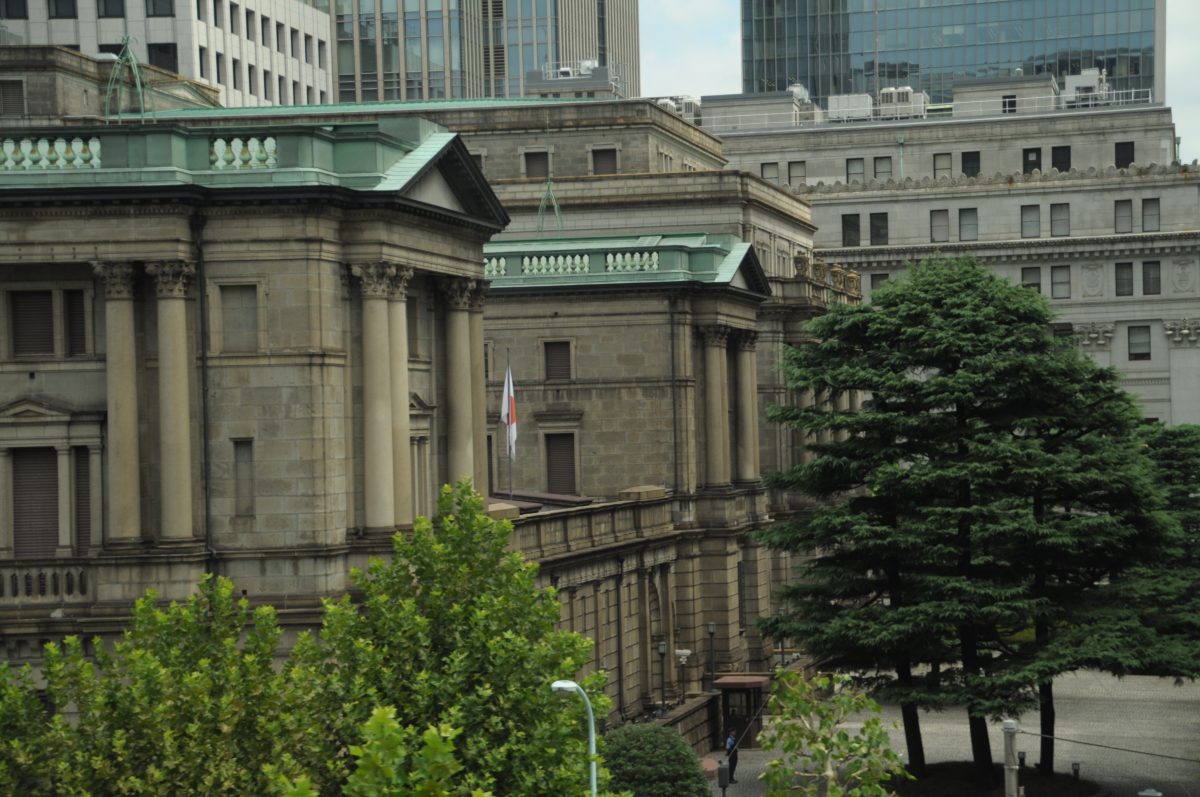
- Lead. The Bank of Japan kept its policy rate at 0.75% on April 28 but recorded its most divided vote in years, with three board members publicly calling for an immediate hike to 1.0% — the clearest signal yet that the era of cheap money in Japan is nearing its final chapter.
- Fact. Dissenters Hajime Takata, Naoki Tamura, and Junko Nakagawa argued the case for tightening; Governor Kazuo Ueda prevailed 6-3, citing the need for more time to assess the Iran war’s impact on global energy prices. The BOJ simultaneously raised its core inflation forecast for fiscal 2026 to 2.8% — up from a January projection of 1.9% — while cutting its GDP growth forecast in half, from 1.0% to 0.5%.
- Stake. A hike at the BOJ’s next meeting would move Japan’s policy rate to its highest level since 2008, affect hundreds of billions in yen-carry trades, and add pressure to a global rate environment that the ECB and Fed have already frozen in place.
The Bank of Japan’s April decision was technically a hold. In practice, it was something closer to a declaration of intent. Three of the nine members of the Policy Board — Takata, Tamura, and Nakagawa — voted to raise the overnight rate to 1.0% immediately, a proposal Ueda’s majority rejected on the grounds that the Middle East situation introduced too much uncertainty to act. That 6-3 split is the widest dissent Japan’s central bank has seen in years and marks a threshold: when three of nine board members are publicly willing to go on record for a hike, a hike is usually not far behind.
Inflation above target, growth below it
The inflation picture driving the dissenters is straightforward. The BOJ now expects core consumer prices — excluding fresh food — to rise 2.8% in fiscal 2026, a substantial revision from the 1.9% it projected in January. The primary cause is crude oil: the Iran war and the partial closure of the Strait of Hormuz have pushed energy and goods costs sharply higher across Japan’s import-dependent economy. Because Japan buys almost all of its energy from abroad, and does so in dollars, a weaker yen compounds every oil price move.
Growth is moving in the opposite direction. The BOJ cut its fiscal 2026 GDP projection to 0.5%, down from 1.0% in January. That combination — inflation above target, growth below it — is exactly the environment in which central banks face their hardest choices. Raise rates to contain prices and risk tipping a fragile recovery into contraction; hold and allow inflationary expectations to drift. The dissenters’ view, as reported by Central Banking, is that the cost of waiting is rising faster than the cost of acting.
Ueda’s window and the yen’s signal
Governor Ueda told reporters after the decision that the BOJ would make “an appropriate decision from next month,” language the market read as a conditional commitment rather than a guarantee. Currency analysts at MUFG described the outcome as a “hawkish hold” and predicted that any rebound in the yen on the news would prove short-lived — in part because the same energy-driven inflation that is pushing the dissenters also keeps import costs elevated in yen terms regardless of the policy rate.
Oxford Economics noted that the BOJ is expected to continue raising rates but that the pace is “highly uncertain,” with the trajectory contingent on whether the Iran war produces a durable ceasefire, whether oil prices stabilize, and whether wage growth in Japan’s spring labor round — the shunto — proves as strong in practice as initial settlements suggested. A 1.0% rate in Japan would still be extraordinarily low by global standards. But the direction of travel, and the growing impatience of a minority that may soon become a majority, is now the clearest signal the BOJ has sent in some time.