
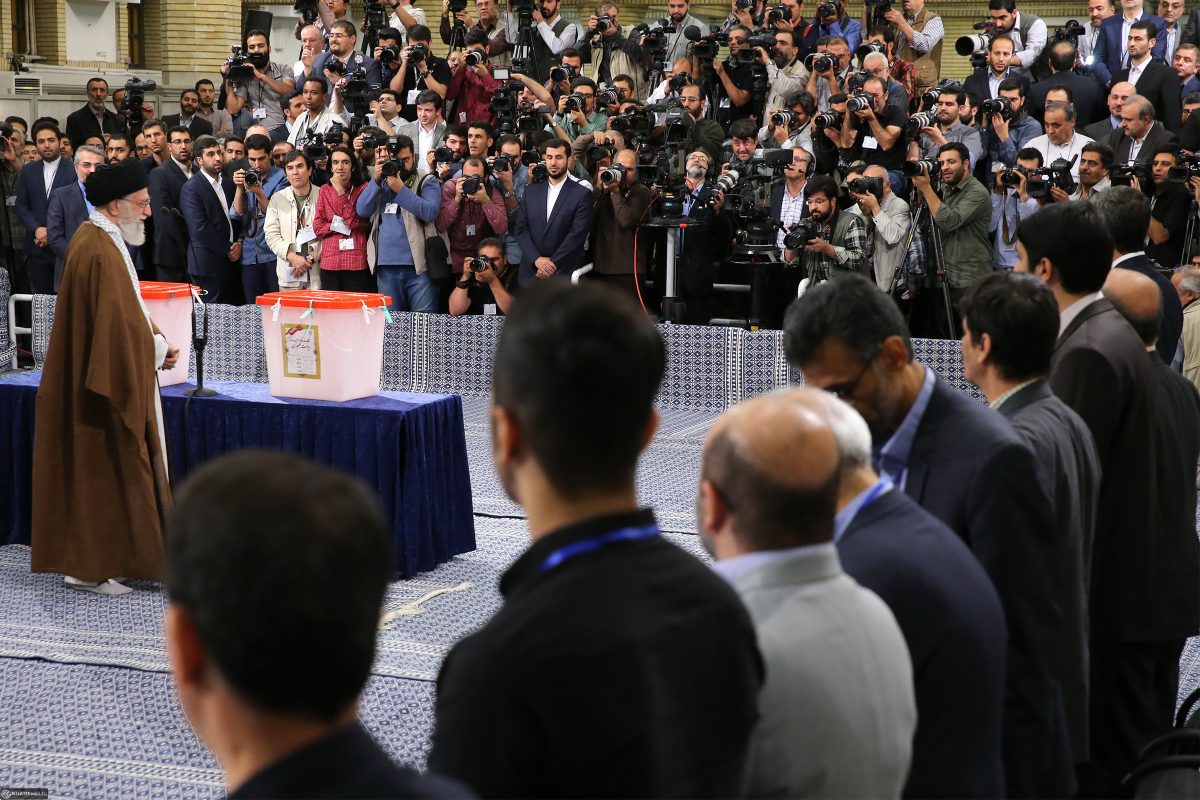
- Lead. Iranian authorities announced on 13 June that the state funeral for Supreme Leader Ali Khamenei, who died when a US-Israeli airstrike destroyed his compound in February, will begin with three days of ceremonies in Tehran on 4 July and conclude with his burial in Mashhad on 9 July.
- Fact. The burial had originally been scheduled for March but was postponed as active fighting continued, leaving the supreme leader of a major regional power unburied for more than four months — an unprecedented interval in the Islamic Republic’s history.
- Stake. The announcement arrives as Khamenei’s successor, his son Mojtaba, is reported to be taking a more active diplomatic role in the US-Iran nuclear negotiations, suggesting the leadership transition is stabilising.
Khamenei, who was 86, led the Islamic Republic for 35 years before the February strike that ended his life. The duration of his tenure — longer than that of the republic’s founder, Ayatollah Ruhollah Khomeini — made the circumstances of his death and the extended delay in his burial a matter of unusual weight inside Iran and across the Shia world.
The schedule announced
According to Al Jazeera, Iranian state media set out a timetable in which funeral ceremonies in Tehran run from 4 to 6 July, a further ceremony takes place in the holy city of Qom on 7 July, and Khamenei is interred in Mashhad — his hometown and Iran’s most significant Shia pilgrimage site — on 9 July. The spread of locations across Tehran, Qom, and Mashhad reflects the tripartite geography of Shia religious authority in Iran, with each city carrying distinct symbolic weight.
The decision to hold the burial in Mashhad rather than Tehran follows Khamenei’s own expressed wishes and mirrors Khomeini’s burial near Tehran’s Behesht-e Zahra cemetery, where another mass gathering reshaped the landscape of Iranian public mourning in 1989.
Why the delay lasted so long
The initial plan to bury Khamenei in March collapsed as the US-Israeli military campaign continued and Iran’s defence posture remained on high alert. Organising a multi-city funeral that, in Shia tradition, can draw tens of millions of mourners would have required security conditions and logistical infrastructure incompatible with an active wartime environment. The April 8 truce provided the opening, but planning ceremonies of this scale takes weeks to execute safely.
Succession and the diplomatic moment
Mojtaba Khamenei has formally assumed the role of Supreme Leader but has remained largely out of public view. US Secretary of State Marco Rubio recently indicated that Mojtaba appears to be taking a more active role in the nuclear negotiations, a signal that the new leadership is becoming more engaged. Pakistan’s prime minister declared last week that the text of an Iran-US deal has been agreed, leaving formal sign-off as the remaining obstacle. The state funeral may give Mojtaba Khamenei a visible public platform — and a moment of national solidarity — in the weeks before that signature is sought.
Whether the July ceremonies proceed as planned will itself depend on whether the ceasefire holds. The announcement of the dates is, at minimum, a signal from Tehran that those in authority believe conditions are stable enough to make that commitment.