
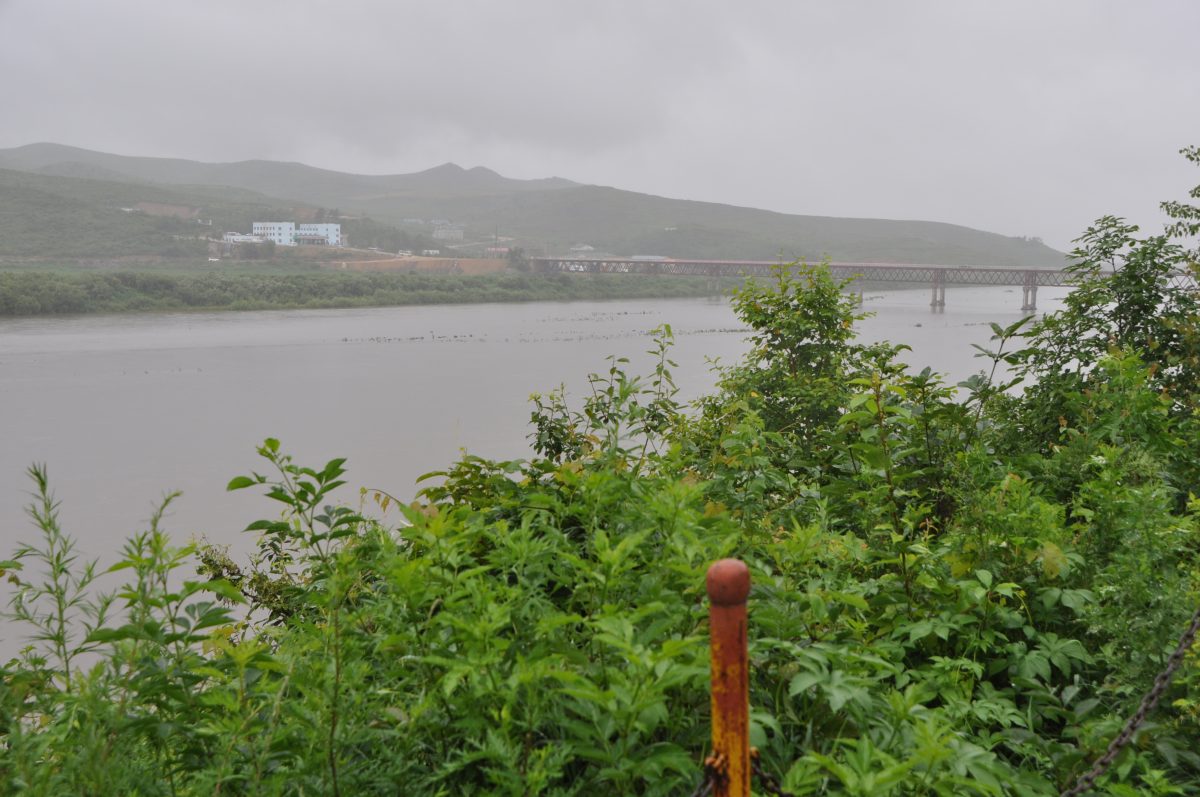
- Lead. A new road bridge connecting North Korea and Russia is set to open on June 19 on the Tumen River, adding physical infrastructure to a Pyongyang-Moscow axis already sustained by troop deployments and arms transfers.
- Fact. China–North Korea bilateral trade reached $325.8 million in April 2026—the highest monthly figure in eight years—while Pyongyang is reportedly importing refined oil at more than seven times the UN sanctions cap of 500,000 barrels per year.
- Stake. A US-Japan-South Korea trilateral meeting on June 12 expressed “serious concern” over North Korea’s nuclear programs, but the mechanisms for enforcing sanctions are visibly eroding as both Moscow and Beijing deepen their economic engagement with Pyongyang.
The opening is scheduled for June 19. The new road bridge crosses the Tumen River approximately 400 metres south of the existing railway link that has handled the bulk of Russia–North Korea freight since the two countries accelerated their partnership following Russia’s 2022 invasion of Ukraine. A separate construction project, the New Yalu River Bridge, has seen equipment at the site increase from 40 to 160 vehicles over recent months, according to analysis by the American Enterprise Institute, signalling that broader logistical expansion is under way.
A trade and evasion picture that keeps growing
The AEI’s Korean Peninsula Update, published June 16, found that China–North Korea bilateral trade hit $325.8 million in April 2026, the highest monthly total in eight years. South Korea’s opposition party separately reported that North Korea illegally exported approximately 1.5 million tons of coal in 2025, using foreign-flagged vessels and false Russian origin labels to evade UN sanctions. Chinese imports of North Korean tungsten—a strategic mineral used in military and industrial applications—rose more than 13-fold in the first four months of 2026 compared with the same period in 2025.
On the import side, North Korea is estimated to be taking in refined oil at a rate more than seven times the UN Security Council cap of 500,000 barrels per year. That cap has remained formally in place since 2017, but enforcement has effectively collapsed as Russia and China, both permanent Security Council members with veto power, have declined to support punitive measures against Pyongyang.
Troops, nuclear sites, and diplomatic alarm
North Korea also deployed approximately 14,000 troops to support Russia’s military operations in Ukraine—a contribution that elevated Pyongyang’s value in Moscow’s calculations and diluted China’s leverage over Kim Jong Un. Beijing has responded by resuming high-level diplomatic exchanges with Pyongyang in an effort to restore its influence.
Against this backdrop, the United States, South Korea, and Japan held their first trilateral meeting since the Xi-Kim summit on June 12, reaffirming commitment to complete denuclearisation of the Korean Peninsula. A joint South Korea-EU statement issued June 10 specifically condemned North Korea’s support for Russia’s war. For the wider nuclear picture, see Kim exposes North Korea’s third uranium enrichment site in nuclear buildup.
What the bridge opening signals
Physical infrastructure is among the hardest things to reverse once built. The Tumen River road bridge, coming after North Korea deployed troops to Europe and accelerated trade across both its Chinese and Russian borders, suggests Pyongyang is deliberately diversifying and cementing its external economic dependencies. South Korean President Lee Jae Myung’s approval rating fell to 51.5 percent this week, down 3.7 percentage points amid domestic economic concerns, adding political complexity to any Seoul-led push for tougher international coordination. The bridge opening on June 19 will be closely watched as a barometer of how far the Pyongyang-Moscow partnership has moved beyond tactical convenience into durable infrastructure.