
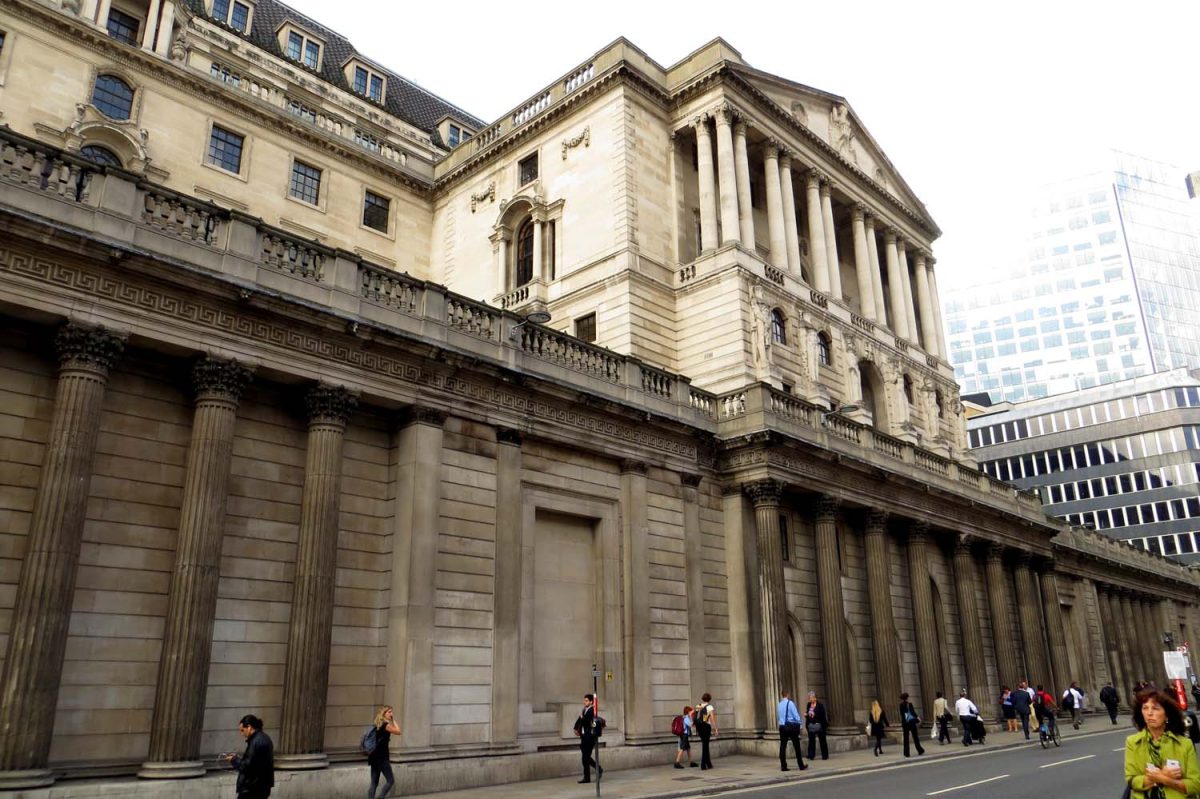
- Divided committee. The Bank of England’s Monetary Policy Committee voted 7–2 on 18 June to hold Bank Rate at 3.75%, with two members pushing for an immediate hike to 4%—the widest dissent split in the current tightening cycle.
- Inflation above target. UK CPI stood at 2.8% in May 2026, well above the MPC’s 2% mandate, having fallen from a March peak of 3.3% after energy prices partially unwound.
- Conditional hold. Governor Andrew Bailey stated the Bank is “in no rush to raise rates,” but the MPC’s own scenario analysis flagged that up to six further increases could occur in a worst-case 12-month outlook.
The Bank of England kept its benchmark interest rate at 3.75% at the conclusion of the June meeting, as the Monetary Policy Committee judged that the inflation picture remained too volatile to act. Two members dissented, voting to raise rates by 25 basis points to 4%, reflecting concern that the MPC may have cut too aggressively in earlier cycles and that above-target inflation requires a corrective move now.
The inflation arithmetic
UK consumer price inflation rose to 3.3% in March 2026 as Middle East energy prices spiked following the Iran-US conflict, before easing to 2.8% in May. That decline gave the majority of MPC members grounds to pause. But 2.8% remains nearly a full percentage point above the 2% target, and core services inflation—which the Bank monitors closely as a gauge of domestically generated price pressure—has proven slower to retreat.
Global energy prices fell after the announcement of the US-Iran memorandum of understanding, but the MPC noted in its summary that prices “remain higher than pre-conflict” and have “continued to be volatile.” That assessment points to a committee wary of declaring victory too early on the inflation front.
How the BoE compares with its peers
The June hold places the Bank of England in a different posture from the ECB, which raised its deposit rate to 2.25% at its 11 June meeting—the first ECB hike since 2023—on the explicit grounds that Iran-war energy costs were feeding eurozone inflation. The Federal Reserve also held at 3.50%–3.75% in June, though nine FOMC officials signalled a hike later in 2026.
Market reaction to the BoE decision was muted in the short rate complex, with all 65 economists surveyed by Reuters having expected no change. Longer-dated swap rates eased modestly on the hold, and at least three major UK lenders—Barclays, NatWest, and Santander—reduced fixed-rate mortgage offerings during the week as a result. Tracker mortgage holders and those on standard variable rates experienced no immediate change to their monthly payments.
What comes next
The MPC’s next scheduled decision falls in August. By then, the committee will have June and July inflation readings, a clearer picture of whether Iran-deal-related energy price relief persists, and updated labour market data. The two dissenters’ position—that the Bank should move before domestic inflation expectations become entrenched—will carry more weight if the July print does not show further progress toward the 2% target.