
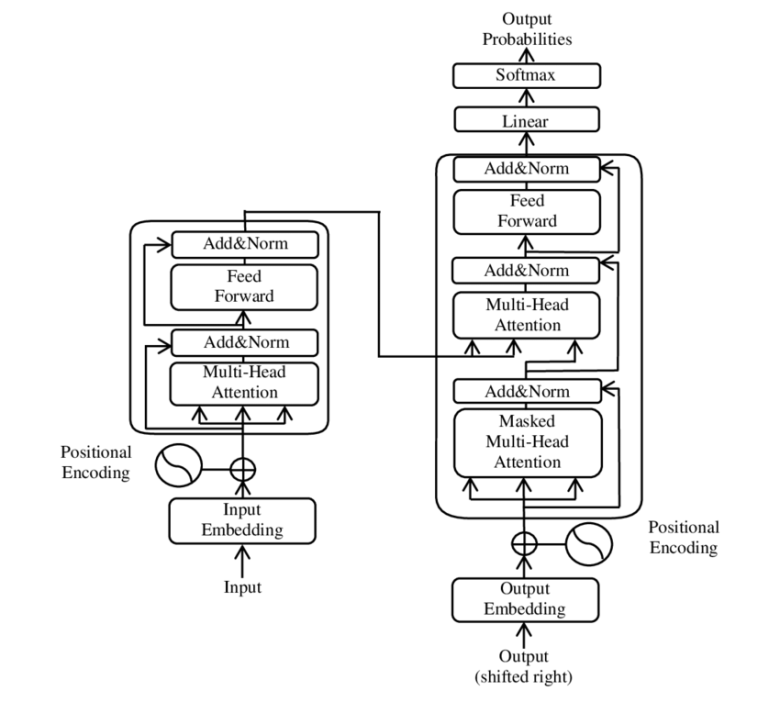
- The man. Noam Shazeer is a co-author of “Attention Is All You Need,” the 2017 Google paper that introduced the Transformer architecture underlying every major AI model today—GPT, Gemini, Claude, and Llama included.
- The cost. Google paid approximately $2.7 billion in 2024 to bring Shazeer back from Character.AI, the company he co-founded after leaving Google in 2021. He lasted less than 22 months before announcing his departure to OpenAI on June 18, 2026.
- The signal. Sam Altman described Shazeer as “one of the people I have most wanted to work with since the very beginning of OpenAI. Only took 10 years.” The hire arrives as OpenAI prepares a confidential IPO filing and intensifies architecture work beyond GPT-5.5.
Noam Shazeer posted his announcement on X shortly after midnight Pacific time on June 18, confirming he was joining OpenAI and ending a tenure at Google that had been secured by a $2.7 billion licensing deal covering Character.AI’s technology. The announcement, confirmed by CNBC, sent an immediate signal through the AI industry: the person who co-designed the architecture underlying every major AI assistant was moving to the company whose products most directly compete with Google’s Gemini.
“I’m excited to share that I’ll be joining OpenAI and look forward to working with the exceptional team there,” Shazeer wrote. Altman replied publicly: “noam is one of the people I have most wanted to work with since the very beginning of openai. only took 10 years. i think it will be worth the wait.”
Why Shazeer matters
The Transformer architecture described in “Attention Is All You Need”—published in 2017 with Shazeer among eight co-authors—is not merely historically significant. It remains the foundational structure on which virtually all large language models are built in 2026. Shazeer’s contributions included attention mechanism optimisations that made the architecture computationally tractable at scale, and subsequent work on mixture-of-experts models that influenced both the Gemini family and the broader research community through open-source releases.
After co-founding Character.AI and building one of the early consumer AI products, Shazeer returned to Google in 2024 as VP of Engineering and co-lead of Gemini. His departure removes a central architect from Gemini’s leadership at the moment when OpenAI is preparing its IPO filing and the two companies are competing directly across coding benchmarks, multimodal capabilities, and enterprise deployments.
OpenAI’s talent moment
The hire comes during a period of notable momentum for OpenAI. The company is preparing a confidential S-1 for a September IPO, recently closed a funding round at an $852 billion valuation with major commitments from Amazon, Nvidia, and SoftBank, and is actively building successor models to GPT-5.5. Sam Altman has indicated that Shazeer will lead architecture research for future GPT models—making his role both technically central and strategically significant ahead of the public listing.
Multiple state attorneys general have opened investigations into OpenAI’s advertising practices and model safety during the IPO quiet period, and the company continues to operate under export restrictions that limit access to certain frontier models abroad. But in terms of talent signalling—historically one of the most reliable indicators of momentum between frontier AI labs—landing Shazeer represents one of OpenAI’s most significant hires in years.
The limits of retention capital
Google’s $2.7 billion deal with Character.AI was explicitly structured as a retention mechanism, bundling the technology licence with Shazeer’s return. That it held for fewer than twenty-two months underscores the limits of money alone when intellectual excitement and competitive positioning are the primary motivators for researchers of Shazeer’s calibre. The broader talent competition between Anthropic, OpenAI, Google DeepMind, Meta AI, and a growing cluster of well-funded startups has pushed compensation to levels where traditional retention structures struggle to create meaningful lock-in. Google has not publicly confirmed a successor to lead Gemini’s architecture work.