
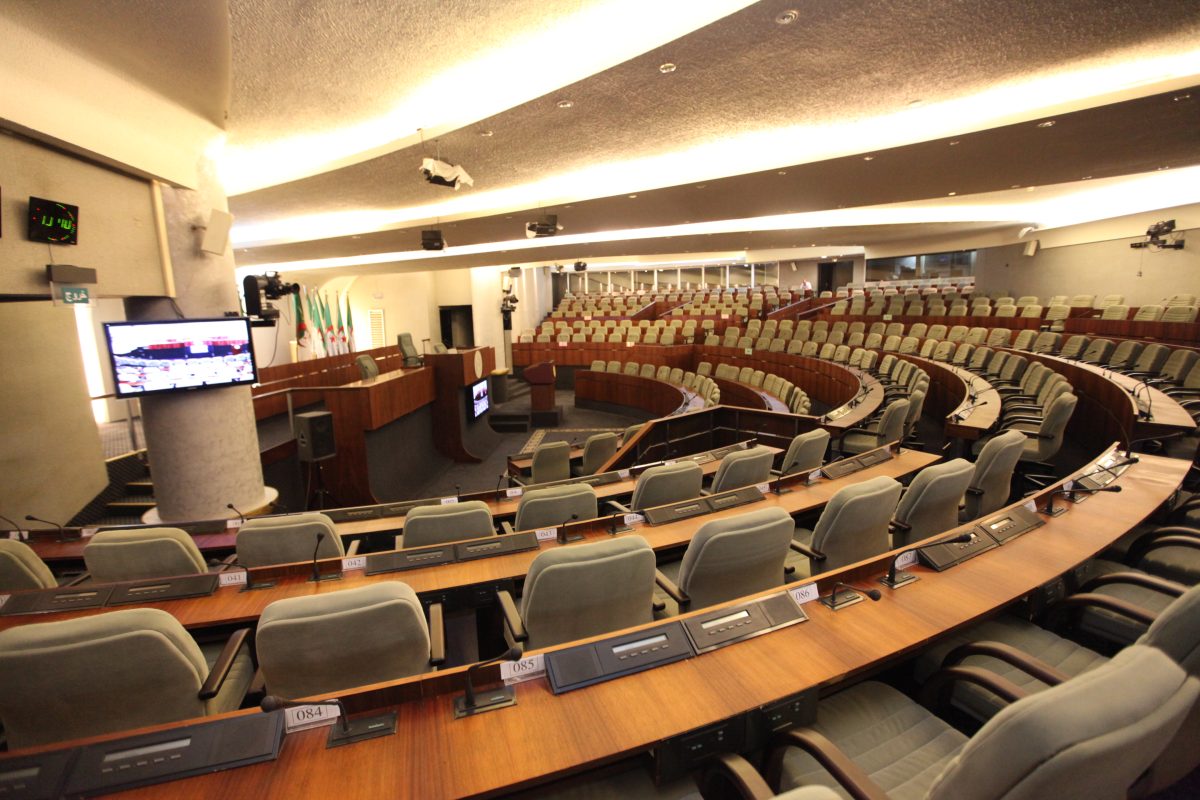
- Lead. Algerians go to the polls on 2 July 2026 to fill all 407 seats in the People’s National Assembly — the most competitive legislative vote since the Hirak protest movement forced the resignation of long-ruling president Abdelaziz Bouteflika in 2019.
- Fact. More than 24.7 million voters are registered, including roughly 854,000 living abroad, with opposition parties that boycotted the 2021 election — including the Socialist Forces Front and the Rally for Culture and Democracy — now returning to contest seats.
- Stake. Turnout will be read as a barometer of whether Algeria’s institutional reforms, rolled out under President Abdelmadjid Tebboune since 2020, have rebuilt any public trust in a system many citizens came to regard as hollowed out under Bouteflika’s final years.
A field wider than 2021
Voting in the 2026 parliamentary election takes place on 2 July under an open-list proportional representation system that allows voters to both choose a party list and express a preference for individual candidates. The governing National Liberation Front (FLN), which held 105 of 407 seats going into the election, runs alongside its pro-government ally the National Democratic Rally (RND) and faces competition from the Islamist-rooted Movement of Society for Peace (MSP) — the main opposition force — as well as independent and nationalist lists. Al Jazeera reported on 1 July that the participation of parties that had previously boycotted makes this the widest competitive field since the post-Hirak transition began.
Human rights organisations have flagged restrictions on opposition activity and independent media coverage ahead of the vote, while authorities contend that a series of constitutional and electoral reforms expanded the space for political participation while preserving institutional stability. Under the revised system, tighter nomination rules led to hundreds of candidate lists being rejected during pre-vote reviews — a point that critics say contradicts the stated reform aims.
Why participation is the real story
The 2021 legislative election recorded official participation of just 23 percent — a historic low that reflected both the enduring legacy of the Hirak movement’s distrust of formal politics and a broader disillusionment with the FLN-dominated system. Whether the return of boycotting parties and a younger cohort of independent candidates translates into meaningfully higher turnout on 2 July will shape how both Tebboune’s government and foreign observers interpret the result.
President Tebboune has described the vote as a step toward building a “new Algeria” following the 2019 upheaval, framing it as evidence that the country’s post-Bouteflika transition is proceeding on schedule. The Hirak movement itself never produced a structured political party capable of contesting elections, leaving the opposition field fragmented between established parties with mixed democratic credentials and independent lists of unproven reach.
What the result will — and will not — decide
The People’s National Assembly holds legislative authority but operates alongside a powerful executive presidency and a technocratic government that has historically retained significant autonomy from parliamentary pressure. A strong showing by the MSP or independent blocs could create modest friction in budget and energy policy debates; an FLN supermajority would reinforce the continuity of the current framework. What the result is unlikely to change is Algeria’s foreign policy orientation — non-alignment, hydrocarbon-export dependency, and managed relations with the EU and Gulf states — which is determined above the legislative level.
Early results are expected on the night of 2 July, with the Independent National Authority of Elections responsible for certifying the outcome.