
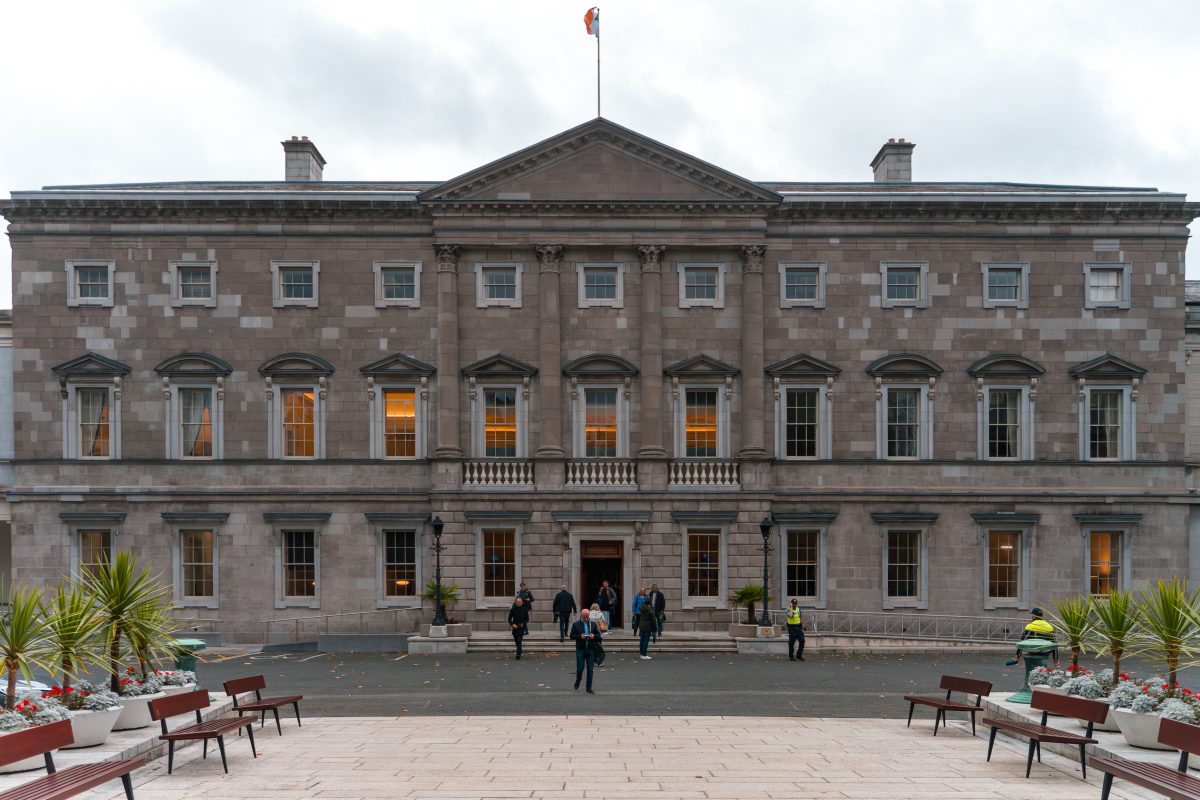
- Lead. Ireland assumed the rotating Presidency of the Council of the European Union on 1 July 2026, with the Digital Omnibus on AI — a package of amendments to the EU AI Act that would delay the original high-risk compliance deadline from August 2, 2026 to December 2027 at the earliest — listed as the most time-sensitive item on its digital agenda.
- Fact. A provisional political agreement on the Digital Omnibus was reached in May 2026 but still requires formal adoption by the Council and the European Parliament; without it, the August 2 date stands, meaning the Irish Presidency begins with roughly 32 days to formally complete a process that determines compliance obligations for AI systems used in hiring, credit, medical imaging, education, and critical infrastructure across all 27 member states.
- Stake. Ireland’s programme — built around the themes of competitiveness, values, and security — includes a national AI summit in Dublin on 14 October 2026 and commitments to strengthen EU cloud infrastructure, but the country’s credibility as an honest broker on Big Tech regulation is complicated by the fact that Google, Meta, Apple, and Microsoft all operate their European Union headquarters from Irish soil.
What the Digital Omnibus does
The Digital Omnibus is not a repeal of the EU AI Act but a revision to its implementation schedule and scope. Under the original Act, developers and deployers of AI systems classified as “high risk” — those used to make or substantially assist consequential decisions in areas including employment, education, law enforcement, and essential services — faced a compliance deadline of 2 August 2026. That date is already the trigger for GPAI enforcement penalties and Article 50 transparency obligations that require chatbots to disclose their AI status at first interaction.
The Omnibus, if formally adopted, would move the high-risk deadline back to December 2027, conditional on the European Commission publishing harmonized technical standards by that point. It also simplifies certain notification and assessment obligations that companies had flagged as operationally unworkable on the original timeline. TechPolicy.Press reported that Ireland’s programme specifically addresses this, stating that “simplification is about better regulation, not deregulation” — a formulation designed to reassure civil society that the delay does not gut the Act’s substantive obligations.
The dual role Ireland must navigate
No member state holding the Council Presidency has a more direct commercial stake in the outcome of EU AI regulation than Ireland. The country is home to the European headquarters of Google, Meta, Apple, and Microsoft — all of them either directly subject to the GPAI obligations already in force or closely affected by the high-risk compliance regime. The Data Protection Commission, Ireland’s national regulator, also holds lead supervisory authority over most of these companies under the General Data Protection Regulation, meaning Dublin simultaneously chairs the legislative process and regulates the principal targets of that legislation.
The Irish Presidency programme lists digital sovereignty alongside AI as a cross-cutting priority, specifically calling for “stronger EU cloud infrastructure, interoperable cybersecurity standards and trusted data governance.” The Council, under Ireland’s chair, will also deal with the Audiovisual and Media Services Directive revisions and intellectual property updates bundled into the same Omnibus package. How Ireland handles the technical dossiers in the Council working groups over the coming weeks will determine whether the August 2 deadline produces a compliance scramble across European industry or is absorbed into a more orderly revised timeline.
October’s Dublin AI summit
Beyond the immediate Omnibus task, Ireland has announced a dedicated AI summit for 14 October 2026 in Dublin — a moment intended to anchor the European AI governance conversation midway through the six-month Presidency. The summit is expected to convene regulators, industry, and civil society to assess progress on the GPAI Code of Practice, which OpenAI has publicly committed to signing, and to address the interaction between the EU AI Act’s enforcement architecture and the voluntary industry frameworks that underpin it. Whether the Omnibus has been formally ratified by October will significantly shape the tone of that conversation.