
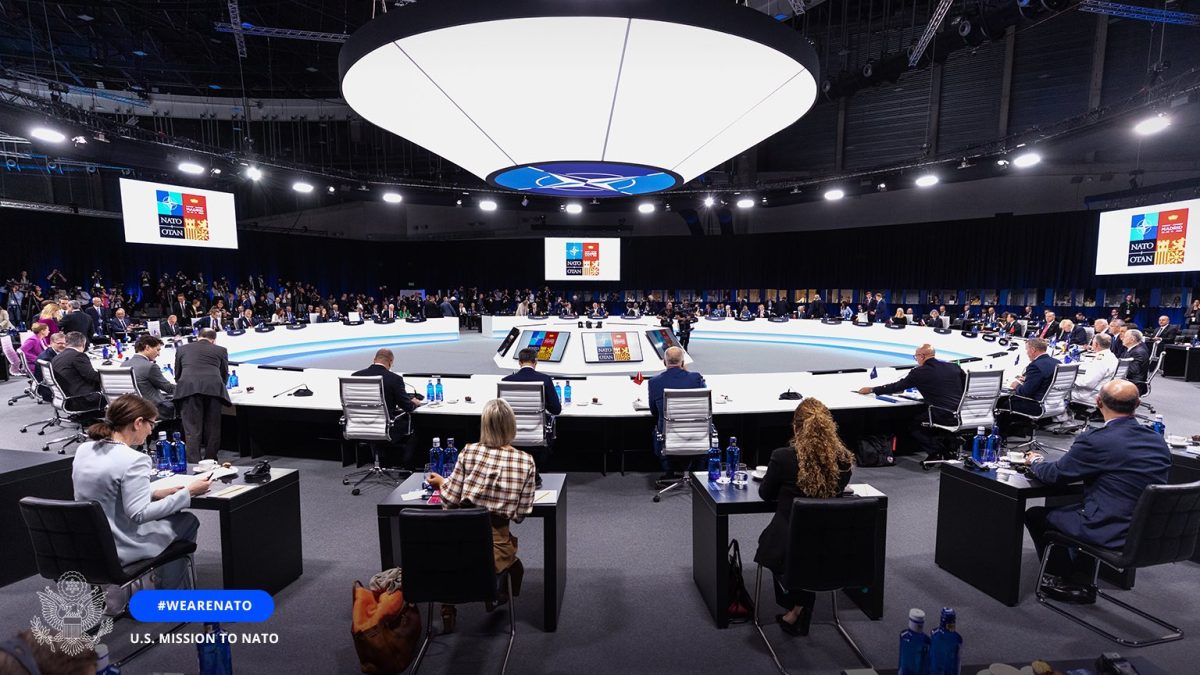
- Audit day. Trump has described Ankara as the first “report card” on the 5% GDP defence pledge signed at The Hague last year — and signalled that Washington expects all 32 members to show a credible path immediately.
- Outlier. Spain has explicitly said it cannot meet the 5% target, while many members lag; Poland, the Nordic states and the Baltic nations are leading the field.
- Side agenda. Trump is scheduled to meet Ukrainian President Zelenskyy on Wednesday and Syrian President Ahmad al-Sharaa, widening the summit’s scope well beyond defence budgets.
NATO’s 32 heads of state arrived in Ankara, Turkey, on Monday for a two-day summit that President Donald Trump has framed less as a celebration of the alliance than as an enforcement action. Trump won a landmark commitment from allies at last year’s Hague meeting: a pledge to spend 5 percent of GDP on defence and defence-related activities by 2035. His mission in Ankara, in the words of US Ambassador to NATO Matt Whitaker, is to make clear that Washington “fully expects all allies to step up immediately and get on the path to 5 percent,” according to NPR.
Who is ahead, who is lagging
Poland, the Nordic countries and the Baltic states have moved fastest, already approaching or surpassing the previous 2% benchmark. Germany is reportedly on track to reach 5% by 2029. Spain is the most vocal holdout, stating publicly that the target is beyond its near-term reach. NATO Secretary General Mark Rutte has credited allied nations with collectively increasing defence investment by $139 billion in 2025, describing it as unprecedented growth, but acknowledged that many members remain far from the new threshold. A defence industry forum running alongside the summit is expected to produce agreements worth tens of billions of dollars in weapons manufacturing and technology contracts.
Trump’s own spending figures complicate the political dynamics: US defence outlays stand at roughly 3% of GDP, lower than Poland’s and below several Baltic allies, though Washington funds capabilities — nuclear deterrence, global intelligence, power projection — that rarely appear in national defence budget lines.
Ukraine, Turkey and the bilateral asks
The summit carries a second, equally consequential agenda. NATO allies have pledged €70 billion in military equipment, training and support for Ukraine in 2026. Rutte will seek fresh commitments alongside the defence spending push. Trump is scheduled to meet President Volodymyr Zelenskyy on Wednesday, a session framed around ending the war, following Trump’s 90-minute phone call with Vladimir Putin on Saturday in which he offered US assistance toward a settlement.
Turkish President Recep Tayyip Erdoğan, whose hosting of the summit gives him considerable leverage, is pressing for the removal of US sanctions and Turkey’s reinstatement in the F-35 programme. Trump described his attendance as going “out of respect for President Erdogan,” a signal that Ankara’s bilateral asks are built into the summit’s unspoken agenda.
A bipartisan counterweight
A delegation of US senators from both parties also travelled to Ankara, in part to reassure European partners that American commitment to collective defence extends beyond any single administration. Senator Jeanne Shaheen framed the stakes plainly: “They are our best allies, they are our best trading partners.” Whether the summit produces enforceable spending timelines or a further round of pledges without binding mechanisms will determine whether Ankara is remembered as the moment the alliance’s new targets became real — or the moment it learned to live with them on paper.