
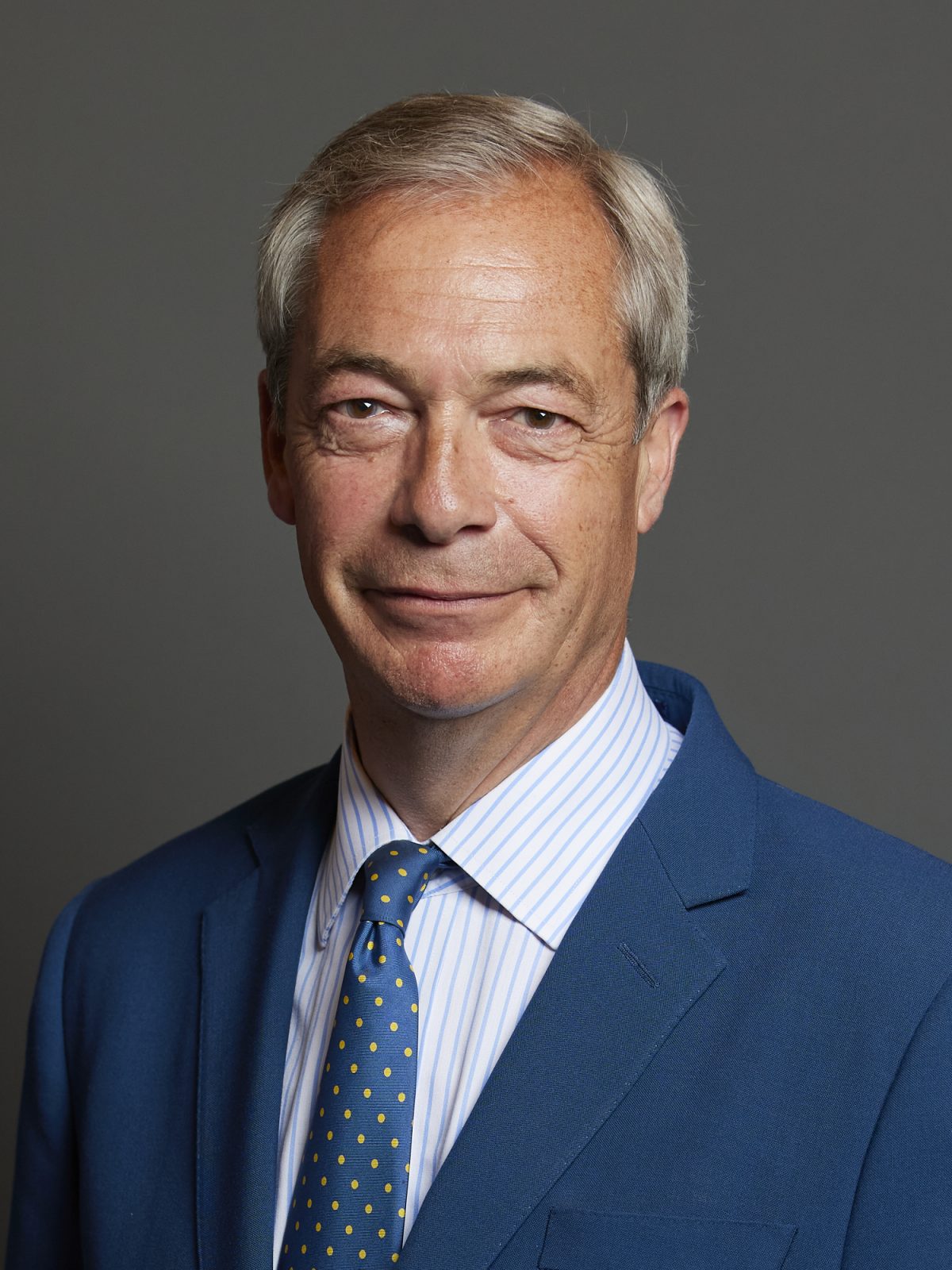
- Lead. Nigel Farage resigned as MP for Clacton-on-Sea on 7 July, triggering a by-election he plans to contest himself, as parliament’s standards watchdog investigates two separate streams of undisclosed income.
- Fact. The probe covers £5 million from Bangkok-based cryptocurrency investor Christopher Harborne, and benefits — including paid social-media staff and use of a London townhouse — provided by convicted money-launderer George Cottrell.
- Stake. Labour, the Conservatives, and the Liberal Democrats all declined to field candidates, making Farage’s return to the Commons near-certain and suspending the standards investigation until any re-election.
Nigel Farage, leader of Reform UK, announced his resignation as a member of parliament on Tuesday in a video posted to his YouTube channel. He framed the move as a democratic test. “I’ve decided that the people of Clacton should be the judges of my actions,” he said, confirming he would trigger a by-election by applying for the Chiltern Hundreds — the traditional device under British constitutional convention for vacating a Commons seat.
The two streams under investigation
Parliament’s commissioner for standards, Daniel Greenberg, opened two lines of inquiry that preceded the resignation. The first concerns £5 million received by Farage from Christopher Harborne, a Thailand-based cryptocurrency billionaire. The payments were described by Farage as funding for private security. The second involves George Cottrell — a former Trump campaign aide who served time in the United States after a 2017 conviction for conspiracy to commit money laundering, wire fraud, and extortion. According to the parliamentary inquiry, Cottrell paid staff who worked on Farage’s social-media accounts and provided use of a central London townhouse near Buckingham Palace.
Farage denied any breach of rules or law. “I have not broken the law in any way at all. I have not misused public money,” he said. Under parliamentary protocol, the standards investigation is suspended while Farage does not hold a seat — it can only resume if he loses the by-election.
Three parties refuse to compete
Within hours of the announcement, all three of Britain’s historically dominant parties declared they would not field candidates in Clacton. Labour cited a “sleaze scandal.” Conservative leader Kemi Badenoch described the resignation as a “fake” manoeuvre and “a gimmick,” saying her party would reserve its participation for a “real by-election” once the investigation had concluded. Liberal Democrat leader Ed Davey said the departure was Farage’s “latest attempt to escape consequences.”
Only Restore Britain, a fringe grouping, indicated it might stand — and then only after the investigation concludes. The field is effectively cleared for Farage to return on his own timetable.
Reform at the centre of British politics
The resignation lands as Reform UK occupies an unusual position in national politics. Since Keir Starmer resigned as Prime Minister following Reform’s surge at local elections, the party has moved from insurgent challenger to the dominant force in British public life. Farage’s calculation appears to be that a return to the Commons — even under continuing scrutiny — is preferable to allowing the standards process to run in his absence.
The by-election will test whether Reform’s electoral dominance extends to protecting its founder from the consequences of undisclosed financial relationships. If Farage wins — as the cleared field strongly suggests — the standards commissioner faces a more delicate question: how to proceed against the leader of Britain’s governing political force, with no electoral check on the outcome.