
- Record. The $1.8 billion Series E is the largest funding round ever closed by a European defense-technology company, valuing Helsing at $18 billion—roughly 50% above its €12 billion mark from June 2025.
- Demand. Investor orders significantly exceeded available allocation, with ten institutions including JPMorganChase and Goldman Sachs Alternatives participating—a sign that pension-scale capital has entered the European defense-AI space.
- Timing. The raise landed on the same day rival Quantum Systems closed a $1.2 billion round, concentrating an unusual amount of capital in European autonomous-military technology in a single day.
Helsing, the Munich-based defense-AI company founded in 2021, closed a $1.8 billion Series E round on July 13, 2026, at an $18 billion valuation—a roughly 50% increase from its €12 billion valuation set just over a year earlier. The round was backed by ten investors: JPMorganChase, Goldman Sachs Alternatives (Growth Equity), General Catalyst, Lightspeed Venture Partners, Iconiq, Dragoneer, the Canada Pension Plan Investment Board, Plural, StepStone, and Disruptive. Investor demand “significantly exceeded” the available allocation, the company said in a statement.
What Helsing builds
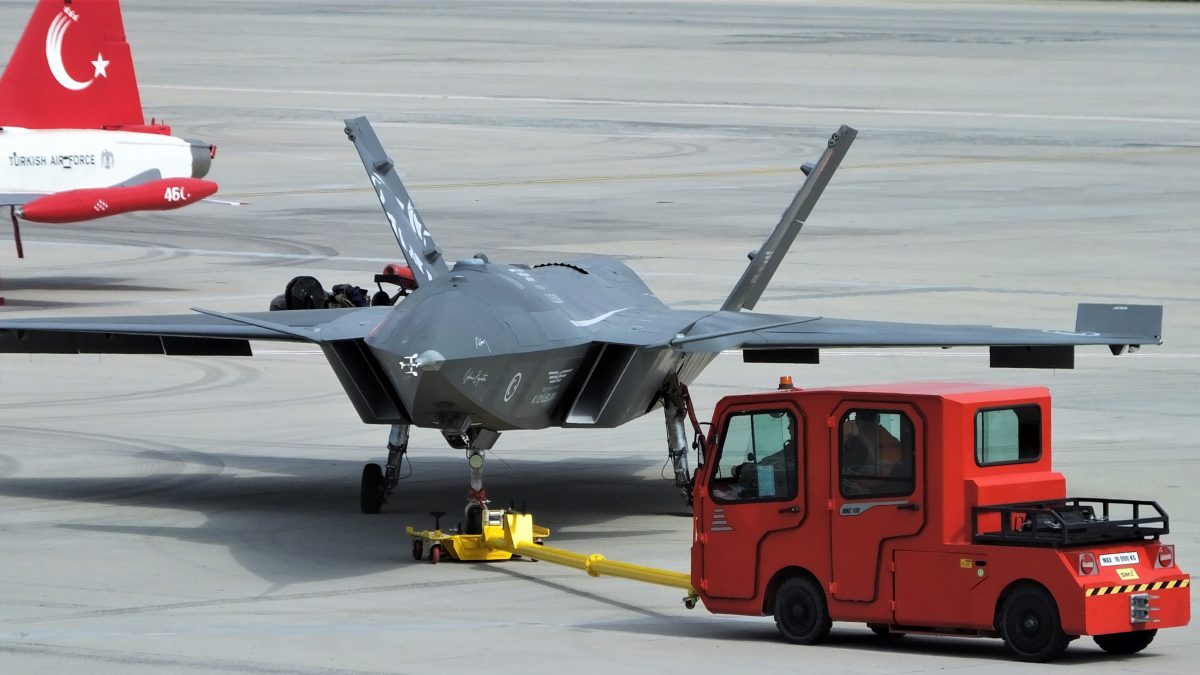
Helsing develops AI-enabled autonomous military hardware and software for NATO-aligned governments. Its product line spans the CA-1 Europa—a 36-foot autonomous jet with a four-tonne takeoff weight—the HX-2 Fathom reconnaissance drone with 62-mile coverage, and the SG-1 Fathom autonomous submarine. Its Centaur autonomous-flight software completed test flights alongside a human-piloted aircraft over the Baltic Sea. The company also operates Altra, a battlefield-intelligence platform designed to aggregate and analyse sensor data in real time.
Helsing manufactures in the United Kingdom and Germany, with a third facility under construction. Last year it acquired German business-jet manufacturer Grob to support hardware production. Proceeds from the Series E will fund direct competition with U.S. rival Anduril Industrial, according to the company’s July 13 statement.
Who is behind it
The company’s co-chairmen are Daniel Ek, co-founder of Spotify, and Tom Enders, former CEO of Airbus—a combination that blends consumer-technology credibility with legacy aerospace pedigree. Co-founders Gundberg Scherf, Niklas Köhler, and Torsten Reil built the company from zero starting in 2021, reaching an $18 billion valuation in under five years—an unusually compressed trajectory even by AI startup standards.
The institutional composition of the round is notable: sovereign wealth-adjacent vehicles such as Canada’s CPP Investments sat alongside traditional venture firms and major investment banks. That mix signals that Helsing has crossed into a category that pension-scale capital can underwrite—a threshold few European defense startups have cleared.
A concentrated moment for European defense AI
The Helsing raise arrived on the same day that Quantum Systems, another European autonomous-military-technology company, announced a $1.2 billion funding round. The coincidence points to a broader shift: European governments have raised defence spending sharply since 2022, and the resulting demand signal has drawn institutional investors who previously avoided the sector on ESG grounds.
The race to build sovereign AI-enabled defence capabilities is no longer confined to Silicon Valley. AI lab executives who argued at the G7 for a US-led global AI security coalition identified the same frontier: that autonomous military technology requires not just capital but interoperability agreements and export-control frameworks that governments are still drafting. Helsing’s $1.8 billion raise is, in part, a bet that European capital and European contracts will be sufficient to build at scale without waiting for those frameworks to mature.