
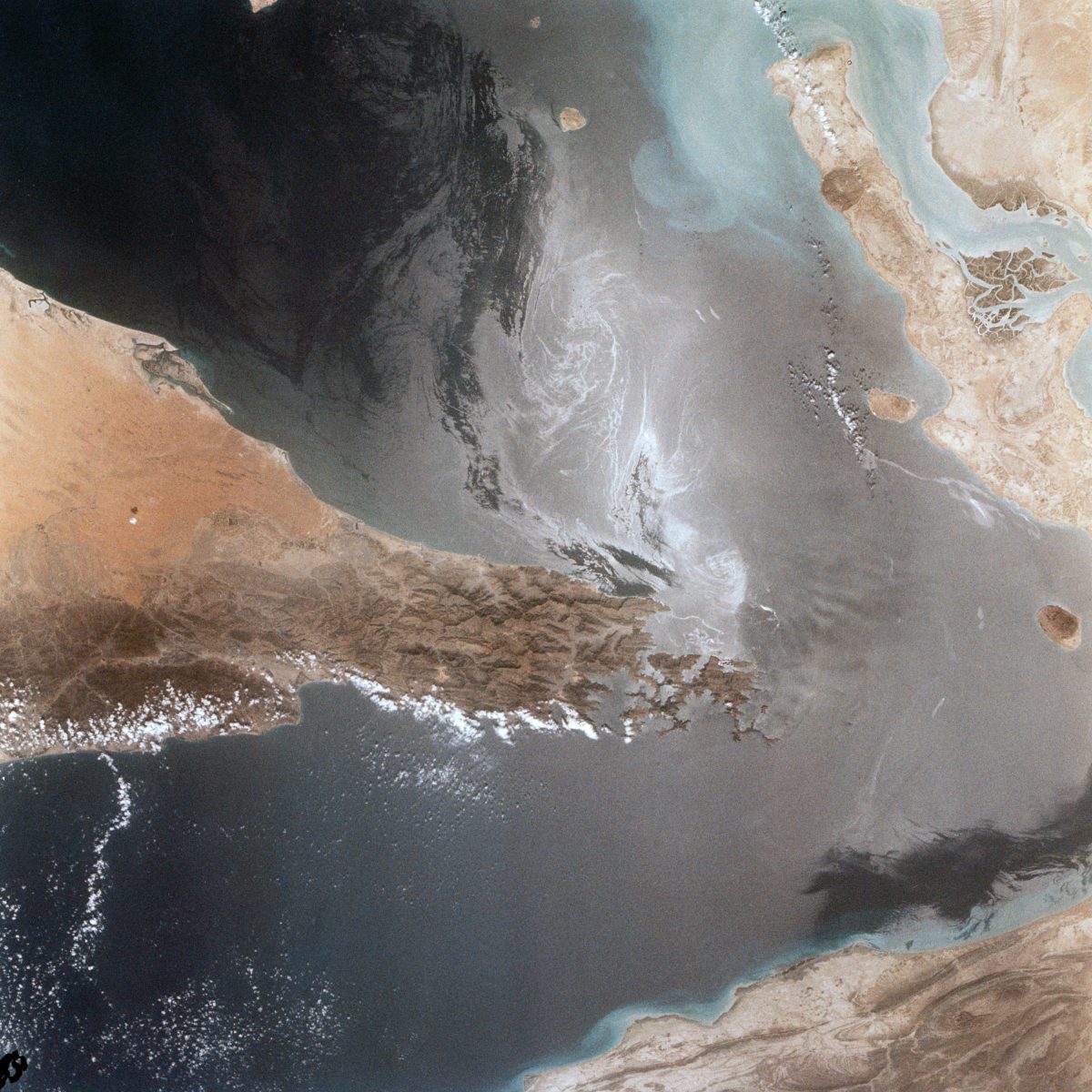
- Closure. Iran has formally shut the Strait of Hormuz—the passage for roughly 20% of global oil trade—demanding foreign vessels pay tolls and follow regime-approved routes.
- Escalation. The U.S. struck 140 Iranian military targets on July 12, while Iran’s IRGC fired three ballistic missiles at a U.S. base in Kuwait; American pump prices have hit $3.87 per gallon.
- Stake. With 14 U.S. troops dead, a ceasefire declared void, and Trump officials acknowledging a nuclear deal is “growing increasingly unlikely,” there is no clear diplomatic exit.
The Strait of Hormuz, through which roughly a fifth of the world’s oil passes, is no longer open to unrestricted transit. Iran’s government formally closed the waterway last week, announcing that foreign vessels must follow regime-approved routes and pay tolls—a move that transforms one of the world’s most critical maritime chokepoints into a sanctioned toll road under Iranian control.
How the ceasefire collapsed
The closure follows the rapid unravelling of a diplomatic compact that had briefly appeared to hold. A ceasefire brokered by Pakistan in April 2026 and formalized in a U.S.-Iran memorandum of understanding signed June 14–17 broke down after Iran attacked three commercial vessels in the Strait on July 6–7. President Trump declared the ceasefire “OVER” on July 7, and U.S. forces struck 140 Iranian military targets on July 12. Iran’s Islamic Revolutionary Guard Corps retaliated by firing three ballistic missiles at the U.S. base in Kuwait and targeting additional American facilities in Bahrain, Qatar, Oman, and Jordan. The back-and-forth has killed at least 14 American troops, according to U.S. government figures reported as of July 13.
The sequence marks a sharp reversal from the June agreement, which had promised to reopen Hormuz and resume diplomatic contact over Iran’s nuclear programme. Trump officials have now acknowledged that a nuclear deal is “growing increasingly unlikely“—a rare public concession on a failed diplomatic goal.
The economic toll
U.S. average gasoline prices reached $3.87 per gallon as of July 13, reflecting risk premiums added to crude after the Strait’s formal closure. Iran’s imposition of a toll regime goes beyond a simple blockade: by demanding that vessels follow designated corridors and pay fees, Tehran is asserting quasi-sovereign control over waters that international law defines as a strait used for international navigation. Shipping insurers have placed the route in the highest-risk category, and several major carriers have suspended Gulf transits indefinitely.
The disruption compounds an earlier energy-market shock: Iran had briefly resumed oil exports under the terms of the June memorandum, and those flows are now fully suspended, tightening global supply at a moment when the U.S. economy had been starting to absorb the initial price spike.
Diplomatic dead ends
UN Secretary-General António Guterres called on both parties to “urgently resume negotiations and to address outstanding issues through diplomacy.” No structured talks are currently scheduled. The ceasefire’s failure leaves no obvious intermediary: Pakistan, which brokered the April agreement, has not publicly stepped forward again, and the Trump administration’s stated willingness to continue talks has not translated into a mechanism.
Iran’s new leadership under Supreme Leader Mojtaba Khamenei—appointed after Ali Khamenei was killed during the initial U.S. Operation Epic Fury in February—is managing its first major escalation without the institutional experience of the Khamenei era. Whether that makes further de-escalation harder or easier remains the central uncertainty facing both U.S. planners and oil markets.
For background on the moment the ceasefire first cracked, see Iran fires missiles at US bases in Kuwait and Bahrain as Hormuz ceasefire unravels.