
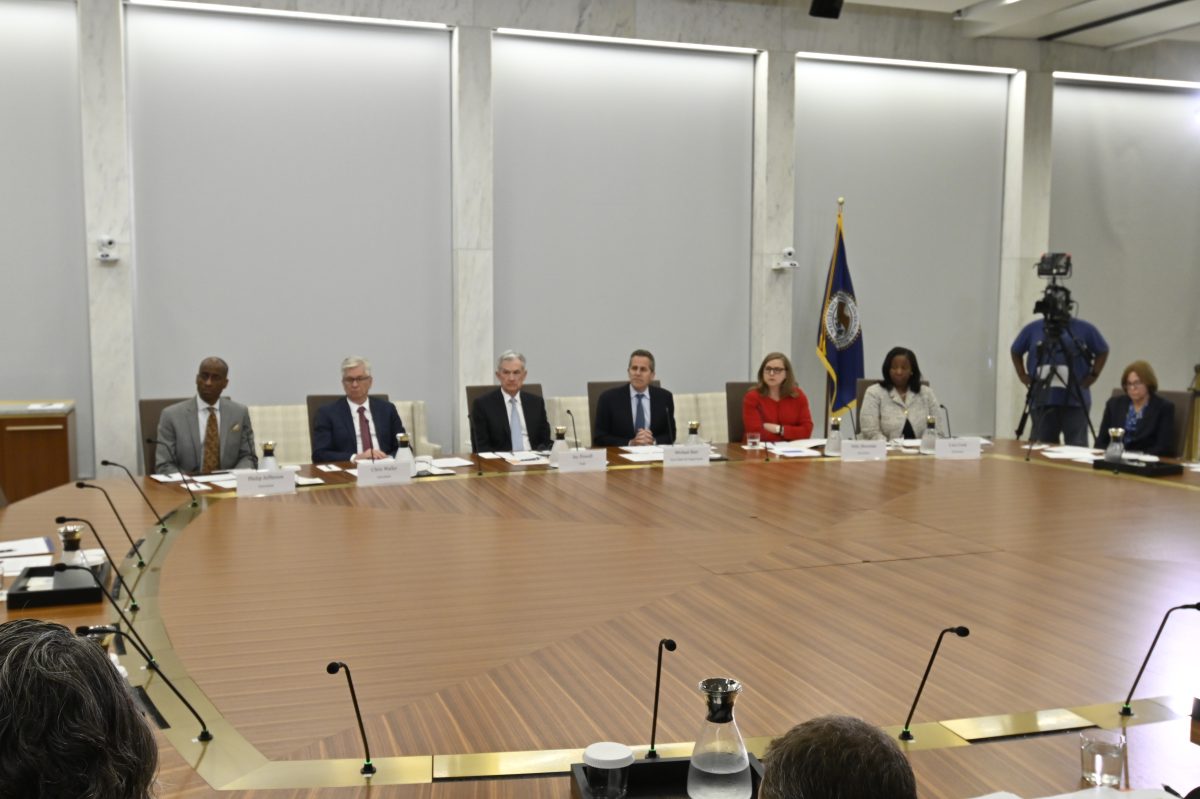
- Lead. Federal Reserve Governor Lisa Cook said on July 15 she is “prepared to act” if inflation does not begin to ease — the clearest individual signal yet that the Fed may resume rate hikes from the current 3.50–3.75% range.
- Fact. US headline inflation stood at 3.7% over the 12 months through June 2026, more than 1.7 percentage points above the 2% target, with the overshoot now running for more than five consecutive years.
- Stake. Cook attributed the persistent miss to two unanticipated shocks — the Middle East conflict and more than $1.5 trillion in announced AI infrastructure investment — that are keeping core goods prices rising at a 5% annual pace.
Federal Reserve Governor Lisa Cook delivered a sharply hawkish set of remarks on July 15, warning that she is willing to tighten monetary policy further if price pressures do not moderate. “Inflation is simply too high,” Cook said in prepared remarks published by the Federal Reserve Board. “Persistently elevated inflation imposes an unacceptable burden on American families. If we do not see signs of disinflation soon, I am prepared to act.”
Five years above target — and getting worse in 2026
US headline inflation reached 3.7% in the 12 months through June 2026, running 1.7 percentage points above the Fed’s 2% mandate. Both core and headline readings in 2026 are tracking roughly one percentage point higher than the Fed projected a year ago. Core goods prices — which had been broadly declining for years before the pandemic era — are rising at an estimated 5% annual pace so far in 2026, a reversal that Cook identified as one of the most troubling features of the current price environment.
The unemployment rate stood at 4.2% in June, giving the central bank latitude to prioritise its inflation mandate. “The risks from high inflation concern me more at this time,” Cook said — a meaningful shift in weighting relative to the Fed’s posture when Chair Kevin Warsh first took over and held rates steady.
Two shocks the Fed did not anticipate
Cook pointed to two forces that have pushed inflation higher than the Fed’s models projected: the ongoing Middle East conflict, which has sustained energy price volatility and supply-chain disruption, and a wave of AI infrastructure investment exceeding $1.5 trillion in announced data-centre plans globally. Both have added to domestic demand in ways that standard rate models did not capture, Cook said, complicating the normal transmission from monetary policy to prices.
The remarks arrive as Chair Warsh and ECB President Lagarde jointly signalled at the Sintra conference that central banks were abandoning forward guidance in favour of meeting-by-meeting flexibility. Cook’s speech is consistent with that posture, but goes further by naming rate hikes as a live option rather than just a retained possibility.
What the market is pricing
The Fed has held its benchmark rate at 3.50–3.75% since the June FOMC meeting, where nine officials indicated a 2026 hike was likely. Cook’s remarks, combined with June CPI data published the same day, are expected to shift futures markets toward pricing in at least one additional quarter-point increase by year-end. US GDP is projected to expand 2.2% in 2026, with labour productivity averaging 2.5% annually over the past two years — giving the economy enough momentum to absorb further tightening without an immediate recession risk, though the margin narrows with each hike.