
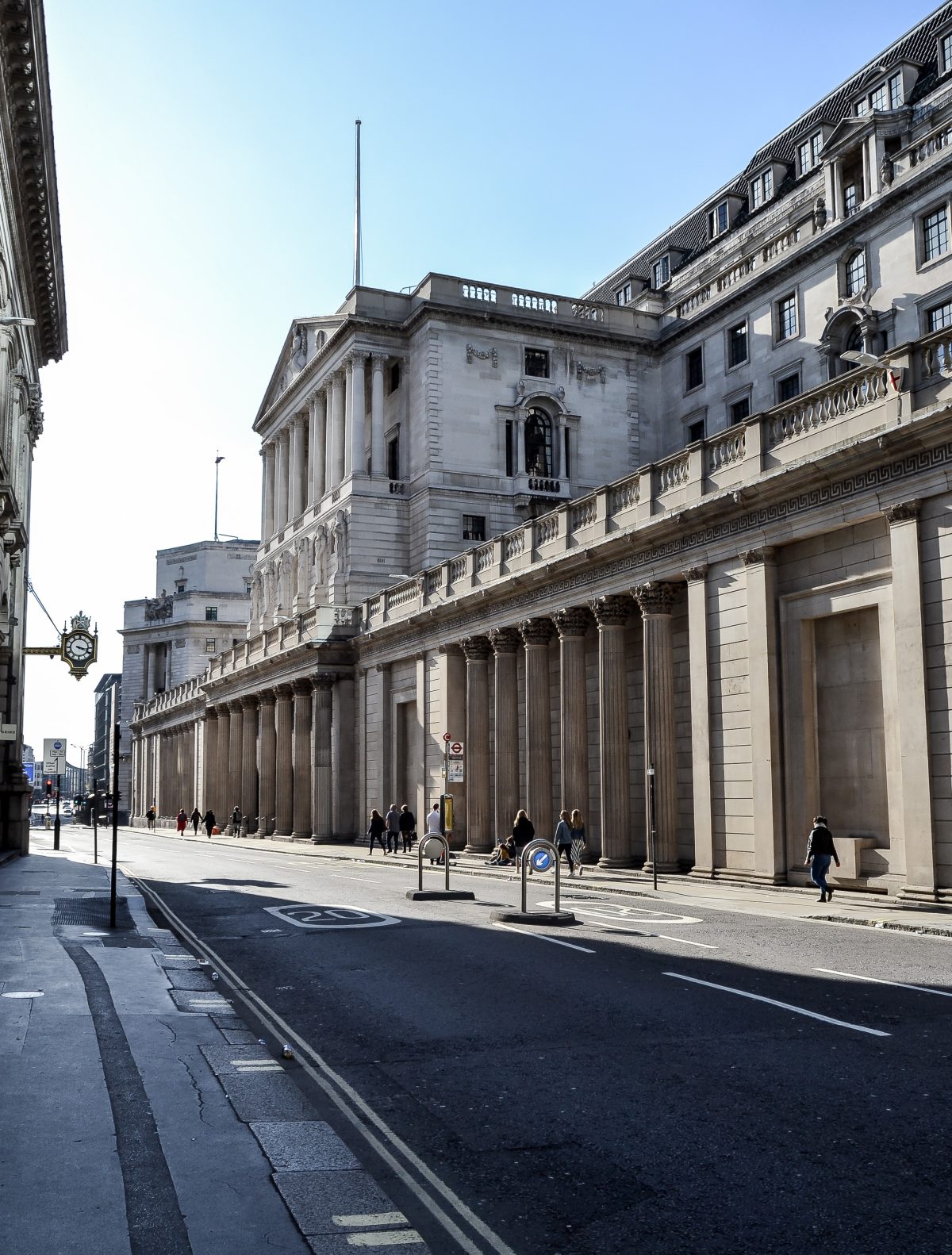
- Lead. The Bank of England’s Monetary Policy Committee voted 6-3 on July 30 to hold the benchmark rate at 3.75%, with three members — Catherine Mann, Megan Greene, and Chief Economist Huw Pill — calling for an immediate rise to 4.0%.
- Fact. Markets had expected a 7-2 vote split. The third dissenter, Huw Pill, was not among those who voted to hike at the previous meeting, making the widening dissent a material hawkish shift rather than a routine repetition of prior positions.
- Stake. The BoE’s next move looks more likely to be a rate rise than a cut: all nine committee members agreed that risks to the energy price outlook “remained skewed to the upside,” and the central bank projects CPI peaking at roughly 3.2% in the fourth quarter of 2026.
The Bank of England’s July 30 rate decision drew an unusual degree of attention not for what it decided — a hold at 3.75% — but for how divided the committee has become. The 6-3 vote was a sharper split than the City had anticipated, and the identities of the three dissenters matter. Deputy Governor Huw Pill, who serves as Chief Economist, had not voted to hike at the prior meeting. His shift joins Catherine Mann and Megan Greene in a hawkish bloc now large enough to tip any future surprise.
What the Minutes Reveal
The accompanying MPC minutes and Monetary Policy Report, released simultaneously with the decision, show a committee unified on one key risk even as it splits on the immediate rate path. All nine members agreed that risks to energy prices “remained skewed to the upside,” a nod to the ongoing conflict in the Middle East and its effect on European gas markets. The central projection has CPI inflation peaking at approximately 3.2% in the final quarter of 2026 — above target but below the levels seen in 2022-23 — before declining into 2027.
The three dissenters argued that holding at the current level risked allowing second-round inflation effects — particularly from a tight labour market — to become entrenched. Their preferred course, a 25-basis-point rise to 4.0%, would have taken the rate to its highest level since 2008.
Context: UK Inflation and the Energy Shock
Britain’s headline inflation fell to 2.6% in June, driven largely by lower diesel and food prices. That reading offered the six hold-voters justification for patience. But the BoE is acutely aware that the drivers of the June disinflation — fuel and goods — are more volatile than services inflation, which has remained sticky above 5%.
The committee’s internal division also reflects an unresolved debate about when to begin easing. At 3.75%, the BoE’s rate is already above most estimates of neutral, meaning the current stance is actively restrictive. The six who voted to hold appeared to be balancing the risk of overtightening — which could deepen any growth slowdown — against the risk of being too slow if energy prices rebound sharply in the autumn.
Market and Political Reaction
Sterling rose modestly against the dollar and euro on the surprise 6-3 split, as traders recalibrated the probability of a September hike upward. UK two-year gilt yields rose roughly 8 basis points in the hours after the release, reflecting a hawkish repricing of the near-term rate path. The government, which has been managing fiscal pressure from higher debt-service costs, made no immediate public comment on the decision.