
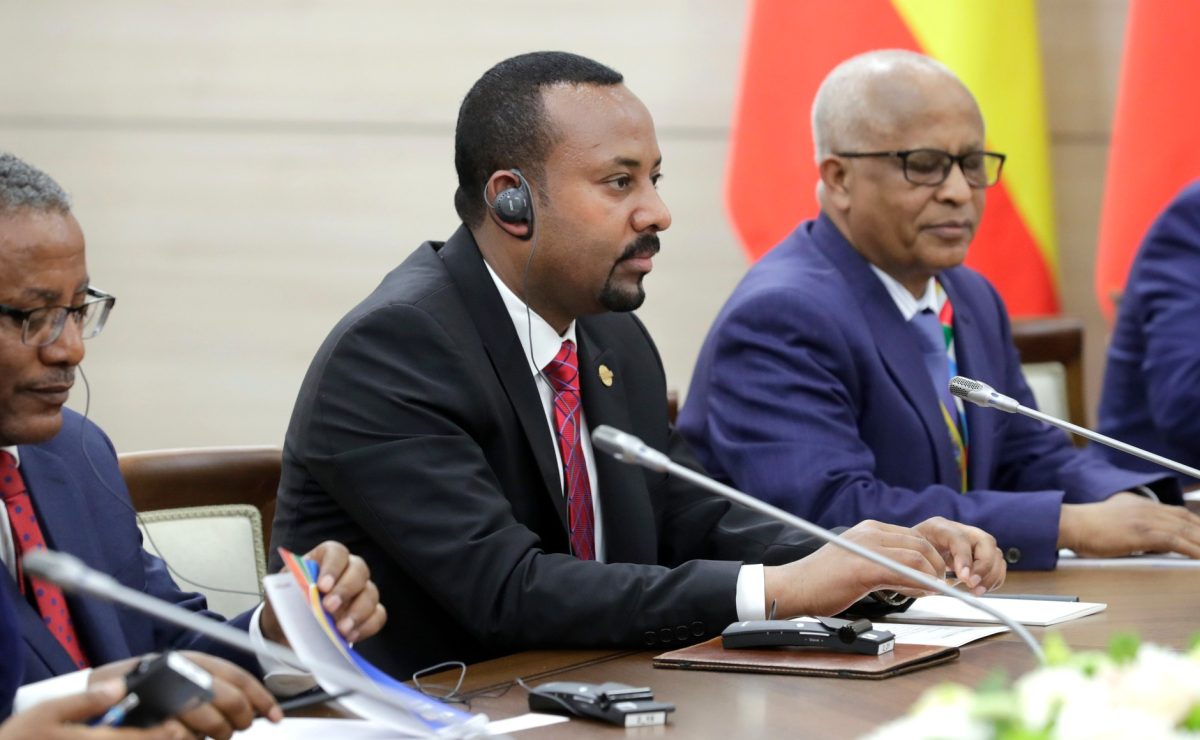
- Lead. Ethiopia’s Prosperity Party won 457 of 547 seats in the House of Peoples’ Representatives, delivering Prime Minister Abiy Ahmed a commanding majority in the country’s first general election since 2021.
- Fact. More than 50.5 million voters were registered for the June 1 vote, but polling was entirely suspended in the Tigray region and 30 Amhara constituencies due to ongoing security concerns.
- Stake. The outcome consolidates Abiy’s grip on power five years after he won the Nobel Peace Prize, but the suspension of voting in two conflict-affected regions limits the mandate’s legitimacy in the eyes of international observers.
A predictable result in unpredictable conditions
Ethiopia held its seventh general election on June 1, with the Prosperity Party widely expected to dominate. The final count placed the party at 457 seats, well above the 274 needed to form a government and continue Abiy’s administration for another five-year term. Parliament formally ratified the result in the days that followed.
The margin was decisive, but the conditions under which Ethiopians voted were not. Security incidents were reported in Amhara and Oromia Regions, with polling interrupted in at least 143 stations. In Tigray, still recovering from the civil war that ended in 2022, no polls opened at all. Opposition groups had accused the government of suppressing their campaigning activities ahead of the vote, though the National Electoral Board of Ethiopia said the process met constitutional requirements.
Disputed constituencies and unresolved complaints
The National Electoral Board certified results across the majority of constituencies but acknowledged complaints filed in 120 of them. As of June 6, roughly 825 of 1,138 targeted constituencies had transmitted verified results to the central count. The Prosperity Party’s share of seats in the remaining undeclared constituencies is unlikely to change the overall outcome.
Ethiopia’s June vote follows a broader pattern of incumbents consolidating control through elections that are formally competitive but structurally skewed. Colombia’s presidential race, heading to a June 21 runoff, presents a sharper contest — but across much of the Global South, this cycle is defined more by managed outcomes than open competition.
What comes next
Abiy Ahmed enters a new term facing significant economic and security challenges: inflation driven partly by the disruption to global energy markets from the Iran war, a fragile peace in Tigray, and persistent insurgency in parts of Oromia. Ethiopia’s role in the African Union and its relationships with Gulf state investors remain central pillars of the government’s foreign policy agenda.
The election result is unlikely to draw significant international censure. The African Union has not issued a critical statement. Western governments have largely limited their concern to the exclusion of Tigray from the vote rather than the overall process.