
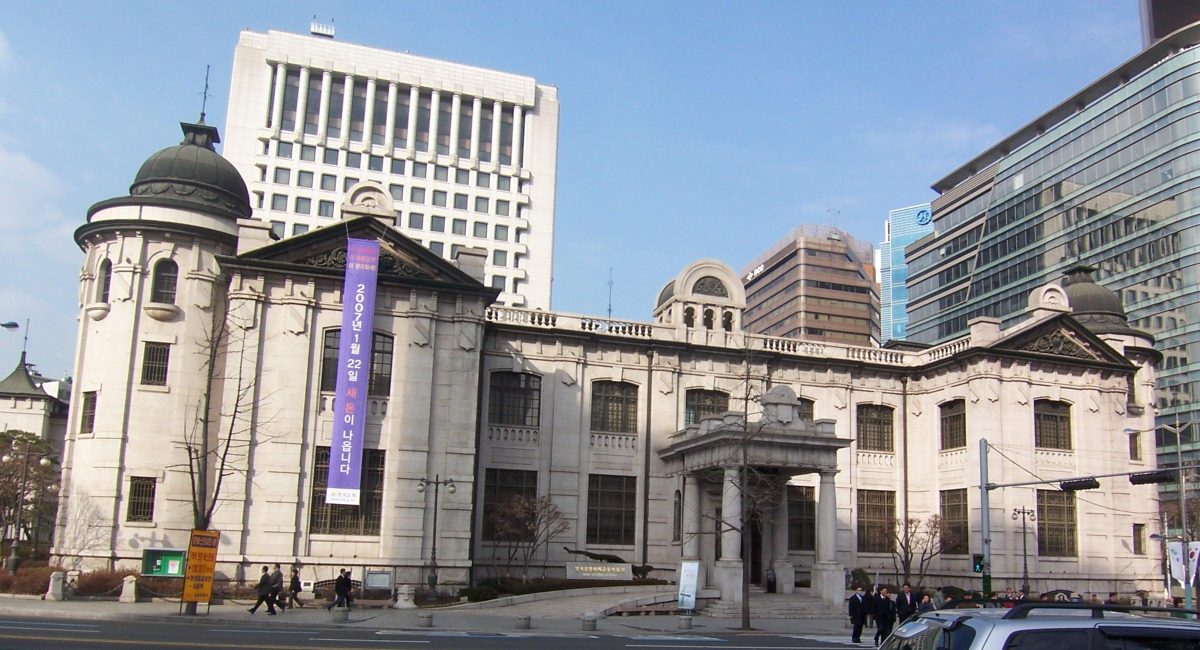
- Second in a row. The Bank of Korea raised its key rate by 25 basis points to 3.00% on Thursday — the first back-to-back increase in more than three years and the highest rate since January 2025.
- AI boom as driver. The BOK explicitly cited South Korea’s semiconductor export surge, fuelled by global AI infrastructure spending, as a key source of inflationary wage pressure that conventional models had not anticipated.
- Growth upgraded. The board raised its 2026 GDP growth forecast to 3.3% from 2.6%, reflecting stronger-than-expected export revenues — making South Korea one of the few major economies revising up this year.
The Bank of Korea’s Monetary Policy Board voted six to one to raise the base rate by 25 basis points to 3.00% at its regular meeting in Seoul on Thursday, August 28. Governor Rhee Chang-yong said the decision reflected sustained inflationary pressure rooted in an export boom driven by global demand for AI chips. The lone dissenter, board member Hwang Kun-il, argued that higher borrowing costs risk dampening household consumption at a fragile point in the domestic recovery.
The July hike to 2.75% — the BOK’s first tightening move in three and a half years — had already marked a departure from the easing bias most Asian central banks maintained through much of 2025. Thursday’s follow-on move to 3.00% signals the board’s confidence that the growth environment can absorb further tightening, and that waiting risks letting inflation expectations drift upward. According to The Korea Herald, the BOK revised its 2026 growth forecast to 3.3%, up sharply from the 2.6% projected earlier in the year.
Semiconductors Driving the Inflation Picture
South Korea’s export-led expansion is concentrated in advanced memory chips — particularly high-bandwidth memory (HBM) and DRAM used in AI accelerators — supplied by Samsung Electronics and SK Hynix to Nvidia, AMD, and major cloud providers. The revenue surge has pushed wages higher across the electronics manufacturing sector and created second-round effects in services and housing costs that the BOK’s models had been slow to incorporate. Consumer price inflation had been running above the central bank’s 2% target for several consecutive months, and board minutes from July showed growing unease that the neutral rate may have shifted upward.
Regional Divergence
The BOK’s consecutive hikes put it at odds with most other Asian central banks, which have either held rates or signalled caution. The move also contrasts with the uncertainty playing out in the United States, where Fed Chair Kevin Warsh is under pressure to clarify the Federal Reserve’s rate path at this week’s Jackson Hole symposium before markets price in a September decision. South Korea’s willingness to move ahead of the Fed reduces pressure from a weak won but also tests domestic borrowers who accumulated variable-rate debt during years of ultra-low interest rates.