
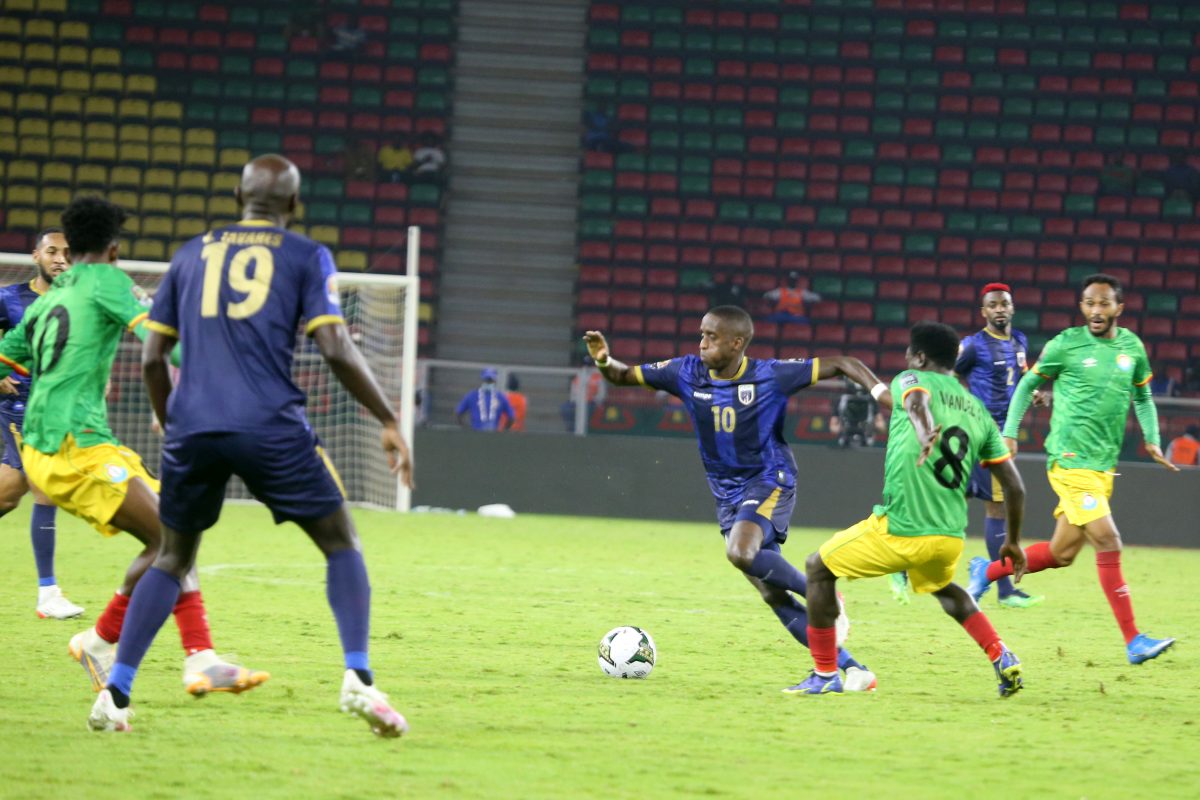
- Lead. Cape Verde, a West African archipelago of roughly 600,000 people, became the smallest nation by land area ever to reach a FIFA World Cup knockout round — then forced Argentina, the reigning champions, to extra time.
- Fact. Goalkeeper Vozinha, 40, made eight saves in the Round of 32 on July 4, including four stops on Lionel Messi alone. FIFA awarded Cape Verde $11 million for their tournament run.
- Stake. The result lands as Africa sends its strongest-ever contingent to a World Cup, and small-nation qualification paths — expanded under FIFA’s 48-team format — are now delivering results that challenge the sport’s established hierarchy.
The match at Miami Stadium on July 4 ended 3-2 to Argentina after extra time, but the scoreline disguises how close Cape Verde came to producing what Sky Sports called the potential “biggest upset in tournament history.” Lionel Messi gave Argentina the lead in the 29th minute, but Deroy Duarte equalised before half-time. Lisandro Martínez restored Argentina’s advantage in the 92nd minute, only for Sidny Lopes Cabral to fire in a stunning 103rd-minute leveller — described widely as a goal-of-the-tournament contender. Cristian Romero’s header deflected off Diney Borges for the 111th-minute winner.
A goalkeeper who became a symbol
Vozinha’s performance anchored the entire campaign. The 40-year-old shot-stopper made four saves on Messi in the closing hour alone, including a point-blank stop from just yards out. “We have dignified Cape Verde as a national team in most parts of the world,” Vozinha said after the final whistle. “Today, we fought on equal footing against Argentina.” Defender Pico Lopes, who played alongside Vozinha for years, acknowledged the goalkeeper had long been underestimated: “He’s a legend in Cape Verdean football.”
Coach Bubista, who prepared a side whose entire population would fit into roughly one-third of a mid-sized European football stadium, kept his assessment grounded: “We want to evolve so that we can have more opportunities to face the so-called big dogs of the tournament.”
Group stage: three draws including Spain
Cape Verde qualified for the knockouts without winning a single group game — finishing second in their group with draws against Spain (0-0), Uruguay (2-2), and Saudi Arabia (0-0). The 0-0 against Spain, the reigning European champions, was itself a landmark result. The Blue Sharks were one of four World Cup debutants in 2026, alongside Jordan, Curaçao and Uzbekistan, having sealed their place with a 3-0 win over Eswatini in Praia on the final day of African qualifying.
Their run illustrates a structural shift in African football. As NPR noted in its coverage of the African contingent’s overall performance this tournament, Cape Verde’s campaign sits alongside Morocco’s deep run and Senegal’s group-stage performances in reinforcing that continent’s emergence as a consistent source of knockout-round contenders.
What comes next
The $11 million FIFA prize represents a substantial sum for Cape Verde’s football federation and is likely to fund infrastructure that could sustain the national team’s improvement. FIFA’s expanded 48-team format — which Cape Verde benefited from directly — has created more qualifying slots for smaller African nations, meaning this tournament is more inflection point than anomaly.
Argentina advanced to the Round of 16 with the win, but the scoreline will follow Messi’s champions throughout the rest of this tournament as evidence that the expanded field has genuinely levelled the early rounds of the competition.