
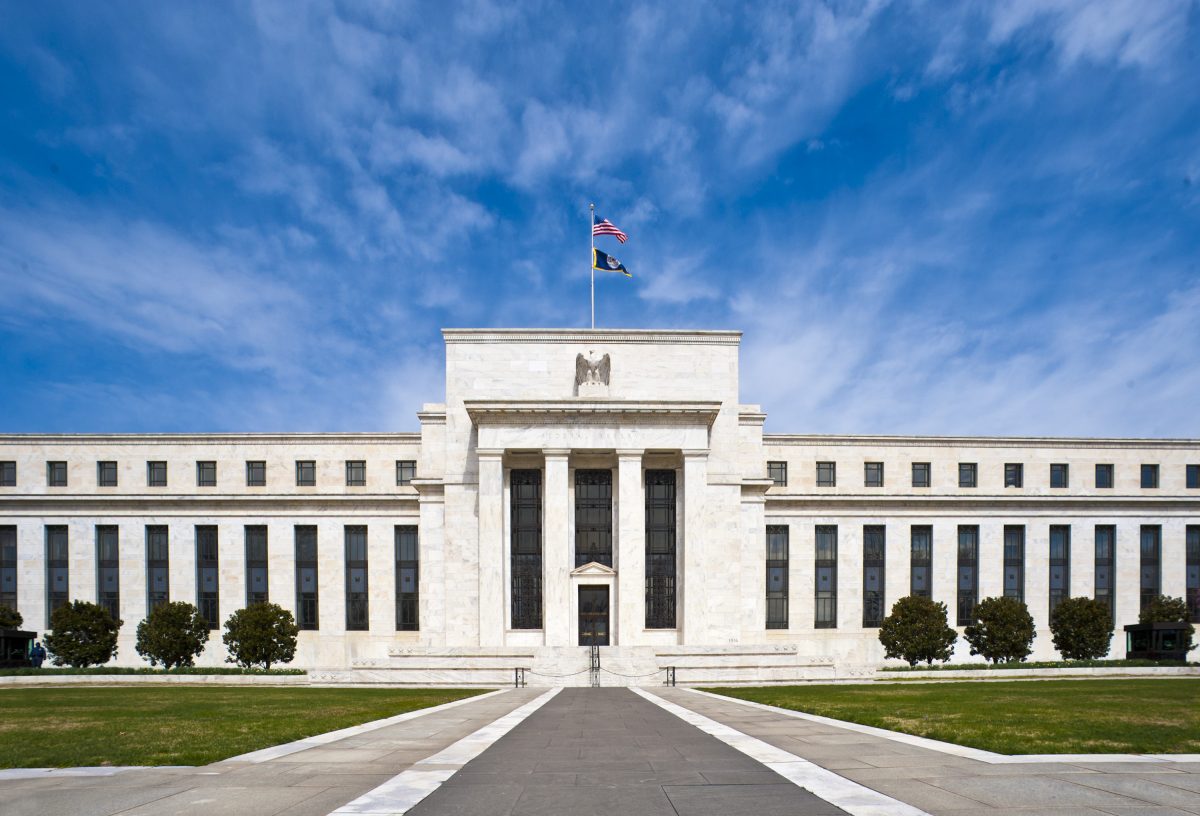
- Lead. The Federal Reserve’s September 16 rate hike to 3.75–4 per cent—its first in more than three years—is landing in emerging markets as a double pressure: currencies are weakening, import costs are rising, and growth is slowing.
- Fact. Research from the Peterson Institute for International Economics shows emerging-market central banks follow the Fed’s direction approximately 60 per cent of the time, with every 100-basis-point Fed hike typically producing a 50-basis-point response in major EM economies.
- Stake. The IMF has downgraded EM growth to 3.9 per cent for 2026 while upgrading EM inflation to 5.5 per cent—a stagflation squeeze that narrows the room central banks have to soften the blow.
The Transmission Mechanism
When the Federal Reserve raises rates, capital tends to flow toward higher-yielding dollar assets, weakening emerging-market currencies against the dollar. A weaker local currency raises the cost of imported goods—food, energy, manufactured inputs—feeding domestic inflation even when the EM economy itself is not overheating. That dynamic means a rate decision made in Washington can force the hand of central banks in Johannesburg, Mumbai, Brasília and Mexico City, regardless of whether their domestic conditions warrant tighter policy.
The Fed’s September 16 unanimous vote to raise the overnight funds rate by 25 basis points to a 3.75–4 per cent target range—the first hike since 2023—is particularly significant because it arrives after a long pause. Markets had partially unwound rate-sensitive positions; now they must reprice. Chairman Kevin Warsh described inflation as having been “too high for too long,” signalling that further hikes remain possible if core PCE—which rose from 3.0 per cent in December 2025 to 3.3 per cent in July 2026—does not moderate.
Which Central Banks Face the Sharpest Squeeze
PIIE analysis identifies South Africa, India, Brazil and Mexico among the emerging-market central banks most exposed to Fed-driven currency pressure. Each has experienced modest currency depreciation since the summer, and each faces above-target domestic inflation that makes aggressive easing politically difficult even as growth slows.
The Bank of Korea, which in August raised its policy rate to 3 per cent in a back-to-back hike citing sticky inflation and AI-driven demand, exemplifies the bind: South Korea’s tech-export strength provides partial insulation, but the Korean won remains sensitive to dollar moves. PIIE notes that most EM central banks held rates steady or proceeded cautiously through early 2026 as the Iran conflict disrupted supply chains and energy prices, but that calm may now end as the dollar strengthens post-hike.
The Growth-Inflation Trade-Off
The IMF’s April 2026 World Economic Outlook placed EM growth at 3.9 per cent—a downgrade from an earlier 4.2 per cent forecast—while marking up EM inflation to 5.5 per cent from a previous 4.8 per cent projection. The war shock has hit energy-importing emerging economies hardest, compressing real incomes and consumer demand while pushing central banks toward tighter policy to anchor inflation expectations.
Countries with larger external debt burdens face a compounding problem: dollar-denominated liabilities become more expensive to service when local currencies weaken, draining foreign reserves and constraining the fiscal space needed to offset the growth impact of higher borrowing costs. The PIIE finding—that a 100-basis-point Fed hike typically elicits a 50-basis-point EM response—suggests that central banks in these markets do not have the luxury of ignoring Washington’s move.
The practical result is likely to be a wave of EM rate decisions in the weeks ahead, with policymakers from South Africa to India weighing the cost of following the Fed against the cost of currency weakness and imported inflation. Whether any of them can engineer a soft landing—containing prices without triggering a recession—will shape how much of the global economy outside the United States contracts as 2026 closes.