
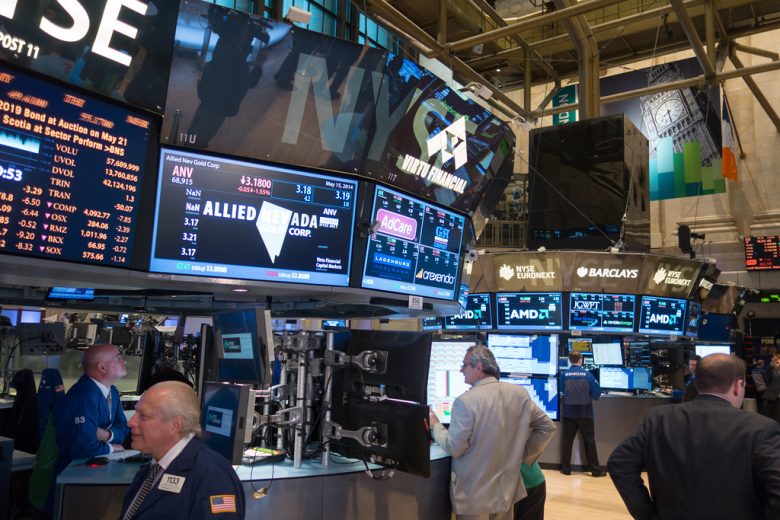
- Lead. Firmus, an Nvidia-backed AI data center company, cancelled what would have been one of Australia’s largest-ever IPOs on October 9, withdrawing its ASX listing after institutional investors refused to support a valuation near 600 times annual revenue.
- Fact. The planned offering of roughly A$11 per share implied a $30.6 billion equity valuation for a company that generated approximately $51 million in fiscal 2026 sales — a multiple that proved untenable as global borrowing costs stayed elevated and AI infrastructure financing came under scrutiny.
- Stake. The collapse, coming days after OpenAI’s revenue discrepancy rattled global AI stocks, reinforces investor pushback against the assumption that future demand commitments alone can sustain frontier AI valuations.
Nvidia-backed Firmus pulled its planned initial public offering on the Australian Securities Exchange on October 9, citing insufficient institutional demand after an attempted price-reduction failed to attract enough investors. Bloomberg described it as one of Australia’s biggest-ever IPOs that was ultimately abandoned. The firm had sought to raise roughly A$5 billion at approximately A$11 per share, implying a total equity valuation close to $30.6 billion — a figure Bloomberg noted amounted to about 600 times the company’s fiscal 2026 revenue of approximately $51 million.
The Economics of the Failed Deal
Firmus had presented investors with a forward-looking case built on $72.8 billion in contracted future revenue commitments from technology companies requiring AI computing capacity. The company’s IPO documents estimated it needed $37.7 billion to complete the construction of its five remaining planned data centres. The problem investors focused on was the debt: analysts working on the offering estimated Firmus carried roughly $30 billion in debt, meaning the enterprise value embedded in the offer was well in excess of the equity valuation alone. When weak investor demand emerged, Firmus explored reducing its offering price to approximately A$8.25 per share — a roughly 25 percent cut — but that adjustment still left the valuation proposition too rich for institutional buyers, according to GuruFocus.
The company now plans to raise capital privately and has begun exploring alternative listings, potentially including Nasdaq. Nvidia’s backing had been a selling point in the original marketing — the chip giant supplies the high-end GPUs that underpin Firmus’s capacity — but did not insulate the deal from investor scepticism about AI infrastructure financing terms.
Context: AI Valuation Fatigue
The withdrawal followed a turbulent week for AI-exposed equities. On October 8, a Financial Times report revealed that OpenAI’s annualized revenue stood at roughly $50 billion — about $20 billion below the figure that had been circulating among investors — triggering a broad selloff in AI and semiconductor stocks. Nvidia fell nearly 3 percent, AMD dropped around 4 percent, and the Nasdaq declined by more than 1 percent. Bloomberg framed Firmus’s IPO collapse as a direct symptom of the same dynamic: investors applying greater scrutiny to the gap between AI infrastructure capital requirements and near-term revenues.
The pattern echoes concerns raised about the Anthropic IPO process, where a $2 trillion valuation target attracted scepticism from analysts who argued the figure rested on forward projections that assumed sustained AI revenue compounding for years. For Firmus, the arithmetic was starker: its revenue multiple was not a projection but a present-day fact.
Broader Market Signal
For the AI infrastructure sector, the Firmus outcome is a data point in a growing debate over whether the capital expenditure cycle — driven by hyperscalers committing to enormous AI buildouts — can support the valuations being assigned to companies further down the supply chain. Firmus’s future-revenue commitments of $72.8 billion are real contracts, but delivering on them requires navigating $37.7 billion in construction costs at a time when financing is more expensive than at any point since 2007, when the 10-year US Treasury yield last traded near current levels of 5.25 percent. The IPO’s failure does not signal the end of demand for AI compute capacity, but it suggests the market is becoming more precise about the conditions under which it will fund that demand.