
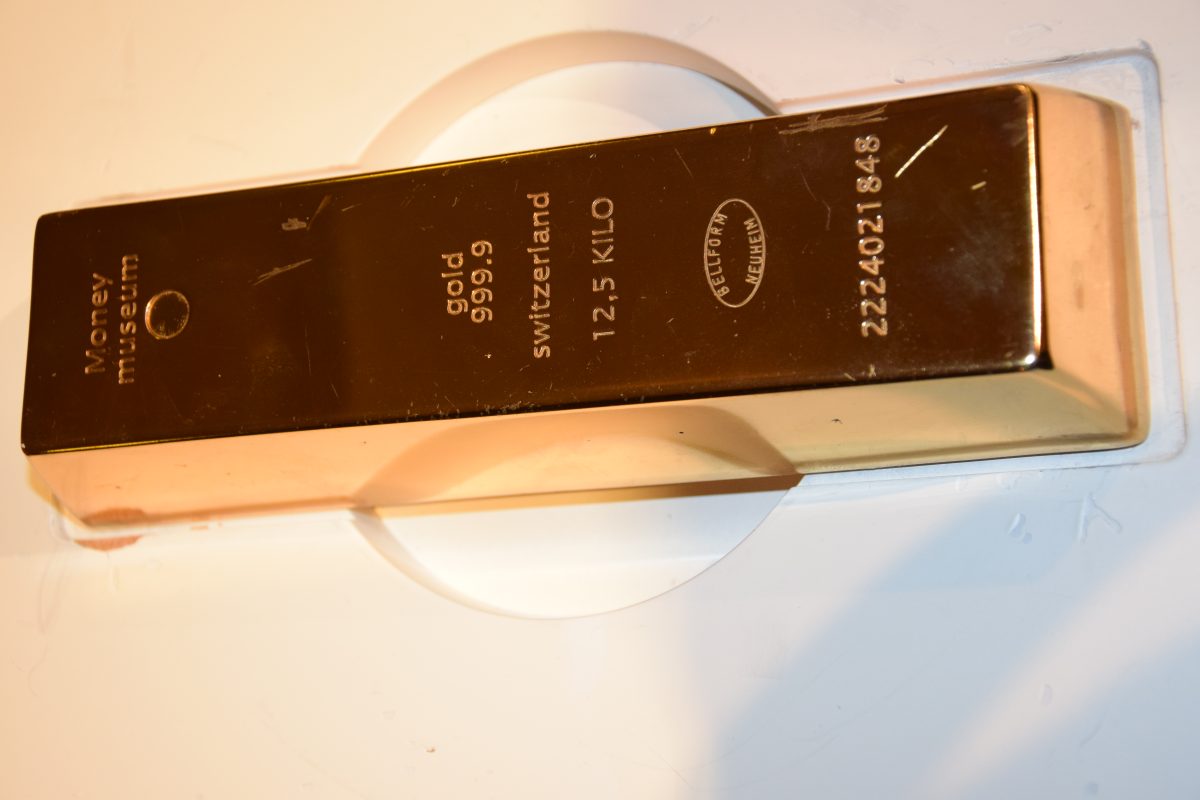
- Lead. Spot gold rose 2.1% to $4,342.35 on Friday after US nonfarm payrolls fell 23,000 in July — a result that missed the 80,000 consensus gain by more than 100,000 positions and revived market expectations of a Federal Reserve rate cut as early as September.
- Fact. The Friday move lifts gold roughly 8% from the $4,020 bear-market territory it held in late June, though the metal remains 22% below its January 2026 record high of $5,598.
- Stake. Institutional investors in China have been building long positions in gold-backed assets throughout the summer as a hedge against technology-sector volatility, and central-bank buying programmes — particularly from emerging-market reserve managers — have provided a structural floor that prevented the kind of drawdown typical of a rate-hold cycle.
Spot gold settled at $4,342.35 per troy ounce on Friday, its sharpest single-session gain since March, according to trading data cited by TheStreet. The catalyst was the US Bureau of Labor Statistics jobs report released at 8:30 a.m. Eastern, which showed nonfarm payrolls contracting by 23,000 in July — the first outright monthly loss in 2026 and a reading that sent Treasury yields sharply lower across the curve.
The Jobs Report Shifted Rate Expectations
Before the payrolls number, fed-funds futures had priced roughly a 30% probability of a September cut. After the release, that figure moved above 65%, according to CME FedWatch data. Lower rates reduce the opportunity cost of holding non-yielding assets like gold, making the metal more attractive relative to Treasuries and money-market instruments. The US unemployment rate fell to 4.1% in July, an apparent contradiction that the Bureau of Labor Statistics attributed largely to a drop in labour-force participation rather than an increase in hiring — a reading most analysts treated as reinforcing the case for easing rather than complicating it.
Gold had been in bear market territory as recently as late June, trading at $4,020 — down 28% from January’s record peak — as the Federal Reserve held rates steady amid a then-resilient labour market and sticky services inflation. The Friday session represents the second week of consecutive gains as that labour-market picture has deteriorated.
Structural Demand Has Not Wavered
Central banks across emerging markets continued adding to gold reserves through the second quarter, a trend that has provided a demand floor even during months when price momentum turned negative. Chinese institutional investors have maintained or increased long positions in physically backed gold exchange-traded products, partly as a hedge against domestic equity volatility linked to the ongoing US chip-export restrictions. Geopolitical tension — including the ongoing Iran conflict and uncertainty over the durability of the ceasefire — has added a periodic safe-haven premium that analysts say is difficult to price out of the forward curve.
Analysts at Mining.com cited by TheStreet raised their 12-month price target to $4,920 after Friday’s move, noting that a September rate cut, if delivered, would likely push gold back toward the psychologically significant $5,000 level. The metal has not closed above $5,000 since January 14, the day of its record high.
Short-Term Technicals
Gold’s 14-day relative strength index crossed back above 50 on Friday for the first time in six weeks, and the metal regained its 50-day moving average during the session — two technical triggers that systematic trend-following funds typically respond to with incremental position additions. The next significant resistance level on most chart frameworks sits at $4,450, with the 200-day moving average near $4,610. Volatility in the VIX index, which fell to 14.90 on Friday — its lowest close in three weeks — suggests equity markets are not pricing acute near-term risk, a backdrop that historically correlates with gradual rather than sharp gold appreciation.