
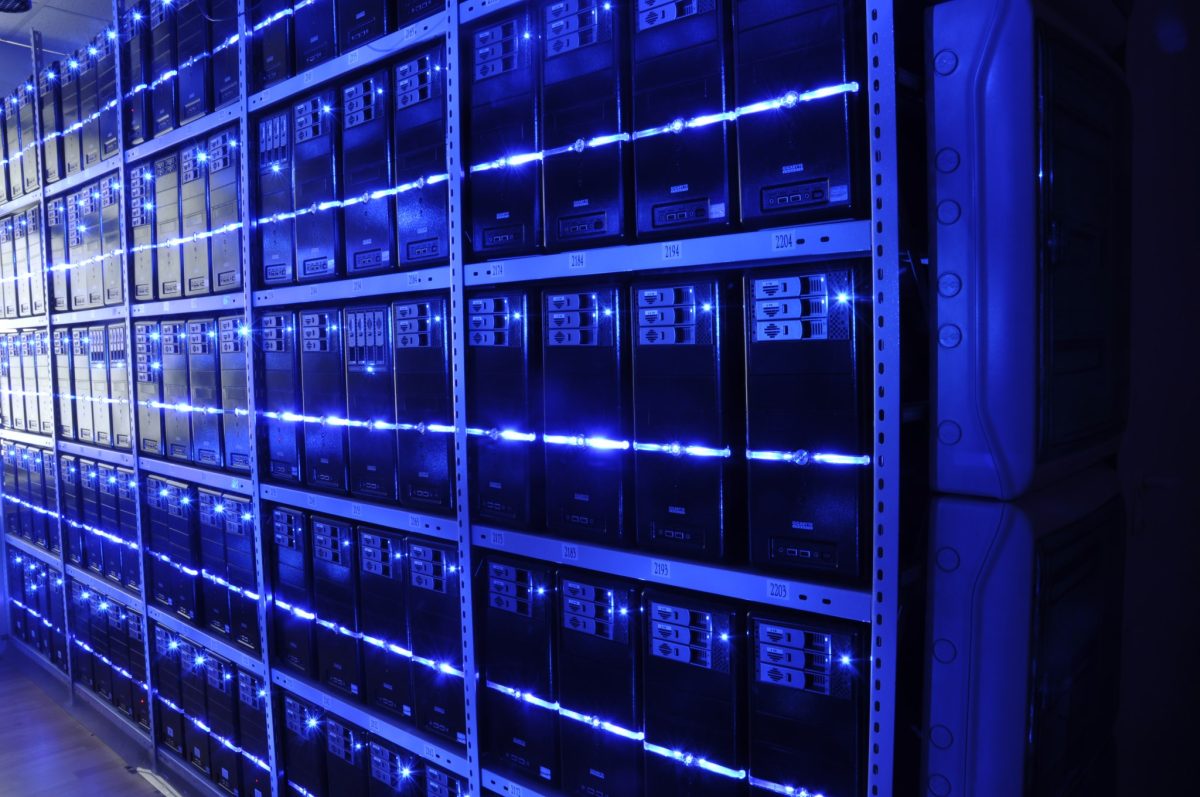
- Lead. Nvidia agreed Monday to guarantee as much as $105 billion in financing for a new AI data centre campus in Ohio where OpenAI will serve as anchor tenant under a 20-year lease — completing a deal that was first reported at $250 billion and was revised downward twice before it closed.
- Fact. The Pike County campus, built on land that formerly housed uranium enrichment operations, will ultimately deliver 8 gigawatts of computing capacity; the first 800 megawatts are expected online by 2028, with SoftBank’s SB Energy building and operating the facility.
- Stake. The $145 billion drop from initial reporting to the final figure has prompted fresh scrutiny of whether AI infrastructure investment announcements reflect genuine near-term demand or financial and political incentives to project scale — a question that will not be answered until OpenAI begins paying for compute in 2028.
The deal was announced by Nvidia and SB Energy, a subsidiary of SoftBank Group. OpenAI will lease the computing capacity for 20 years, while Nvidia serves as exclusive chip provider and backs defined portions of lease and power payments until capacity becomes available. Nvidia addressed concerns about circular financing by clarifying that “OpenAI will pay the lease” — the guarantee covers obligations on OpenAI’s behalf during the construction and ramp-up phase, not a direct capital transfer to either counterparty.
A Deal That Shrank Twice
The trajectory of the announced figures tells its own story. Al Jazeera reported on July 27 that Nvidia was considering a guarantee of $250 billion. The Wall Street Journal then reported on August 14 that Nvidia had already reduced the figure to “less than $120 billion.” The final number, confirmed Monday at $105 billion, sits $145 billion below the original report. Nvidia has not publicly explained the revisions. The company also made a separate $1.5 billion equity investment in SB Energy as part of the agreement.
Fortune described the outcome as a deal “coming in $145 billion lower than reported — signaling concerns of artificial demand for chips.” The phrase “artificial demand” points to a risk analysts have raised about large-scale AI infrastructure commitments: that the economics of announced deals are driven as much by the need to demonstrate pipeline and political goodwill as by actual booked orders from AI model developers.
Scale and Economic Claims
The project remains enormous by any standard. One gigawatt of computing capacity can power roughly 750,000 U.S. homes; 8 gigawatts would place the Pike County campus among the largest facilities in the world. The energy infrastructure required — 10 gigawatts of new generation capacity — will be sourced from the SB Energy power development that SoftBank is building alongside the compute infrastructure. The site, located at the PORTS-Pike Technology Campus in Pike County, Ohio, occupies a combination of private land and federal property that required coordination with the Department of Energy.
The Trump administration cited the announcement as a significant policy win, consistent with its pattern of claiming credit for large-scale domestic investment commitments. The project is projected to support 35,000 construction jobs through 2032 and 2,500 long-term positions.
What It Means for Nvidia and OpenAI
Nvidia has been assembling multiple large-scale financing arrangements as it repositions itself as not just a chip supplier but a financial enabler of the broader AI infrastructure buildout. The Ohio deal is its largest loan guarantee of this type to date. For OpenAI, the agreement secures a committed compute pipeline backed by the world’s most valuable chip company, insulating it from the spot-market pricing volatility that has affected smaller AI developers competing for data centre capacity.
The first 800 megawatts are expected to come online in phases beginning in 2028. Revenue that justifies the full $105 billion guarantee will not be visible for at least two years — a timeline that makes the deal’s economics contingent on AI model demand sustaining at current growth rates through a period when both regulatory and competitive pressures on the sector are intensifying.