
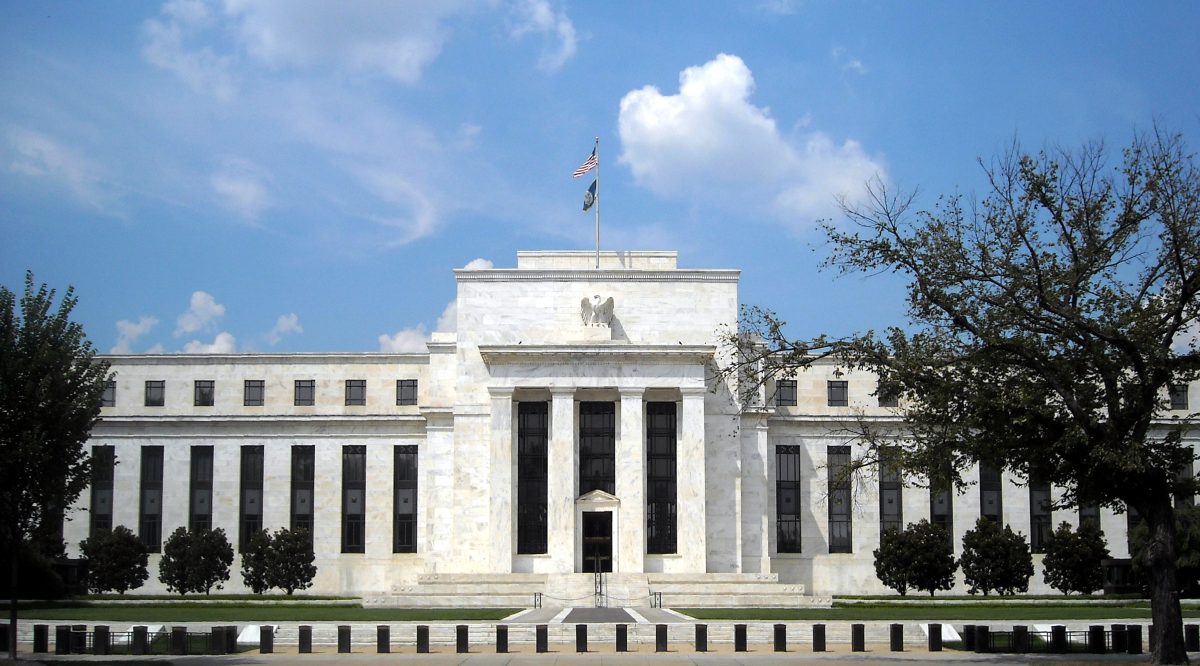
- Lead. The probability of a Federal Reserve rate hike at its 29 July meeting has tripled over the past seven days — rising from 12 percent to 38 percent, according to CME FedWatch data — after crude oil crossed $100 per barrel for the first time since May, driven by the Iran-US conflict’s second week.
- Fact. The Fed is still expected to hold its benchmark rate in the 3.50%–3.75% range, which would mark the fifth consecutive meeting without a change, but the pace at which hike expectations have repriced reflects how quickly the energy shock has altered the calculus.
- Stake. A July or September hike from Chair Kevin Warsh would be the first increase under his chairmanship and the first tightening move in more than three years — arriving precisely as tariff-burdened households are also absorbing $100 gasoline prices.
What Changed in Seven Days
The shift in market positioning has been abrupt. As recently as mid-July, traders were pricing in a less than one-in-eight chance of tightening at the July meeting. Then two things happened in quick succession: Iran-related disruptions pushed Brent crude past $100 — a threshold not seen since May, as earlier Iran escalation had already driven oil to $87 — and US CPI for May came in at 4.2% year-on-year, the largest 12-month gain since April 2023.
Nigel Green, chief executive of deVere Group, put it plainly: “The Fed will find holding steady a harder case to make than it looked even a few weeks ago.” Gregory Daco of EY-Parthenon added that while a July hike “remains highly unlikely, the September FOMC meeting could become the first meaningful test of whether the recent improvement in inflation proves durable.”
Warsh’s Deliberate Ambiguity
Fed Chair Kevin Warsh made his most recent public comments at the ECB Forum in Sintra on 1 July, where he described inflation as “too high” while declining to offer any specific guidance on the July meeting. Warsh has since removed the traditional forward-guidance language from Fed communications, substituting instead a commitment to “pure data dependence” — a framing that provides maximum flexibility but maximum uncertainty for markets.
At the June FOMC meeting, nearly half of policymakers indicated they would support a rate increase before year-end if inflation remained sticky, according to the published minutes. That internal openness to tightening, combined with the energy shock, helps explain why a three-fold jump in hike probability happened without a single Fed statement.
What Comes After 29 July
Even if the Fed holds on Wednesday — the most probable outcome — three data points will determine whether September becomes a live decision: the July CPI print (due 13 August), the path of crude oil as Iran-US negotiations either resume or collapse, and the degree to which tariff pass-through into core goods inflation becomes measurable in the August PPI report.
Resurgent energy prices are a particular problem for a central bank already grappling with services inflation that has proven stickier than projected. If oil remains above $90 through August, the pass-through into airline fares, freight costs, and utilities could push September’s headline CPI well above the Fed’s 2% target. That, in combination with a labour market that has remained tighter than most forecasts anticipated, would leave Warsh with little room to maintain the current pause.
Wednesday’s press conference at 2:30 PM ET will be the first real test of how Warsh frames the new inflation environment — and whether any shift in tone signals a September move.