
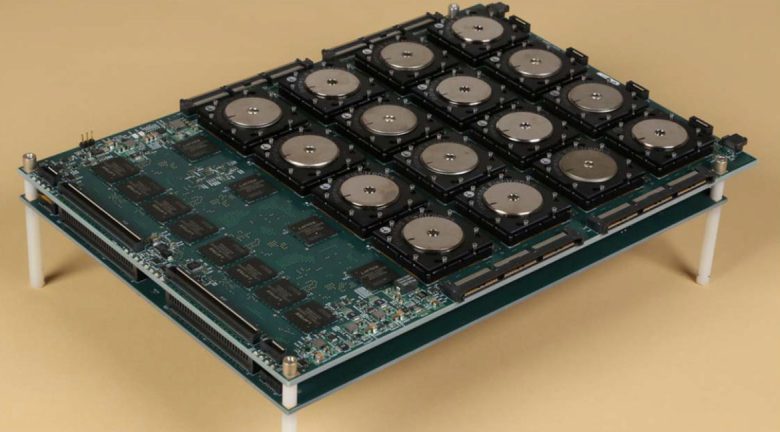
- First chip. OpenAI has unveiled Jalapeño, its first custom AI inference processor, developed with Broadcom in nine months from initial design to tape-out.
- Cost driver. The chip targets performance-per-watt gains over current alternatives, with early testing described as “materially stronger” — a direct challenge to the Nvidia GPU dominance that defines AI infrastructure costs.
- Stake. As OpenAI prepares for a September IPO projecting $14 billion in operating losses, reducing inference costs per token is central to its path toward profitability.
What Jalapeño is and why it was built
On June 24, 2026, OpenAI and Broadcom jointly announced Jalapeño, an application-specific integrated circuit (ASIC) designed from the ground up for AI inference — the process of running pre-trained models to respond to live user requests. Unlike the general-purpose GPUs made by Nvidia, ASICs sacrifice flexibility for efficiency: they cost less to operate and consume less power per task, but cannot easily be repurposed for other workloads.
OpenAI President Greg Brockman framed the chip as the product of deep workload knowledge accumulated from operating one of the world’s largest consumer AI platforms. “We have a deep understanding of the workload. We’ve really been looking for specific workloads that are underserved,” Brockman said. Jalapeño’s development was itself accelerated by OpenAI’s own AI models, which the company says helped compress a design cycle that typically takes several years into just nine months — what it described as potentially the fastest ASIC development cycle ever achieved in high-performance advanced semiconductors.
The Nvidia dependency problem
OpenAI, like most frontier AI labs, currently depends almost entirely on Nvidia GPUs for both training and inference. That dependence carries a cost that grows with every additional query served to ChatGPT’s hundreds of millions of users. The company has been explicit that pre-training — the compute-intensive process of building models from scratch — will continue to rely on Nvidia hardware for the foreseeable future. Jalapeño is not a full replacement: it targets the inference layer, where the economics of scale are most punishing.
Google has operated its own tensor processing units (TPUs) for nearly a decade, and Amazon has deployed its Trainium chips across AWS. OpenAI’s move brings the last major frontier AI lab into the custom silicon market. The announcement also positions Broadcom, already a significant player in custom chip design, as a preferred partner for AI labs seeking an alternative to Nvidia. Broadcom CEO Hock Tan said deployment of Jalapeño would begin at small scale in late 2026, with a full ramp in the first half of 2028.
Infrastructure strategy at IPO scale
The timing of the announcement — roughly three months before OpenAI’s targeted September IPO — is not incidental. OpenAI’s S-1, filed in June 2026, projects approximately $14 billion in operating losses for the full year, a figure driven substantially by the cost of compute. Building proprietary inference infrastructure is one of the clearest levers available to reduce that number over a multi-year horizon without sacrificing model quality or user experience.
OpenAI has described its infrastructure strategy as owning “the full AI infrastructure stack — spanning chip architecture, memory systems, networking, scheduling, and deployment systems.” Jalapeño is the first physical artifact of that ambition. The companies said they are targeting gigawatt-scale data center deployments with Microsoft and other partners beginning in 2026.
The move comes as the broader AI chip market is under pressure from multiple directions. As this publication reported earlier this week, Qualcomm is also pursuing a $14 billion AI chip push, including potential talks to acquire chip startup Tenstorrent. Competition in custom silicon is accelerating at the same moment that Nvidia’s dominance is drawing scrutiny from the Department of Justice over possible antitrust violations.
What comes next
Jalapeño remains in testing as of late June 2026. The chip’s performance advantage will only be confirmed when it enters production at scale, and the trajectory of cost reduction will depend on how quickly Broadcom can manufacture at volume and how well OpenAI’s software stack adapts to ASIC constraints. For now, the announcement signals that the era of frontier AI labs as pure software operations — dependent entirely on third-party chip suppliers — is drawing to a close.