
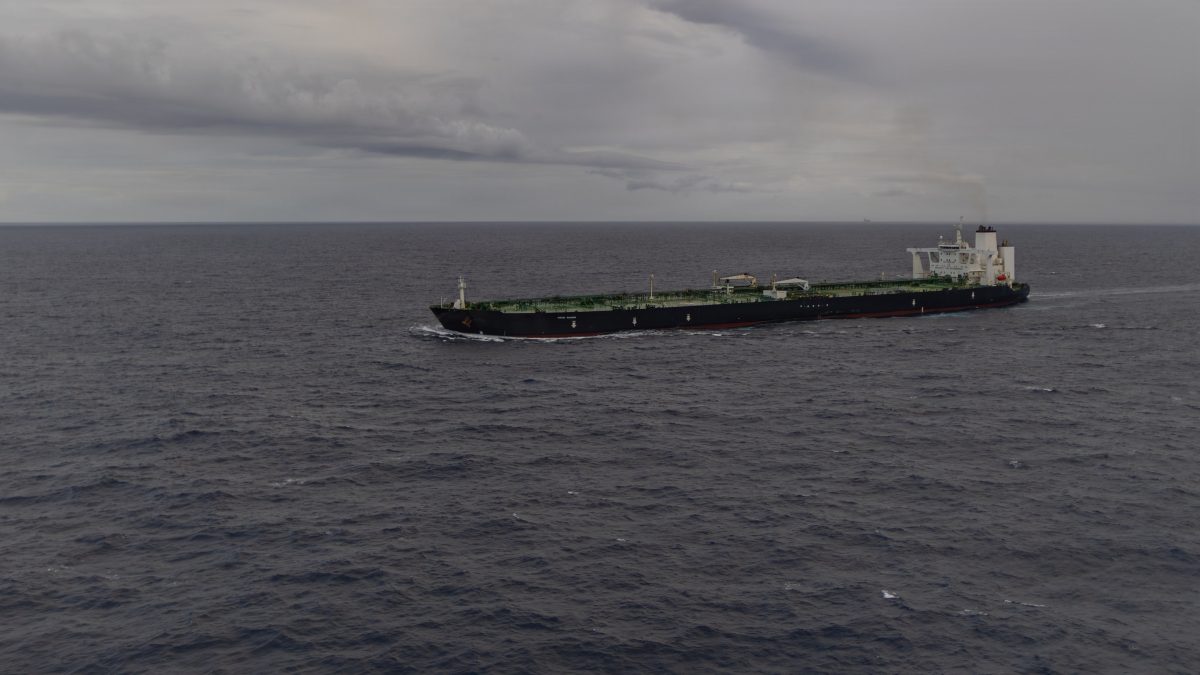
- Lead. For the first time in this conflict, Royal Marine Commandos have physically seized a vessel suspected of carrying Russian crude oil in breach of Western sanctions — a dramatic enforcement step that moves the shadow fleet pressure campaign from the ledger to the high seas.
- Fact. In a coordinated fortnight of action, the UK designated 27 newly sanctioned vessels (20 of them oil tankers) and 43 additional entities, while the EU simultaneously approved a package covering 34 individuals and 47 entities including Lukoil-Western Siberia; more than 600 shadow fleet vessels are now sanctioned by the UK alone.
- Stake. Russia’s ability to generate oil revenues depends on informal shipping networks operating through Turkey, the UAE, Hong Kong and elsewhere; the West is now moving beyond designating ships on paper to boarding and arresting their crews.
On June 14, 2026, Royal Marine Commandos boarded and seized the SMYRTOS — a vessel carrying approximately $30 million worth of Russian crude oil — on suspicion of sanctions breach. The ship’s captain was arrested. The action, reported by maritime law firm Hill Dickinson in its June 2026 sanctions update, marked an escalation from financial and trade designations to physical interdiction.
A coordinated fortnight
The boarding was the centrepiece of a broader coordinated push. Two days later, on June 16, the UK announced 27 newly designated vessels — 20 of them oil tankers — alongside 43 further individual and entity designations spanning military equipment suppliers in China, Thailand and Turkey, as well as crypto and illicit finance networks. More than 600 shadow fleet and Russian LNG vessels are now under UK sanctions in total.
On June 15, the EU Council approved a parallel “mini” package: 34 individuals and 47 entities, of which 24 are specifically linked to the shipment or export of Russian crude oil or petroleum products. The package also targets Lukoil-Western Siberia. The EU’s proposed 21st sanctions package, announced on June 9 and awaiting formal approval, goes further still — adding 32 more vessels to the list and proposing restrictions on 31 Russian banks and 20 third-country banks, crypto firms and oil traders used to move money through the cracks in existing measures.
Widening the net
The enforcement push has also targeted financial infrastructure. On May 26, the UK designated 18 entities focused on crypto networks, including what it described as the A7 network — a Kremlin-backed system used to route money around sanctions. On June 17, the UK’s Office of Financial Sanctions Implementation fined Sabre Global Technologies £1 million for providing Ural Airlines access to its distribution system after the 2022 sanctions came into force.
The pressure fits a broader pattern. Western governments have moved from broad energy restrictions to specific enforcement actions: targeting the ships, the companies that own them and the financial infrastructure that enables them to operate. As Russia continues its largest aerial campaigns of the war, the question is how quickly the shadow fleet enforcement translates into reduced revenues available to fund them.