
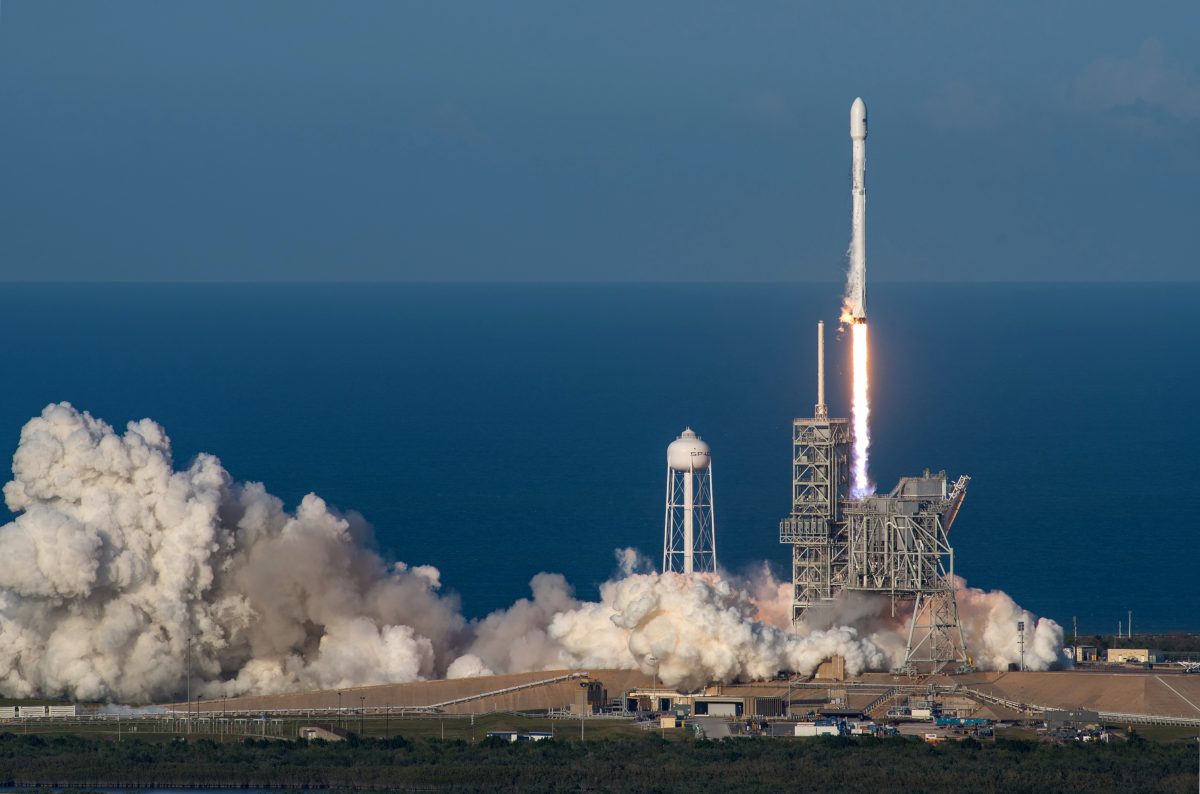
- Lead. SpaceX is set to finalise pricing of $135 per share after US market close on June 11, locking in a $75 billion raise at a $1.75 trillion valuation that would make it the largest initial public offering in stock market history.
- Fact. The offering drew roughly $150 billion in investor demand against a $75 billion target—nearly double oversubscription—with bookbuilding by 21 participating banks concluding this week ahead of the Nasdaq debut under the ticker SPCX on June 12.
- Stake. SpaceX’s listing will force major index-tracking funds to absorb billions in new stock within days of inclusion in the Nasdaq-100, creating structural demand that analysts estimate at roughly $7 billion, while the company’s publicly disclosed financials will for the first time expose the economics of Starlink and the cash-burning xAI segment to public markets scrutiny.
The offer
SpaceX targeted a fixed price of $135 per share from the outset of its roadshow—bypassing the traditional book-build range process—with 555.6 million shares on offer. At that price and valuation of approximately $1.75 trillion, the raise eclipses Aramco’s 2019 record-setting IPO and every other listing in history. The roadshow launched on June 4, accelerated by a quicker-than-expected SEC review. Around 125 analysts from 21 banks met SpaceX management during the process, and a dedicated retail investor event for approximately 1,500 participants was held on June 11, according to CNBC.
The company is also expected to join the Nasdaq-100 index tracked by the QQQ ETF within 15 trading days of its debut, generating a mechanical buying wave from passive funds that analysts estimate at around $7 billion. That structural demand floor has contributed to the froth in the book.
What the S-1 reveals
SpaceX’s public filing disclosed 2025 revenues of $18.67 billion against a net loss of $4.94 billion. The headline loss obscures a profitable core business: the Starlink satellite internet division generated $11.39 billion in revenue with an adjusted EBITDA margin of 63%, serving 10.3 million subscribers as of early 2026. Launch services—approximately 130 Falcon 9 missions in 2025—contribute a stable profit stream, with SpaceX commanding roughly 60% of the global commercial launch market.
The drag comes from the xAI segment, which posted a $6.36 billion operating loss in 2025 on $3.2 billion in revenue, and consumed $12.7 billion in capital expenditure last year alone. That segment’s capital intensity—76% of group capex in Q1 2026—is the central risk factor for new public shareholders: the orbital data-centre and AI infrastructure strategy is speculative and unproven at scale, yet it is absorbing most of the cash that Starlink generates.
Competitive context
SpaceX’s debut arrives as the AI and deep-tech IPO pipeline is unusually full. Rival Anthropic filed its own confidential S-1 at a $965 billion valuation earlier this week, and OpenAI submitted draft registration statements to the SEC on June 8. Investment bankers have characterised the cluster as a race for first-mover advantage in setting public-market pricing terms for AI-era companies. SpaceX, however, has a material advantage none of the AI labs share: it generates real revenue from hardware operations and a profitable, subscription-based consumer internet business, giving its public offering a financial foundation that pure-play AI companies cannot yet match.