
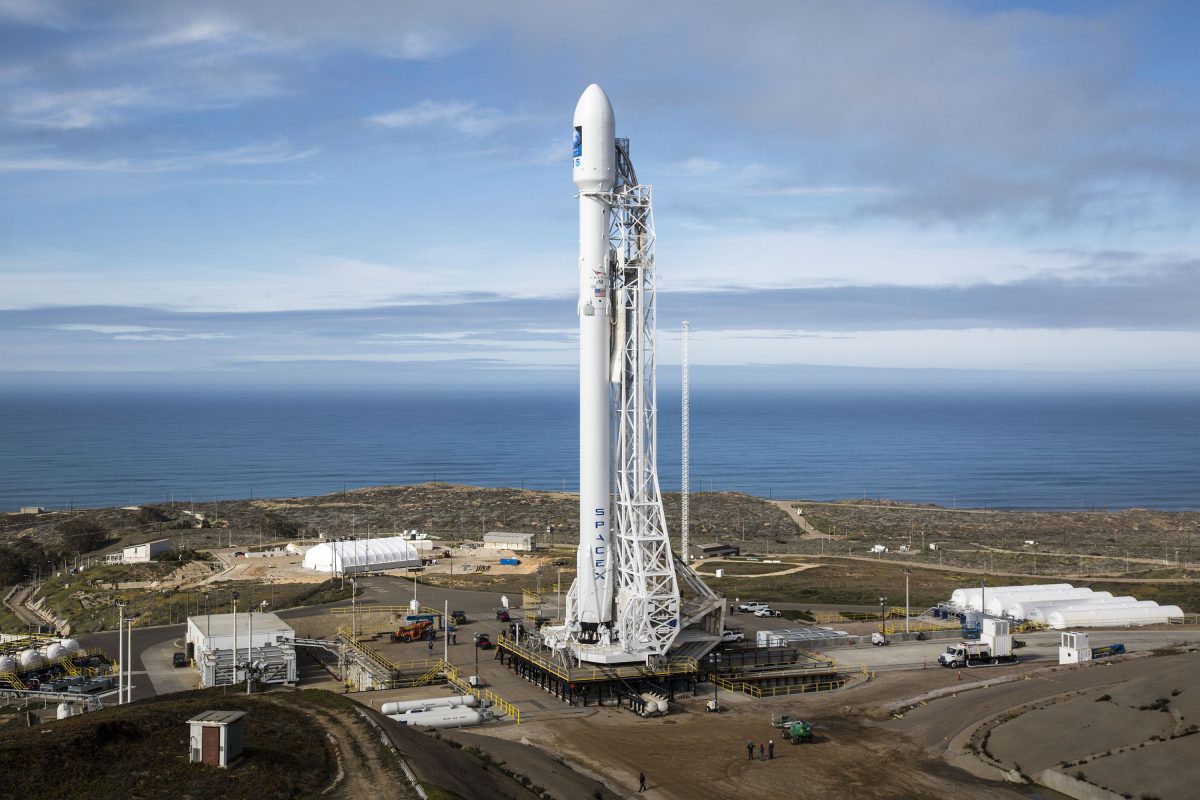
- Lead. SpaceX-xAI’s $75 billion IPO on June 12 — the largest in history — moved AI infrastructure financing from venture capital to public markets, setting a valuation benchmark that will define how OpenAI and Anthropic are priced when they follow.
- Fact. The combined entity, valued at $1.77 trillion, has already signed $30 billion in GPU compute supply agreements with Google and a contract paying approximately $1.25 billion per month from Anthropic to rent capacity from the Colossus 1 and Colossus 2 data centres.
- Stake. Grok, xAI’s model family, counts 1.3 billion supported accounts and 550 million monthly active users as of March 2026 — a distribution advantage the company can now fund at scale, even as analysts question whether its compute rental model is sustainable against the buildout plans of Google and Microsoft.
A rocket company that is now an AI infrastructure play
SpaceX filed its IPO prospectus describing the merged entity as “a vertically integrated space technology, connectivity, and artificial intelligence company” — language that signals how fundamentally the acquisition of xAI and the X platform changed what the business is. The Starlink satellite broadband network, the Colossus GPU clusters, and Grok’s model distribution across X’s 550 million monthly active users together constitute a vertically integrated AI stack that no traditional aerospace company has assembled before.
The compute deals are the clearest expression of that positioning. The $30 billion Google agreement and Anthropic’s $1.25 billion monthly rental commitment — disclosed in the IPO prospectus — reframe Colossus not as an internal asset but as a third-party AI infrastructure platform, sitting alongside Amazon Web Services and Microsoft Azure as a provider to other leading AI labs. The irony that SpaceX-xAI is supplying compute to Anthropic, which has also filed a confidential S-1 and is preparing its own IPO, was not lost on market observers.
The model quality gap and the compute workaround
Independent assessments of Grok’s technical performance against Claude, GPT-4o, and Gemini have consistently placed the xAI family behind on standard benchmarks. One industry analysis published on listing day described SpaceX as having “the worst AI” among the major labs while “still reaping the benefits of being the first big AI company to IPO” — pointing out that Grok’s shortcomings in enterprise traction are somewhat irrelevant when the revenue model is selling compute capacity rather than model subscriptions.
That is the bet embedded in the $1.77 trillion valuation: that Colossus’s physical infrastructure — data centres, power contracts, cooling systems, and the Starlink network as a distribution layer — constitutes a defensible moat even if Grok never closes the gap with rivals on model quality. The SpaceX IPO prospectus made four major Grok iterations, the latest updates from June 2026, available to investors as evidence of continued model investment.
What the IPO sets in motion
The shift from VC to public markets is not merely a financing event. It changes the pressure cycle on AI labs. Public shareholders expect quarterly disclosure, margin trajectory, and a path to profitability — disciplines that venture-backed labs have deferred indefinitely. SpaceX-xAI’s prospectus acknowledged the combined entity remains loss-making overall, with profitability in the legacy aerospace business offset by AI infrastructure losses.
Analysts raised a pointed sustainability question: “I don’t see this rental business as sustainable,” given that both Google and Anthropic are simultaneously expanding their own compute capacity and may exit their Colossus rental agreements once internal buildout is sufficient. The $75 billion in fresh capital gives SpaceX-xAI the runway to expand Colossus to a scale at which switching costs and physical constraints make exit difficult — but executing that race against Google’s TPU investment and Microsoft’s Azure AI buildout is the core execution risk the new public shareholders are absorbing.