
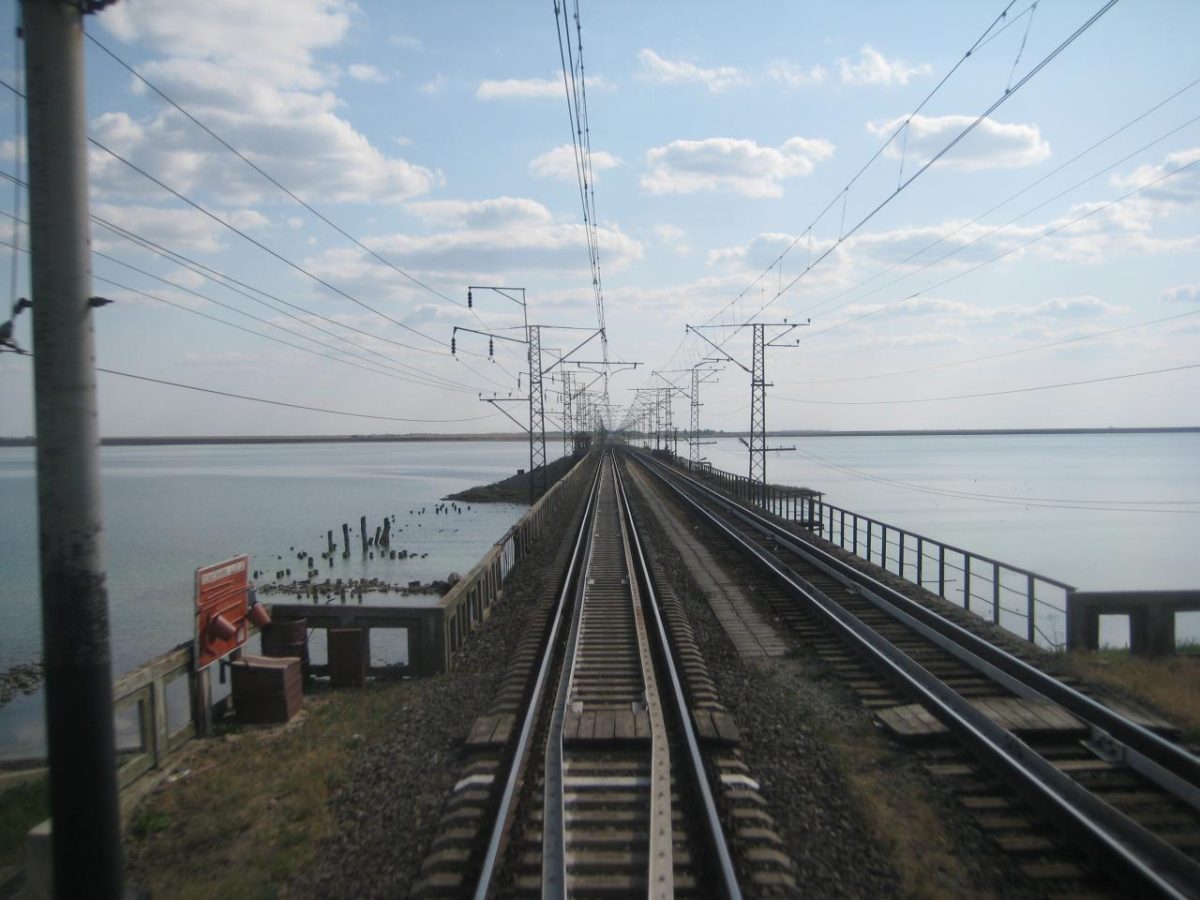
- Lead. Ukraine’s Special Operations Forces announced on June 23 that the railway bridge over the North Crimean Canal — a key logistics corridor connecting Crimea to the broader supply network — had been destroyed in a two-phase overnight operation, telling reporters: “The railway bridge across the North Crimean Canal in Crimea no longer exists.”
- Fact. The overnight operation struck more than 60 Russian military targets across occupied Crimea, including oil storage facilities, electrical substations, an Nebo-U radar station, a Pantsir-S1 air-defense system, and an S-300 launcher, while the Kerch Bridge was closed for more than five hours.
- Stake. Ukraine’s defence minister framed the operation as part of a broader campaign: “In the near future, it appears that the Crimean peninsula will turn into an island,” Mykhailo Fedorov said, citing what he called a “logistics lockdown” strategy targeting Russia’s supply corridors into Crimea.
The two-phase operation began overnight on June 22 with an initial strike that collapsed one span of the bridge near Rozdolne village in occupied Crimea, followed by a second strike on June 23 that destroyed repair equipment and the remaining sections. Ukraine’s Special Operations Forces described the action as “the first” such railway bridge to be eliminated in occupied Crimea, according to the Kyiv Independent.
Breadth of the Strike Package
The overnight operation extended well beyond the railway bridge. Ukrainian forces reported destroying three Orion reconnaissance drones, a Nebo-U radar station, a Pantsir-S1 air-defense system, and an S-300 launcher. Oil storage at the Kerch thermal power plant was struck, as were an electrical substation in western Crimea and a gas distribution station in Simferopol. The Kerch Bridge — the 35-kilometre crossing linking Crimea to the Russian mainland — was closed to traffic for more than five hours. By morning, multiple Crimean settlements, including Yevpatoriia, Saky, and Simferopol, reported widespread power outages.
The Logistics-Lockdown Strategy
Defence Minister Fedorov framed the strikes not as isolated incidents but as part of a systematic campaign to cut Russia’s ability to supply its forces through Crimea. He said Ukraine had contracted 300% more medium-range strike drones in the first four months of 2026 than in all of 2025, and announced a dedicated “logistics lockdown” programme funding military units for rapid drone deployment.
Russian-backed occupation authorities in Crimea responded by suspending all passenger train services within the peninsula and banning civilian gasoline sales. Governor Sergei Aksyonov ordered the suspension of all summer camp reservations through September 1. Russian military bloggers — a reliable barometer of domestic dissatisfaction — criticised the Kremlin’s lack of a meaningful public response to what they described as Ukraine’s effort to turn Crimea into an “island.”