
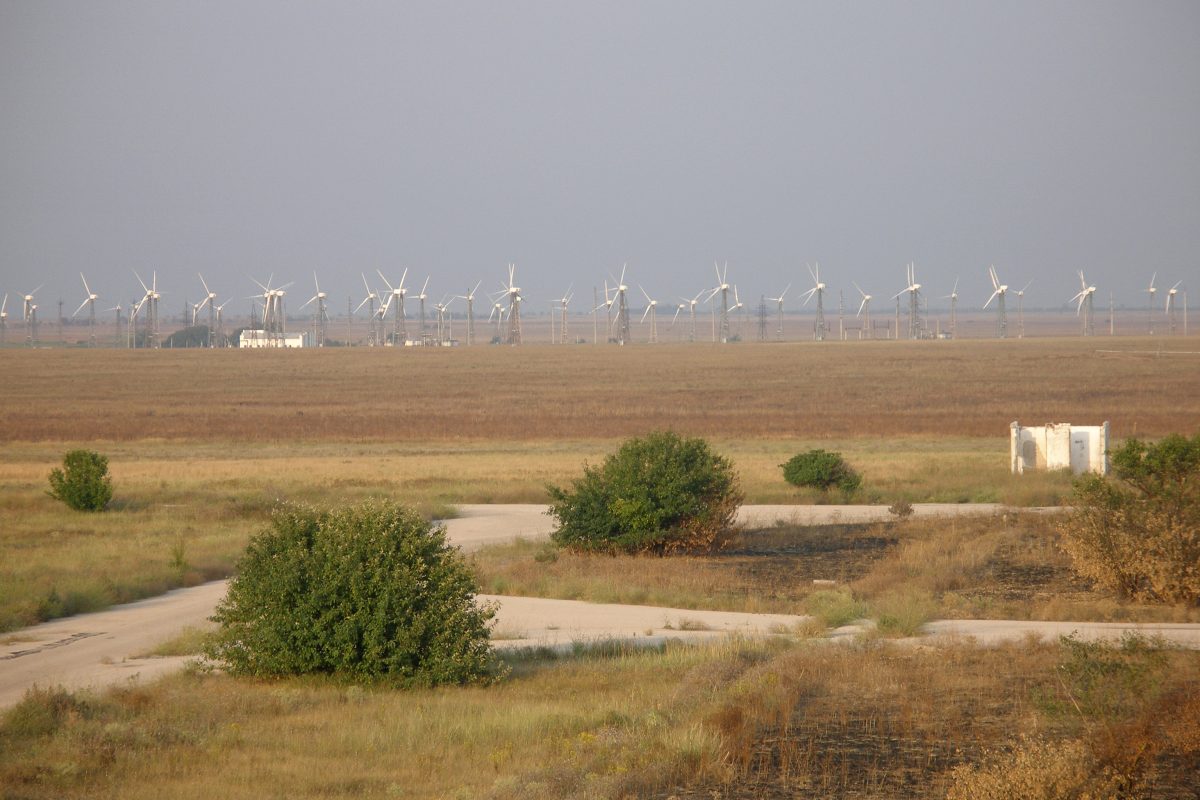
- Lead. Ukrainian Defense Forces struck the Hvardiyske airfield in occupied Crimea on the night of July 4–5, targeting one of Russia’s primary bases for tactical and naval aviation on the peninsula.
- Fact. The same 48-hour window saw 16 power stations across Crimea hit, triggering blackouts across the occupied peninsula — the most intensive infrastructure campaign against Crimea since the war began.
- Stake. The strikes fit a documented collapse in Russia’s territorial gains: the advance rate in June fell to just 1.03 square kilometres per day, down from 16.6 sq km daily in early 2025, while the monthly casualty rate reached 39,490 personnel in June alone.
Ukraine’s General Staff reported the Hvardiyske strike on July 5, describing the airfield as hosting “operational-tactical and naval aviation” and serving as a key logistics and maintenance hub for Russian air power in Crimea. The exact damage assessment remained under evaluation at the time of reporting. Alongside the airfield, Ukrainian forces struck three ammunition depots — in Makiivka (Donetsk region), Dovzhansk (Luhansk region) and Preobrazhenka (Kherson region) — and destroyed two road bridges used to move personnel and supplies: one across the Hruzkyi Yalanchyk River near Huselnikove, another across the Kalmius River near Staromariivka in Donetsk Oblast, according to Ukrinform.
Logistical Lockdown deepens
The Hvardiyske operation is the latest increment in what military analysts have labelled Ukraine’s “Logistical Lockdown” campaign, which in June 2026 produced 303 mid-range strikes on Russian rear areas — up from 210 in May. The campaign has combined drone attacks on refineries, ammunition factories and communications centres with precision strikes on Crimean infrastructure. Twelve electricity substations in Crimea were hit in the first two days of July alone.
The pressure on Russian logistics is showing in economic data as well as battlefield metrics. Russian oil revenues fell approximately 30% year-on-year in the January–May period, and widespread diesel shortages have prompted Moscow to ban exports and import 60,000 tonnes of refined petroleum from India, according to the Al Jazeera analysis published July 3. Ukraine’s declared 40-day pressure campaign, launched in late May with a record 660-drone barrage, set the template for this intensification.
Russia’s advance collapses
The operational context for the Hvardiyske strike is stark. Russian forces captured 622 square kilometres in the first half of 2026 — compared with 2,190 sq km in the same period of 2025. In June, the net advance rate, excluding shallow infiltrations, fell to just 1.03 sq km per day. The casualty-to-territory ratio has inverted sharply: Russia suffered 1,298 casualties per square kilometre gained in June, versus 68 per square kilometre in June 2025, as Ukraine’s long-range and drone capabilities have made forward movement prohibitively costly.
President Volodymyr Zelenskyy’s warning — “If Putin wants to send another million of his soldiers, these million Russians should think about what awaits them next” — was delivered in the same week as the Hvardiyske strike, underlining Kyiv’s intent to make every further Russian advance unaffordable. A previous strike on Saky airfield hangars and Crimean air defences demonstrated Ukraine’s sustained capacity to reach deep into the peninsula.
What to watch
The Hvardiyske strike adds pressure on Russia’s Crimea basing posture at a moment when the peninsula’s energy infrastructure is also being systematically degraded. Sustained blackouts limit the operational tempo of ground and naval aviation. With Russian recruitment capacity estimated at only 24,000–30,000 soldiers per month against June losses of nearly 40,000, the arithmetic of attrition is increasingly difficult for Moscow to sustain.