
- Lead. Diplomats at the UN in Geneva concluded a week of talks on lethal autonomous weapons on November 21, agreeing only to extend negotiations for two more years — not to adopt binding rules as the International Committee of the Red Cross and UN Secretary-General had demanded.
- Fact. The United States proposed a five-year window for nonbinding voluntary guidelines. Russia objected to the agenda on day one. Negotiators emerged at 4:30 a.m. on a Saturday after the talks ran through the night.
- Stake. For at least two more years, weapons capable of selecting and engaging targets without human oversight will face no binding international legal restriction. UN figures cited at the talks show drones caused 80 percent of civilian deaths in Sudan this year.
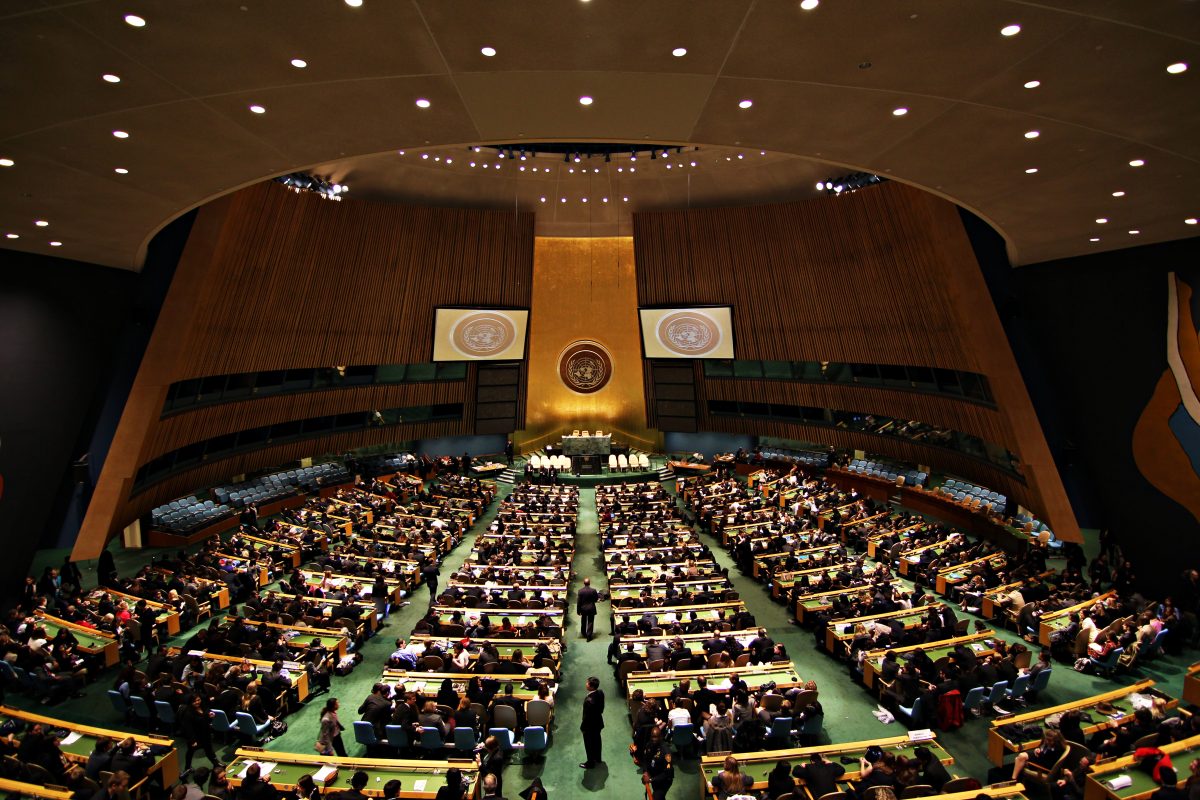
The Seventh Review Conference of the Convention on Certain Conventional Weapons concluded at the Palais des Nations in the early hours of November 21 after a week of negotiations. All 128 states parties backed a final text committing them to “elaborate” a possible international instrument on lethal autonomous weapons systems by 2028 — a mandate humanitarian groups immediately described as a “nothing burger” and a “watered-down” outcome that leaves the most dangerous question unanswered.
What States Agreed To — and What They Refused
The mandate that emerged gives states two years to propose regulatory options, which could be legally binding or optional. It stops far short of the binding treaty that the ICRC, the Stop Killer Robots coalition, UN Secretary-General António Guterres, and Pope Leo had all called for before the talks opened. The ICRC had asked for legally binding rules within one year. The United States had proposed an even slower track — a five-year window for discussions of nonbinding, voluntary guidelines — a position that effectively set the ceiling for ambition during the final hours of negotiation.
Russia delayed proceedings on the first day by formally objecting to the meeting’s agenda. Israel, like the U.S., had also signaled reluctance to accept binding constraints before the talks began. Together, their positions meant no major military power was prepared to accept hard legal limits on autonomous weapons at this stage.
The Stakes on the Ground
ICRC legal adviser Georgia Hinds framed the core issue in human terms. “You cannot hold a machine accountable for a violation of the law,” she said, arguing that decisions to use lethal force must carry a chain of human accountability. Anna Hehir of the Future of Life Institute added: “We’re likely to see the systems proliferate” as a result of the delay.
The proliferation concern is not theoretical. UN figures cited during the talks show that autonomous or semi-autonomous drones caused 80 percent of civilian deaths in Sudan in 2026. Similar systems have been documented in Ukraine and Gaza. The two-year delay means these deployments will continue without any agreed international legal framework. As states debate oversight rules, existing arms restraints elsewhere are also fraying — Iran’s Revolutionary Guard recently dropped its self-imposed ceiling on missile range, adding pressure to an already fragmented global arms-control architecture.
What Comes Next
The CCW process will continue through 2028, with the next formal session expected in 2027. Critics of the outcome note that two years of “elaborating” options is itself not a commitment to any instrument, binding or otherwise. Stop Killer Robots called the mandate “a real disappointment” and said it expected the talks to stall again absent the kind of political pressure that only a major incident or escalatory deployment is likely to produce. The ICRC said it regretted the outcome and renewed its call for legally binding rules, warning that the window to shape the technology before it is too widely deployed is narrowing.