
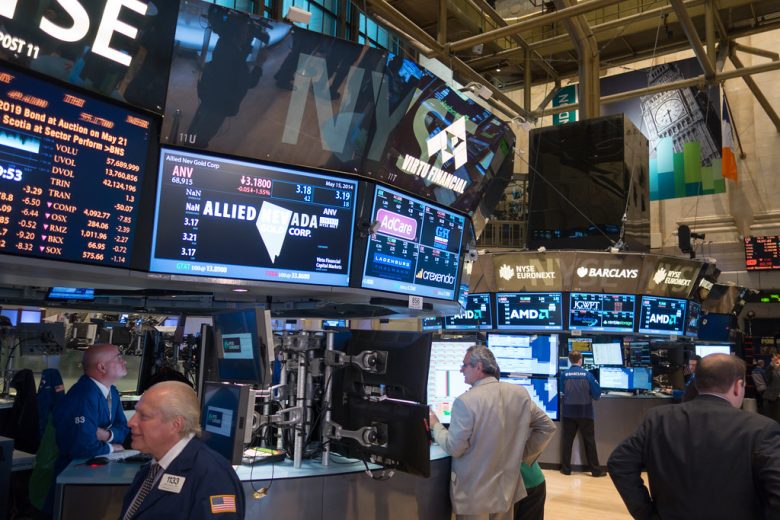
- Lead. The S&P 500 entered correction territory on Friday, November 20, closing more than 10% below its October 6 peak after a 3.7% single-day drop — its seventh consecutive losing session and the longest losing streak for the index since the Covid pandemic.
- Fact. The Nasdaq Composite fell 5.3% on the day, erasing its 2026 gains entirely. The Dow Jones Industrial Average also entered correction. Only the consumer staples sector managed a gain, rising less than 1%.
- Stake. Analysts described the retreat as an “AI repricing” — a reckoning with the possibility that the artificial-intelligence investment wave that powered markets through the first half of 2026 may be losing momentum faster than the consensus expected.
The S&P 500 peaked at 7,823.67 on October 6. By Friday’s close, it had reached 6,910.39, a decline of roughly 12% from that high. The drop placed the index in correction territory — defined as a 10% or greater pullback from a recent peak — but remained well short of the 20% threshold for a bear market. Richard Saperstein of Treasury Partners described a “one-two punch”: the Nvidia crisis and the Democrats’ midterm victory had combined to undermine the AI narrative that had driven valuations higher.
What Triggered Friday’s Move
Two events added acute pressure to a market that had already been sliding since early October. First, a Reuters report said regulators were examining possible accounting irregularities at Nvidia, sending the company’s shares down approximately 14%. Second, Anthropic — which had priced its IPO at $83 and briefly surged 17% on its first day — fell 9%, leaving shares only marginally above the offering price. The two AI-linked declines spread quickly across the broader technology sector and then into other asset classes.
The underlying conditions had been building for weeks. Kevin Gordon of Charles Schwab cited “dual forces”: a hawkish Federal Reserve signaling aggressive rate hikes and a tech-sector downturn. The Fed’s October minutes, which all but confirmed a December hike, had already rattled bond markets. Jim Reid of Deutsche Bank observed that the pressure was spreading from equities into credit and commodities. Gold posted its worst week since March, and silver fell sharply, as investors sold liquid assets to meet margin calls elsewhere.
The AI Repricing in Context
The selloff accelerated a trend that the Nasdaq had already entered earlier in November, driven by the same AI chip and data center concerns. What Friday’s session added was the confirmation that the broader market, not just technology, was recalibrating. Jim Cramer argued on CNBC that the decline was “not 2000” — today’s AI leaders, he said, are profitable companies whose shares simply climbed too high — but the distinction offered little comfort to investors seeing the index’s longest losing streak in four years.
The Democratic midterm victory added a political dimension to the selloff. Investors had priced in a scenario of continued Republican support for unregulated AI development and large data-center investments. The Democratic sweep shifted those expectations, with concerns mounting about slower tech data center buildouts and potentially tougher AI regulation under the incoming Congress. Trump blamed the entire rout on Democrats — a characterization few analysts endorsed, though several acknowledged the midterm result had contributed to the rotation out of AI stocks.
Broader Market Signals
Flight to safety accelerated as equities fell. U.S. Treasury bond purchases increased as investors sought lower-risk positions. The VIX, Wall Street’s volatility gauge, remained elevated. Oil moved on a separate path, with prices declining for a third straight week on strong export flows from the Middle East — a rare area of stability in an otherwise broadly risk-off environment. With the S&P now in correction and the Fed expected to hike in December, the question for markets heading into the final weeks of 2026 is whether the AI repricing is a healthy consolidation or the beginning of a larger structural reassessment of tech valuations.