
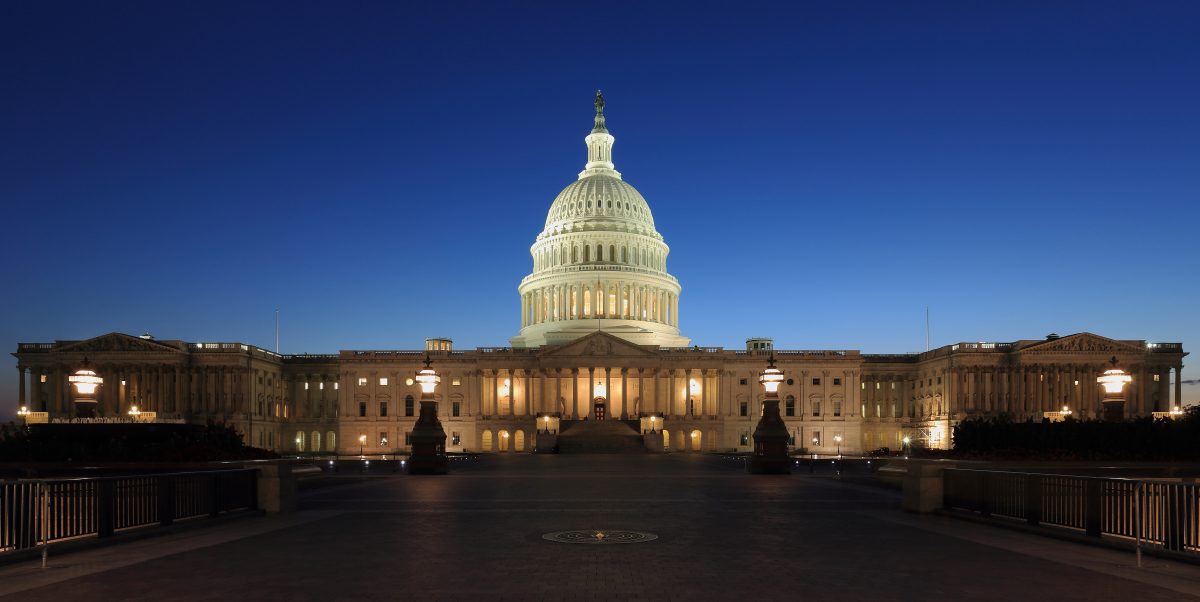
- Lead. The Digital Asset Market Clarity Act — the most comprehensive crypto market-structure legislation the US Congress has attempted — is stalling in the Senate after bipartisan negotiations over ethics and law-enforcement provisions collapsed in early June, with the August recess now threatening to shelve the bill for years.
- Fact. Prediction market odds for the CLARITY Act passing before August have fallen from 74% a month ago to 48% as of July 3, according to CryptoTimes, as floor-vote conditions set by key Democratic senators remain unmet.
- Stake. Senator Cynthia Lummis has warned that missing the 2026 window could delay federal crypto market-structure rules until 2030 — a four-year gap that industry officials say is already causing institutional capital to stay on the sidelines.
The Digital Asset Market Clarity Act (H.R. 3633) cleared the House in July 2025 on a 294-134 bipartisan vote, advanced through the Senate Banking Committee 15-9 in May 2026, and now sits on the Senate legislative calendar as Calendar No. 423, formally eligible for a full floor vote. That is where progress has stopped. Closed-door negotiations collapsed on June 9 after Republicans withdrew support for an amendment that would have allowed state attorneys general to bring civil actions against the Justice Department over ethics failures tied to presidential crypto business interests — a provision Democrats had treated as non-negotiable.
Two separate breakdowns
The impasse has two distinct tracks. On ethics, the White House and Senate Republicans offered alternatives — limiting enforcement to the US Attorney General, or routing it through impeachment — that Democrats described as “functionally circular,” since those mechanisms rely on officials who serve at the president’s discretion. On Section 604, law enforcement organisations have formally opposed provisions they argue would “severely impede the ability of law enforcement and prosecutors to investigate, trace, and prosecute criminal activity involving cryptocurrency.” Senators Mark Warner and Catherine Cortez Masto have tied their floor votes to law-enforcement approval of that section — a condition not yet met.
The situation has left key nominally supportive Democrats — including Ruben Gallego (D-AZ) and Angela Alsobrooks (D-MD) — noting that their committee votes in favour do not automatically translate into floor votes. The bill still needs at least seven Democratic votes to clear the 60-vote threshold required for Senate passage.
The August deadline
Only 31 Senate session days remain before the August recess. Senate Majority Leader John Thune controls floor scheduling and has given no public indication that crypto market-structure legislation will receive priority time. Cody Carbone of the Digital Chamber noted that “they’ll want to only bring it to the floor if they feel confident they’ve got 60” — a bar that has not been cleared as of July 4.
The bill’s relevance extends well beyond the ideological fight over presidential ethics. Kristin Smith of the Solana Policy Institute noted that “many asset allocators are actively exploring digital asset exposure but are withholding capital commitments pending defined regulatory guidelines.” The uncertainty has played out in crypto prices, with Bitcoin reaching a yearly low in the same quarter that US equities posted their best performance since 2020 — a divergence that partly reflects the regulatory vacuum the CLARITY Act was meant to close.
What failure would mean
If the Senate does not vote before August, the bill does not die — it lapses into what analysts describe as “election-year limbo,” in which senators grow increasingly reluctant to vote on complex financial legislation ahead of the 2026 midterms. Senator Lummis’s 2030 estimate reflects the assumption that a failed 2026 attempt would require a new congressional session, new committee hearings, and a fresh bipartisan coalition to build. The gap would leave the US crypto market governed by a patchwork of SEC and CFTC enforcement actions rather than legislation — the status quo that the CLARITY Act was designed to replace.