
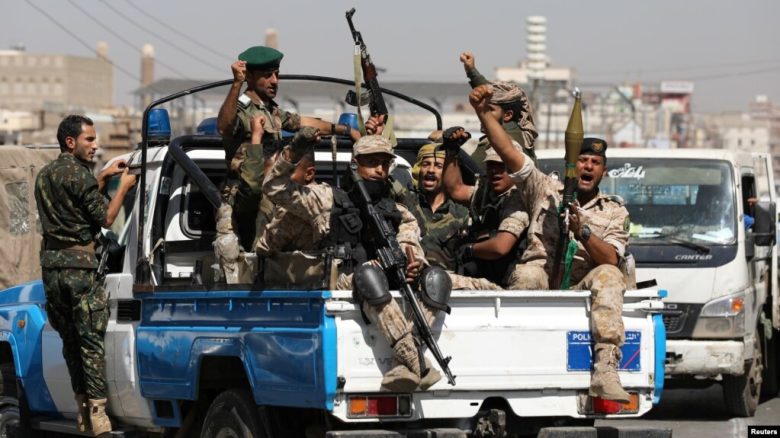
- Backchannel. Trump administration officials met Houthi representatives at the US Embassy in Muscat over the weekend in a covert meeting facilitated by Oman, reported September 16.
- Pledge. The Houthis told the US side they had no intention of targeting American or Israeli vessels, reaffirming the May 2025 ceasefire—but carved out an explicit exception for Saudi-owned ships.
- Context. The talks came days after Houthi forces completed a sweeping seizure of Yemen’s Red Sea coastline, including territory near the Bab el-Mandeb strait.
Trump administration officials met senior Houthi representatives at the US Embassy in Muscat in a secret meeting reported on September 16 by The Times of Israel and corroborated by multiple outlets. Oman, which has acted as an intermediary between Washington and Tehran for years, helped organise the meeting. The US delegation comprised embassy personnel; the Houthi side was led by Mohammed Abdul Salam, the group’s senior Muscat-based official who remains under US sanctions, alongside senior Houthi figure Abdul-Malik al-Ajri.
What was pledged
The Houthis told US representatives they had no intention of attacking American vessels and remained committed to the ceasefire struck with Washington in May 2025. They also pledged not to target Israeli or commercial ships—with one explicit exception: vessels belonging to Saudi Arabia remain fair game, reflecting Riyadh’s ongoing military role in Yemen. The meeting was notable because it took place despite Washington’s designation of the Houthis as a foreign terrorist organisation in March 2025.
President Trump separately told reporters the Houthis had contacted his administration asking the United States to stay out of the Yemen war—a framing that the Houthi delegation did not publicly dispute. The US has provided intelligence support to the Saudi-led coalition and has conducted its own strikes against Houthi positions in 2026.
Why now
The timing followed a rapid Houthi advance along Yemen’s Red Sea coast that alarmed Saudi Arabia and international shipping operators. Saudi Arabia launched 54 airstrikes in response as the group consolidated control of islands and coastal strips near the Bab el-Mandeb, a chokepoint through which roughly 10% of global seaborne trade passes. The Muscat backchannel suggests Washington wants to limit the risk of direct US-Houthi naval confrontation even as it backs Riyadh’s air campaign.
What it changes
The meeting does not constitute a formal agreement and carries no enforcement mechanism. The Houthis have broken prior ceasefire understandings when the tactical situation shifted in their favour. Whether the Muscat pledge holds will depend in large part on how the Saudi air campaign develops and whether Houthi leadership in Sana’a ratifies the terms agreed by its Muscat delegation.