
- Lead. The United States withdrew all 12 of its B-1 Lancer strategic bombers from RAF Fairford in England over the weekend after new intelligence warned of an Iran-backed threat against the installation, a move executed with enough urgency that some aircraft departed before their aerial refuelling support was in place.
- Fact. On the same weekend, Vice President JD Vance chaired an unannounced Camp David meeting of senior national security officials — including Secretaries Rubio and Hegseth, CIA Director John Ratcliffe, and Joint Chiefs Chairman General Dan Caine — to discuss the Iran conflict and Yemen situation.
- Stake. The Fairford repositioning signals that Iran’s proxy networks are now actively scanning NATO-adjacent infrastructure in Europe, widening the potential theatre of a conflict that has so far been concentrated in the Middle East and Gulf.
US commanders ordered the emergency repositioning of all 12 B-1 Lancer bombers from the Royal Air Force base at Fairford, Gloucestershire, over the weekend, responding to what officials described as credible intelligence about an Iran-backed plot targeting the installation. The redeployment was carried out at sufficient speed that some aircraft left before their aerial refuelling support was fully mobilised — an operational detail that underscored both the perceived seriousness of the threat and the urgency commanders felt. Just Security reported the details of the withdrawal on 5 October.
The Camp David Meeting
The B-1 withdrawal coincided with an unannounced gathering of President Trump’s senior national security officials at Camp David on Friday. Vice President JD Vance chaired the session, which brought together Secretary of State Marco Rubio, Defense Secretary Pete Hegseth, special envoy Steve Witkoff, CIA Director John Ratcliffe, Joint Chiefs Chairman General Dan Caine, and Treasury Secretary Scott Bessent. The breadth of the attendance — spanning diplomacy, intelligence, military operations, and financial sanctions — reflected how comprehensively the Iran conflict now intersects with US strategy across multiple domains. The meeting addressed both the Iran conflict and the ongoing Yemen situation, where Saudi-backed forces announced on Sunday the beginning of a major military operation to retake territories controlled by Houthi forces, including the capital Sana’a.
Hormuz Remains Closed
The meetings took place as Iranian Parliament Speaker Mohammad Baqer Qalibaf said publicly that the Strait of Hormuz would remain closed until seven conditions drawn up in the June Memorandum of Understanding with the United States were satisfied. “The period of dragging out the process and dictating one-sided demands is over,” Qalibaf said, indicating that Tehran’s negotiating posture had hardened since the summer agreement. The Strait, a passage for roughly a fifth of global oil trade, has remained closed under Iran’s control since earlier in the year.
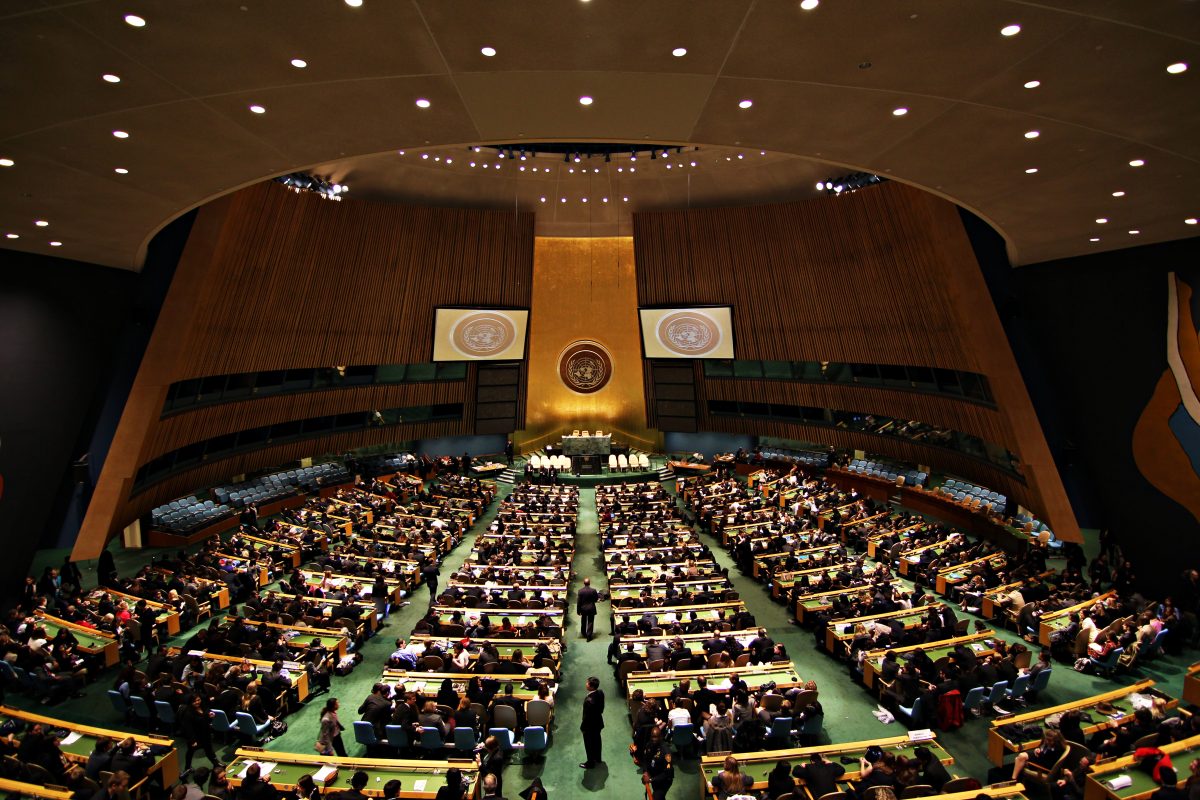
Two members of Iran’s United Nations General Assembly delegation were simultaneously expelled from the United States. Secretary of State Rubio had previously demanded their departure; the expulsions reinforced the diplomatic deterioration running in parallel with the military standoff. The Pentagon also announced that a third aircraft carrier strike group — the USS Theodore Roosevelt, accompanied by the USS Makin Island Amphibious Ready Group — had departed San Diego and was expected to be positioned near Iran by the end of November, bringing total US carrier presence in the region to three strike groups.
The European Dimension
The Fairford withdrawal adds a European dimension to a conflict that Washington had until recently framed as geographically contained to the Middle East. Germany’s foreign intelligence chief last week said confrontations with Russia had taken on “a new, more dangerous dimension,” and the Fairford intelligence warning — though Iran-sourced — will increase concern among NATO allies about how broadly proxy threats can now be projected. The earlier rejection of Iran’s Hormuz terms and the subsequent deployment of additional carrier groups suggested that Washington was not yet prepared to accept the conditions Tehran has set for reopening the waterway. The Camp David meeting represents the administration’s effort to coordinate a response that spans military, diplomatic, and financial instruments simultaneously.