
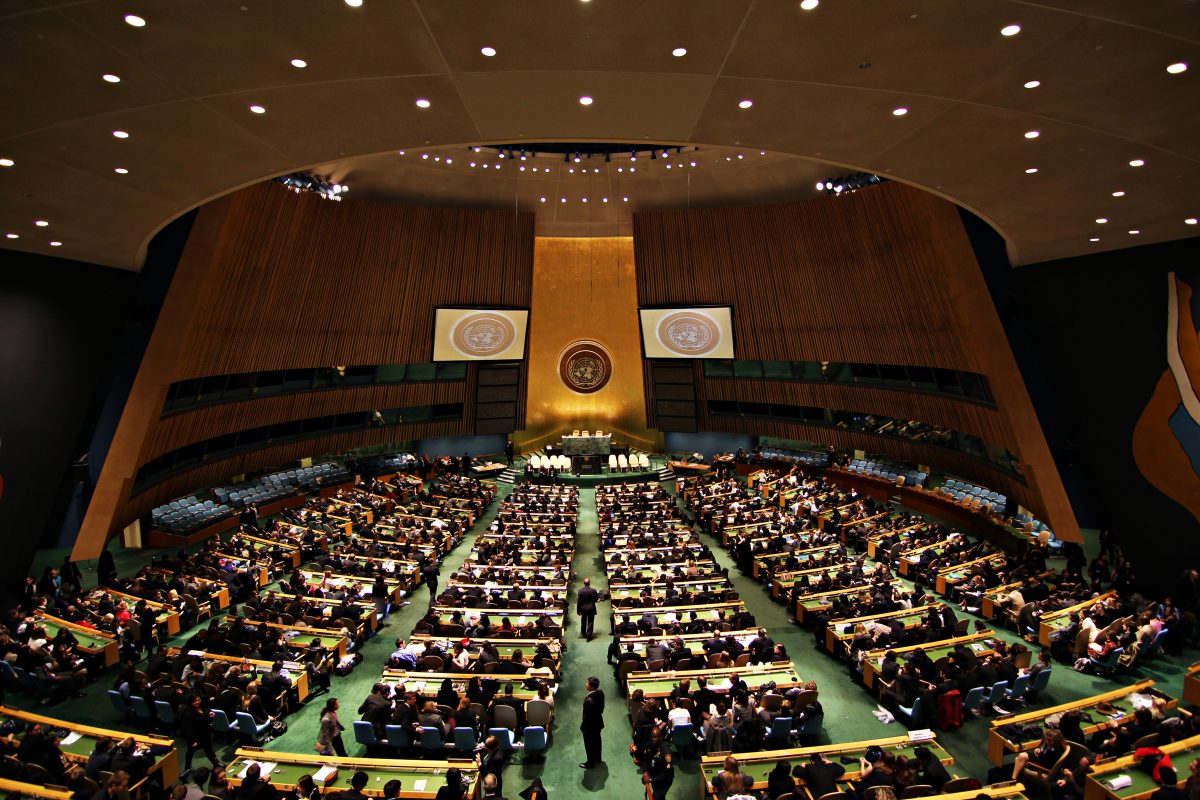
- Rejection. President Trump called Iran’s latest Hormuz proposal “not acceptable” on Saturday, ending a brief diplomatic window that opened on the sidelines of UNGA last week.
- Price signal. Brent crude rose more than 3% on Monday morning, reaching $107.35 a barrel before 08:00 GMT and touching $108.48 intraday — its highest level in this cycle.
- Throughput collapse. The Strait now records roughly 132 ship transits per week, compared with approximately 130 crossings per day before the war began in February.
Iranian Foreign Minister Abbas Araghchi presented a seven-day roadmap at the United Nations General Assembly last week: Washington would release frozen Iranian assets, lift its naval blockade, and end economic sanctions; in exchange, Tehran would reopen the Strait of Hormuz and resume nuclear negotiations. The offer was calibrated as a reversible, time-bounded package — but it lasted fewer than 48 hours before Washington rejected it.
Trump told reporters on Saturday that Tehran’s proposal was “not acceptable,” according to Al Jazeera, and he did not rule out further military strikes. No US counter-proposal was offered.
What Iran Proposed
Tehran’s three conditions were: an end to what it described as US “acts of aggression,” removal of the naval blockade confining Iranian shipping, and the unfreezing of sovereign assets held under US jurisdiction. The nuclear negotiation track was framed as an immediate deliverable — starting within a week — rather than a long-term precondition, a design intended to give Washington a concrete win.
Trump told UNGA last week he faced a binary choice between “annihilating Iran or making a deal,” establishing a high threshold for any arrangement that left Iran’s military capacity intact while providing economic relief. The Araghchi proposal did exactly that.
The Chokepoint in Numbers
Before February 2026, approximately one-fifth of global oil supplies transited the Strait of Hormuz daily, with around 130 vessel crossings every 24 hours according to maritime intelligence platform MarineTraffic. The week of September 21–27 registered 132 total transits — roughly the same as a single pre-war day’s traffic. Commercial operators have rerouted around the Cape of Good Hope or suspended Gulf operations entirely, adding weeks to voyage times and tightening global supply.
Oil markets priced the rejection immediately. Brent crude futures for November delivery traded at $107.35 before 08:00 GMT Monday and reached an intraday high of $108.48 per barrel. US West Texas Intermediate futures hit $96.54 before retreating, settling at $92.60 at the New York close. Some gains were pared as traders weighed reports that diplomatic contact could resume.
Prospects for Resumption
Washington’s rejection does not formally close the channel. Talks between the two sides are expected to resume, though without a stated timeline or a new US position. The Oman back-channel, which brokered earlier signals of a potential Hormuz arrangement in July, may re-enter the process, though no confirmation has emerged from Muscat.
Iran’s seven-day nuclear track expires unexercised, resetting the diplomatic clock. Whether Araghchi’s UNGA offer represented a genuine strategic opening or a media move timed to peak UN attention — and whether Washington’s rejection reflected firm policy or a negotiating posture — will determine whether the next exchange happens within days or weeks.