
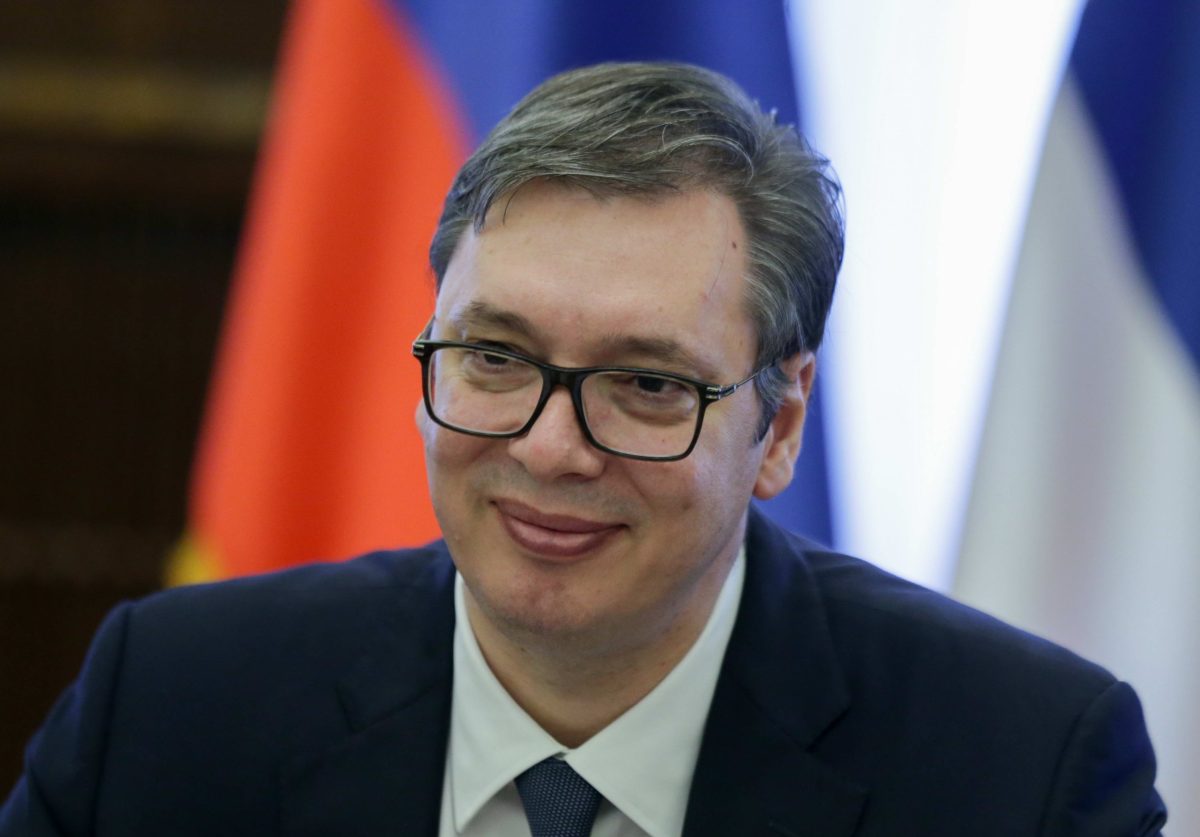
- Lead. Serbian President Aleksandar Vucic announced on June 27 that he will resign within weeks, triggering early elections that will determine whether the Balkans’ most entrenched government survives or fractures.
- Fact. Vucic told supporters at a Belgrade rally: “I will be president for only a couple of weeks, and then I will resign.” The announcement follows 18 months of student-led protests—the largest sustained demonstrations in Serbia since the fall of Milosevic in 2000.
- Stake. Whether Serbia tilts toward EU integration or maintains its pro-Russia posture will hinge on elections that must now be held within 90 days of Vucic’s formal departure.
Protests that broke the dam
The crisis traces directly to November 2024, when a concrete canopy at Novi Sad’s newly renovated railway station collapsed and killed 16 people. The disaster crystallised what protesters had long argued: that construction contracts flowed to government-connected firms whose work went unchecked. Within weeks, Serbian universities became the site of rolling occupations and marches that spread to cities across the country.
Former Prime Minister Miloš Vučević resigned in January 2025 under the pressure. The protests did not follow him out the door. For another six months, demonstrators maintained their demand that Vucic himself depart. Saturday’s announcement at a pro-government rally in Belgrade—where Vucic acknowledged the situation had become untenable and declared his intention to resign—represented the movement’s most significant political result.
Vucic has controlled Serbian politics as either prime minister or president for 14 years. He described his decision as voluntary and said he would campaign for his Serbian Progressive Party (SNS) before formally stepping down, preserving his influence over the forthcoming vote even from the departure lounge.
The constitutional arithmetic
Serbia’s constitution requires presidential elections within 90 days of a formal resignation. Parliamentary elections can be called concurrently. The SNS remains the most organised political force in the country, and Vucic’s stated intention to campaign for the party before resigning leaves open the possibility of a return to the prime ministership should the SNS retain its parliamentary majority.
That manoeuvre carries familiar logic. Vucic served as prime minister from 2014 to 2017 before moving to the presidency. A reversion to that model would keep him in executive authority regardless of who occupies the presidential palace—an outcome opposition parties will argue during the campaign represents continuity without accountability.
The European Union question
For Brussels, the leadership transition offers a moment of recalibration. Serbia’s EU accession process has remained formally open for years while making almost no substantive progress—largely because Belgrade refused to join the EU’s sanctions regime against Russia. Opposition parties, most of which hold a clearer pro-European position than the SNS, will now have a genuine opportunity to contest power.
Al Jazeera’s June 27 report was among the first to carry the direct quote from Vucic’s Belgrade address. Whether Serbia’s voters choose a decisive break with the political model of the past 14 years—or return the SNS to power in a new institutional configuration—will shape the country’s place in European politics well into the next decade.