
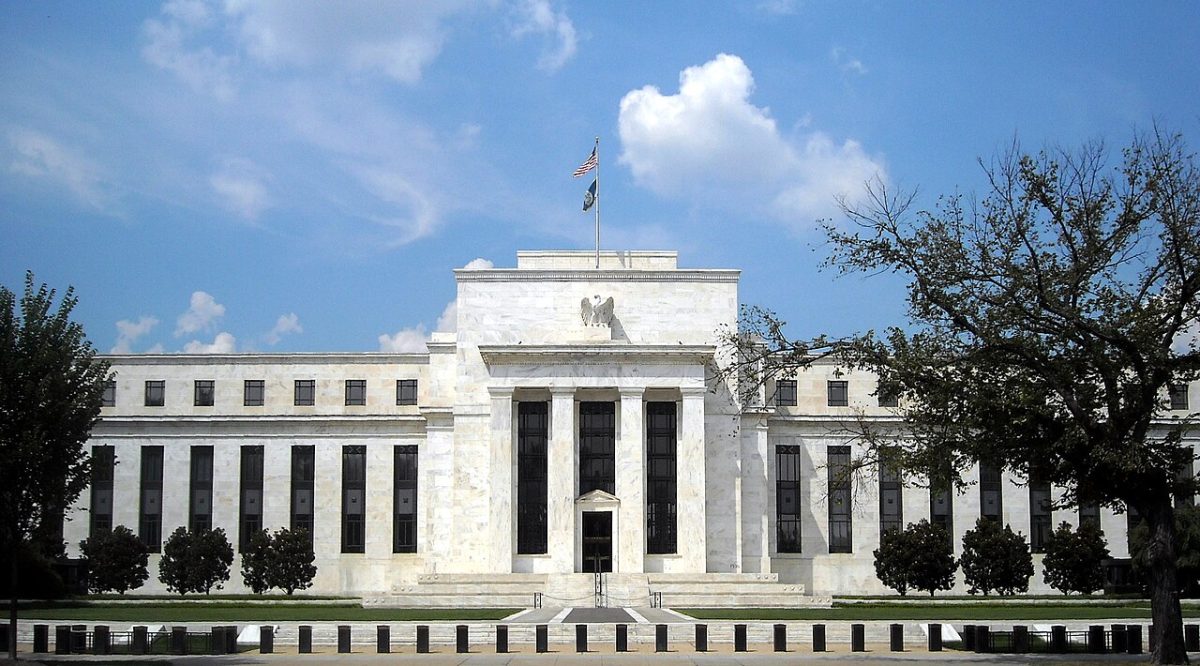
- Lead. The Federal Open Market Committee voted unanimously, 12-0, on September 16 to raise the federal funds rate by 25 basis points to a target range of 3.75%–4%, the first rate increase in more than three years.
- Fact. The Fed’s new dot-plot projection shows 16 of 18 officials expect at least one further hike in 2026, with four pencilling in two additional increases — eliminating any near-term prospect of the cuts that markets had priced in earlier this year.
- Stake. US headline inflation held at 3.4% year-on-year in August, with core at 2.4%, while Chair Kevin Warsh described the economy as appearing to strengthen — a combination that signals the hiking cycle is not a one-off correction but the reopening of a rate-rise regime.
The Decision
The September 16 decision, reported by CNBC, brings the overnight funds rate to its highest level since mid-2023 and marks the first tightening move by the Fed under Chair Warsh, who replaced Jerome Powell earlier this year. The post-meeting statement was brief: “Inflation remains elevated,” the committee said, and “Today’s policy action will support a timelier return to the Committee’s 2 percent goal.”
At his press conference, Warsh was more pointed. “We must be confident that underlying inflation is moving to our objective clearly and at sufficient speed,” he said, adding that inflation has been “too high … for too long.” The remarks, which investors interpreted as hawkish rather than formulaic, triggered a sharp reversal in equity markets during the briefing itself.
Forward Guidance and the Dot Plot
The shift in the Fed’s own projections — the so-called dot plot — was arguably more consequential than the rate move itself. With 16 of 18 participants signalling further tightening, the committee has effectively closed the door on the pivot narrative that drove parts of the 2026 rally in equities and high-yield credit. Going into the meeting, futures had priced a 92.5% probability of a 25-basis-point hike, meaning the hike itself was not the surprise — the accompanying signal was.
Warsh also noted that “Our decision comes at a time when the economy appears to be strengthening,” citing August payrolls that had come in well above consensus and a services PMI at 55.4. The combination of sticky inflation and robust growth makes it harder for the Fed to pause without being seen as prematurely tolerant of above-target prices.
What Comes Next
The dot plot implies at least one more 25-basis-point hike before year-end, with the November meeting now the key decision point. European counterparts have taken a different path: the European Central Bank kept rates on hold at its September meeting, with the deposit facility at 2.00%, reflecting a slower-burning inflation dynamic in the eurozone. The Bank of England’s Monetary Policy Committee faces its own September 17 decision with a reported 6-3 internal split — a signal that developed-market rate cycles are diverging rather than converging.