
- Lead. Ukraine launched a formally declared 40-day pressure campaign against Russia on June 25, 2026, opening with its largest drone attack of the war—660 unmanned aircraft across 13 regions—as President Volodymyr Zelenskyy framed the operation as a direct bid to force peace negotiations.
- Fact. The overnight barrage of June 25-26 exceeded the previous record of 556 drones set on May 17 and struck military vessels in occupied Kerch, an S-400 radar system, and industrial targets including an explosives-supply facility in the Tula region.
- Stake. By framing strikes as “long-range and medium-range sanctions,” Ukraine is converting military pressure into negotiating leverage at a moment when US-brokered peace efforts have stalled.
The operation and its opening strikes
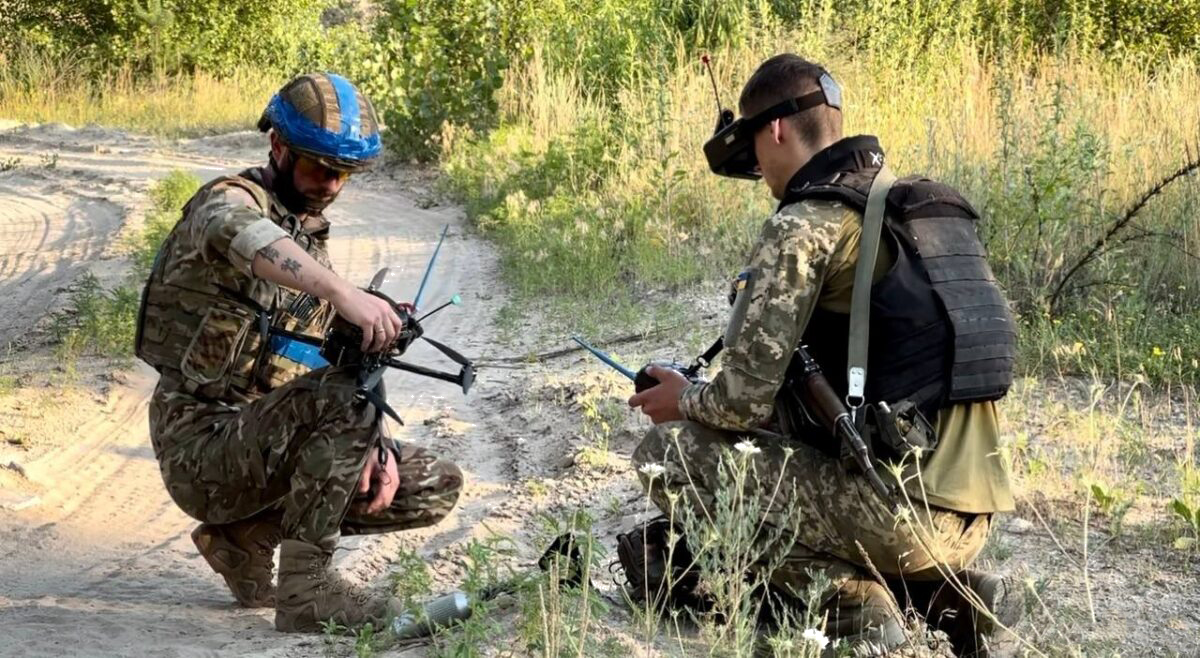
On June 25, Zelenskyy met with the acting head of the State Security Service (SBU), Major General Yevhenii Khmara, and approved what he publicly described as “a 40-day influence operation against the aggressor state aimed at compelling it to end the war.” Within hours, Ukraine’s Unmanned Systems Forces conducted one of the most concentrated drone offensives since Russia’s full-scale invasion began in February 2022.
Russia’s Defense Ministry reported intercepting 660 Ukrainian drones across 13 regions, including Moscow, Crimea, and over the Black Sea and Sea of Azov. Moscow Mayor Sergei Sobyanin said 47 drones were downed as they approached the capital. In the Tula region, 180 kilometres south of Moscow, a house was damaged and one woman injured. An industrial facility in Novomoskovsk, approximately 200 kilometres from Moscow, also sustained damage. Ukraine’s Zelenskyy separately confirmed strikes on two oil refineries in Ufa, roughly 1,500 kilometres from the front line, and an oil depot in Russia’s Krasnodar region. A facility described by Zelenskyy as “critical to Russia’s production of explosives” was also targeted, according to Al Jazeera.
Crimea as the strategic centre of gravity
The SBU’s operations in Kerch illustrated the campaign’s focus on strangling Crimea as a Russian military and logistics hub. Ukrainian drone strikes hit two Project 15310 cable-laying ships—the Volga and the Vyatka—at the Zaliv shipyard, starting fires aboard both vessels. The ships are designed to deploy Garkonya hydroacoustic surveillance systems and cost hundreds of millions of dollars each. A cargo-passenger ferry, the Petropavlovsk, was also struck. Drones additionally hit the radar component of an S-400 surface-to-air missile battery guarding the Kerch Strait, according to the Kyiv-based Euromaidan Press.
The strikes compounded an already acute civilian fuel crisis on the peninsula. By mid-morning on June 26, 2,760 vehicles had queued at the Kerch Strait crossing—1,780 of them heading toward mainland Russia to refuel. A satellite-visible queue stretched roughly 15 kilometres. Russian occupation authorities had already doubled the permissible liquid fuel limit per vehicle from 100 to 200 litres. The Crimea state of emergency was extended, and civilian fuel sales remained halted.
The pressure on Crimea follows a series of earlier Ukrainian strikes that have systematically degraded the peninsula’s military infrastructure. A previous operation destroyed hangars and air defences at Saky airfield, cutting power across much of Crimea, while an earlier overnight operation demolished a railway bridge over the North Crimean Canal, cutting a key supply artery.
The political logic of the 40-day clock
Zelenskyy’s framing of the campaign as “influence” rather than purely military action is deliberate. By putting a fixed timeline on the escalation, Kyiv is signalling to both Western partners and Moscow that the current phase of the conflict is entering a decisive window. The SBU leadership described the campaign’s tools as “long-range sanctions and medium-range sanctions,” language that positions drone strikes against Russian energy and logistics as economic coercion rather than conventional warfare—an implicit appeal to allied governments still debating the legal and political boundaries of weapons transfers.
Zelenskyy has also accused Russia of pressing Belarus into providing military infrastructure along Ukraine’s northern border. He warned: “The development of border infrastructure for aggression from Belarus must be stopped.” The Kremlin denied the allegations, with spokesman Dmitry Peskov stating the reports “do not correspond to reality.” Meanwhile, Russia continued overnight missile and drone attacks on Ukrainian cities: the Sumy region reported 25 people injured over 24 hours on June 27-28, including three children, while Kharkiv and 17 surrounding settlements were shelled, injuring seven.
Stalled diplomacy and thinning Russian air defences
The campaign comes after more than a year of US-led peace efforts that produced no breakthrough. Zelenskyy has publicly stated the “Spirit of Anchorage” framework is dead, and that Putin has refused invitations to meet in neutral countries. A senior Ukrainian official reported that President Donald Trump privately urged Zelenskyy to act “more boldly” against Russia; Trump publicly described Zelenskyy as “courageous” and said Ukraine was “doing pretty well.”
Zelenskyy separately told reporters that Russia had redeployed nearly 90 air-defence launchers to the Valdai region from other areas, and had concentrated hundreds of missile launchers in the Moscow region alone—a reallocation that, if sustained, would thin coverage elsewhere. Ukraine has destroyed 1,447 Russian air-defence systems since 2022, according to its military. The 40-day window closes in early August, just as the summer fighting season reaches its peak.