
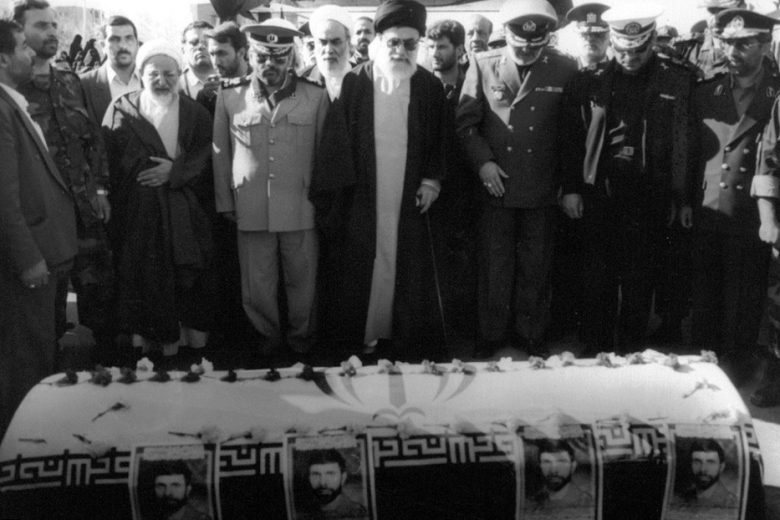
- Lead. Iran on 3 July opened a six-day state funeral for assassinated Supreme Leader Ali Khamenei, with his body lying in state at Tehran’s Grand Mosalla and authorities expecting up to 35 million pilgrims to attend — a figure that would dwarf the estimated 10 million who gathered for Ayatollah Khomeini’s 1989 funeral.
- Fact. Khamenei was killed on 28 February 2026 in a US-assisted Israeli airstrike on his Tehran compound; the ceremony was delayed four months due to the ongoing Iran war, with burial at the Imam Reza shrine in Mashhad scheduled for 8–9 July.
- Stake. Officials from more than 30 countries are attending, including Russia’s Dmitry Medvedev and Pakistan’s Prime Minister Shehbaz Sharif, while reports of organised pressure on civilian participation have emerged alongside the official spectacle.
A funeral four months in the making
Khamenei died on 1 March 2026, one day after bunker-busting munitions penetrated 30 to 35 metres into the compound where he was sheltering in Tehran. Four family members were also killed, including his daughter Boshra and son-in-law Bagheri-Kani. His son Mojtaba Khamenei was elected Supreme Leader on 8 March, but the state funeral — originally set for early March — was postponed as the Iran war continued, fuelling speculation abroad about regime stability and the coherence of the new leadership.
The ceremony follows a carefully choreographed geography of Shia Islamic significance. After the lying-in-state period at the Grand Mosalla ends on 4 July, a procession moves to Qom on 5 July, the centre of Iran’s clerical establishment. On 7 July, symbolic processions are planned in Najaf and Karbala in Iraq before burial at the Imam Reza shrine in Mashhad on 8–9 July — a departure from precedent, since Ayatollah Khomeini is interred at a purpose-built shrine on Tehran’s outskirts. The events take place against a backdrop shaped by months of military escalation; earlier in the conflict, Iran fired missiles at US bases in Kuwait and Bahrain as the Hormuz ceasefire collapsed.
The logistics of mass mourning
Iranian authorities have made preparations on a scale without modern precedent: 50 million loaves of bread arranged for pilgrims, 5,000 mosques and 700 schools converted for overnight accommodation, 1,000 tents pitched in Mellat Park, and 6,000 overhead water sprinklers installed across central Tehran to manage crowds in peak July heat. Free fibre-optic access points have been established citywide.
Parliament Speaker Mohammad Bagher Ghalibaf said the funeral would ensure the nation’s call for “vengeance against the United States and Israel” would “ring in the ears of the whole world,” according to reporting on the event. IRGC commander Ali Abdollahi issued a direct warning to Washington against conducting military operations during the procession days. President Trump had previously described Khamenei’s death as “justice for the people of Iran.”
Forced attendance and the new Supreme Leader’s absence
Reports have surfaced of organised pressure on civilian participation. Tehran’s real estate union received a text message telling members they “are not allowed to open our office during the funeral days and must attend.” Iran’s second-largest automaker Saipa cancelled overtime and mobilised approximately 2,000 workers. Hamshahri newspaper instructed staff to produce 200 employees. Basij paramilitaries have reportedly visited shops warning that premises found open during the mourning period could be sealed.
Mojtaba Khamenei, who has made no public appearances since his appointment as Supreme Leader in March, is not expected to appear at the funeral — an unusual absence that analysts say reflects either security concerns or unresolved questions about his authority over Iran’s fractured post-war institutions.