
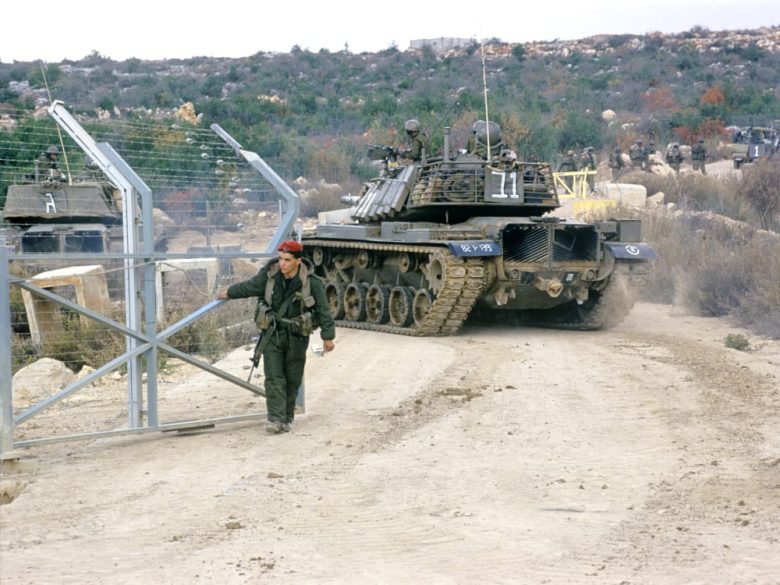
- Lead. Israeli Prime Minister Benjamin Netanyahu visited occupied southern Lebanon on July 1 — his first trip to the area since a US-brokered arrangement on June 27 called for Israeli forces to begin withdrawing from two pilot zones — and used the occasion to restate that Israel will remain as long as Hezbollah is armed.
- Fact. Israel has built a 10-kilometre buffer zone along the entire 81-kilometre Lebanon-Israel border since March 2025, a campaign that has killed more than 4,000 Lebanese and displaced over one million people.
- Stake. Netanyahu’s stated withdrawal condition — Hezbollah’s disarmament or removal — has no agreed benchmark, verification process, or timeline, leaving the June 27 arrangement with no clear path to full implementation.
Netanyahu arrived in the occupied zone with Defence Minister Israel Katz and senior military officials, touring Israeli positions within the buffer strip four days after Washington mediated a security arrangement with Beirut. His previous public visit to the area was in April. The June 27 deal requires Israeli forces to hand over two designated border areas to the Lebanese Army, an initial step toward a broader settlement that both sides have yet to flesh out.
What Netanyahu said
Speaking to troops stationed inside Lebanon, the prime minister was unambiguous. “Our insistence is that we will not leave southern Lebanon until the threat is removed,” he said. “And as long as Hezbollah remains here, armed and threatening us, we will remain here as well.” The statements, reported by The New Arab, effectively make Israeli withdrawal contingent on Hezbollah’s status — a condition that Lebanese officials and the UN Interim Force in Lebanon (UNIFIL) have not endorsed as part of the June 27 arrangement’s terms.
The scale of the campaign
Israel’s operations in Lebanon have killed more than 4,000 people and displaced over one million since March 2025 — roughly one in five Lebanese residents. Thirty-two Israeli soldiers have died during the same period. Israel has described the campaign as targeting Hezbollah’s underground tunnel networks, weapons storage, and command positions embedded in southern Lebanese villages. The buffer zone now extends the full length of the border, with local populations displaced and buildings systematically demolished in areas Israeli forces deem operational terrain.
The conflict is one front of a broader regional confrontation: earlier this year, Iran fired missiles at US bases in Kuwait and Bahrain as the Hormuz ceasefire collapsed, tying Lebanon’s trajectory to the wider US-Iran dynamic and limiting Washington’s diplomatic bandwidth for pressing Israel on a withdrawal timeline.
What the June 27 arrangement actually requires
The agreement brokered by US mediators establishes a pilot-zone model: Lebanese Armed Forces assume control of two specific border areas while broader withdrawal terms remain under negotiation. Implementation had not begun as of July 4. Whether the arrangement broadens into a wider disengagement depends on whether Washington is prepared to apply pressure beyond the current diplomatic framework, and whether Beirut’s government — which does not control Hezbollah — can enforce whatever conditions emerge. Netanyahu’s July 1 statements suggest Tel Aviv views any timeline as open-ended for as long as Hezbollah remains a functioning military organisation inside Lebanese territory.