
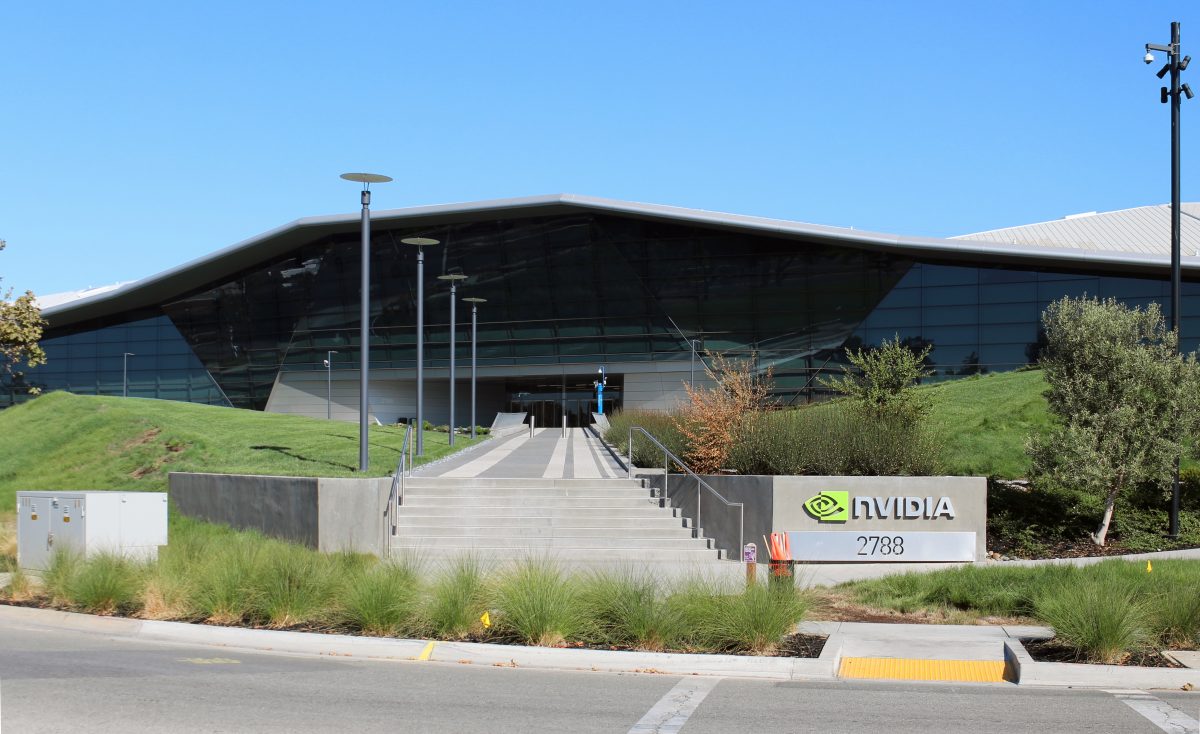
- Lead. Nvidia is reportedly close to acquiring Hugging Face — the dominant open-source AI model hub — for approximately $12.9 billion, a deal that would give the world’s most valuable chip company a chokehold over how artificial intelligence is built, discovered and deployed.
- Fact. Hugging Face hosts more than one million open-source AI models and generates roughly $150 million in annual revenue; neither company had issued an official statement as of Friday, though both declined to comment to reporters.
- Stake. Unlike Nvidia’s earlier structured deals with Groq and Poolside — which used licensing frameworks to bypass antitrust filing thresholds — this outright acquisition will trigger mandatory Hart-Scott-Rodino review in the US and an EU merger review, putting Nvidia’s AI market power under direct regulatory scrutiny for the first time.
The deal was first reported by The Information and Business Insider and subsequently confirmed by TechCrunch, which cited people familiar with the negotiations. The reported valuation of $12.9 billion is a steep premium to Hugging Face’s last known private valuation of $4.5 billion, set when the company raised $235 million in 2023. The company had also previously rejected a $500 million investment offer from Nvidia itself — an offer that would have valued Hugging Face at $7 billion — specifically to avoid giving any single investor dominant influence over its direction.
Why Nvidia Wants a Model Hub
The strategic logic for Nvidia is rooted in a defensive calculation. As Nvidia’s revenue from AI infrastructure has reached record levels, the company’s largest customers — OpenAI, Google, Amazon and Anthropic — have all accelerated efforts to design proprietary AI chips that would reduce their dependence on Nvidia hardware. By controlling Hugging Face, Nvidia would embed itself at the layer where developers select and deploy models, creating a dependency that exists independent of which chips are underneath.
Founded in 2016, Hugging Face operates as the open-source equivalent of an app store for AI: a platform where researchers publish models, companies download and fine-tune them, and developers benchmark competing architectures. Its neutrality has been its core asset. Forbes noted that developers and analysts have already raised concerns that Hugging Face could lose that impartiality under Nvidia ownership — a worry that CEO Clem Delangue, who has aligned publicly with Nvidia’s open-source advocacy, will need to address.
The Antitrust Dimension
The regulatory exposure is significant and deliberate. Nvidia structured its $20 billion arrangement with AI-inference startup Groq as a licensing deal and acqui-hire — a framework that, as senators Elizabeth Warren and Richard Blumenthal noted in a February 2026 letter, allowed Nvidia to consolidate control over inference chip technology without triggering antitrust review. A similar logic applied to its arrangement with Poolside. The Hugging Face acquisition is structured differently: as a full acquisition it crosses the HSR filing threshold and will require clearance from the Department of Justice or the FTC, as well as the European Commission. That makes it the most significant antitrust test yet of Nvidia’s AI market dominance — a test that plays out as rival chip alliances multiply across the industry.
Regulators on both sides of the Atlantic have been building institutional knowledge on AI concentration for roughly two years. The EU’s AI Act, combined with the bloc’s existing merger framework, gives Brussels meaningful tools to impose conditions or demand remedies — including behavioural commitments around open-source access — even if it ultimately clears the deal.
What Happens to the Open-Source Ecosystem
The most consequential unknown is whether a Nvidia-owned Hugging Face would remain genuinely open. The platform’s value to independent researchers, universities and smaller companies depends on its perceived neutrality: if Nvidia models receive preferential placement, or if Hugging Face’s inference tools are optimised to run best on Nvidia silicon, the open-source community could fracture. Several large open-source AI projects — including those backed by Meta and Mistral — maintain their own distribution pipelines and could accelerate migration away from a Nvidia-controlled hub, potentially fragmenting an ecosystem that has benefited from centralisation.