
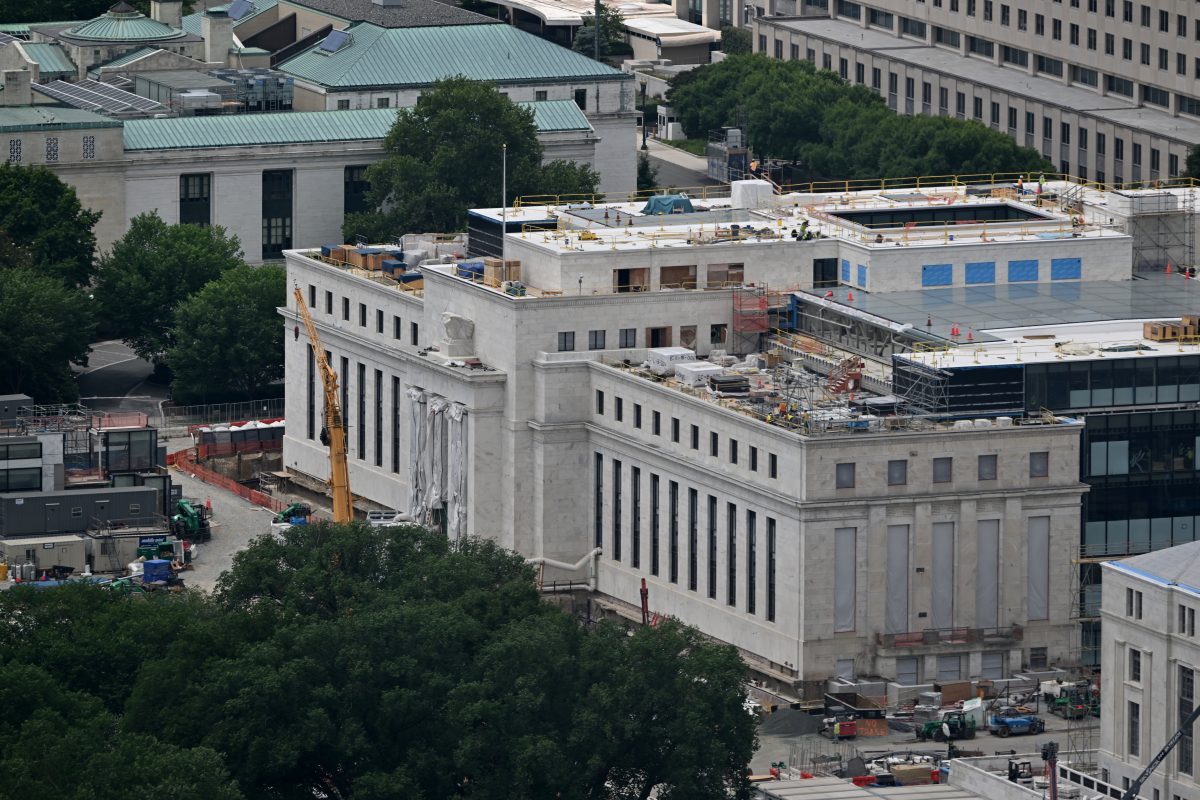
- Hold. The Federal Open Market Committee voted 9-3 on July 29 to leave the benchmark federal funds rate unchanged at 3.5–3.75%, marking a fifth consecutive hold since the current tightening cycle paused.
- Dissent. Three regional presidents — Beth Hammack of Cleveland, Neel Kashkari of Minneapolis, and Lorie Logan of Dallas — all voted for an immediate rate hike, the most policymakers dissenting in the same direction since September 2016.
- Inflation. The Fed now projects headline and core inflation both running at 2.7% by year-end 2026, reflecting persistent price pressure from tariffs and elevated energy costs tied to the conflict in the Middle East.
A divided committee holds firm
The FOMC’s July decision preserved a holding pattern that has remained in place since March, even as inflation has run above the Fed’s 2% target for more than five years. Updated projections released alongside the decision show the committee still expects to deliver one 0.25 percentage-point cut before the end of 2026, with the rate expected to settle in a 3–3.25% range by 2028. GDP growth for 2026 was revised modestly upward to 2.4%, from the 2.3% forecast issued in December 2025, giving the majority of the committee grounds to argue that the economy can tolerate the current rate level while inflation cools further.
The three dissenters — Hammack, Kashkari, and Logan — argued the accumulated weight of persistent inflation justified tightening further rather than waiting for additional data. Their unified call for a hike, rather than a cut, makes the September 2016 comparison apt: that meeting was the last time three FOMC members voted against the majority in the same direction. CNBC and Bloomberg both reported the dissenters viewed the balance of risks as tilted toward higher inflation, not a slowdown.
Warsh at the press conference
Fed Chair Kevin Warsh addressed the division at his post-meeting press conference, pushing back on the suggestion that the hold reflected complacency. “We are focused on the direction of travel in the data, not relying on just a single inflation print,” Warsh said. The chairman reiterated that the committee remains committed to returning inflation to 2%, while preserving the option to move in either direction as data evolve over coming months.
Warsh’s framing emphasised optionality — the Fed is neither ruling out a hike nor committing to a cut — a stance that market pricing had partially anticipated in the days before the meeting, when bets on a July hike had risen to 38% after Brent crude crossed $100 per barrel. The actual split vote confirmed that the hawks have a genuine presence on the committee, even if they remain in the minority for now.
What drives the September calculus
The next FOMC meeting is scheduled for September 16–17. Between now and then, policymakers will receive August CPI and PCE deflator readings — the Fed’s preferred inflation gauge — as well as another payrolls report. If energy prices remain elevated and headline inflation holds at or above 2.7%, Hammack, Kashkari, and Logan have a strong public case to attract a fourth vote for a hike. Conversely, any meaningful cooling in core services inflation could shift the balance back toward patience. The narrow margin of the current hold makes September one of the more consequential meetings on the Fed’s 2026 calendar.