
- Lead. Fervo Energy’s Nasdaq debut on May 13 broke the record for the largest clean energy IPO ever — surpassing all prior renewable listings globally — and validated a technology that has sat at the edge of commercial viability for decades.
- Fact. The company priced 70 million shares at $27, above an already-upsized range of $21–$24, raised $1.89 billion, opened at $36.54 on day one for a market cap above $10 billion, and now trades on Nasdaq under the ticker FRVO. Backers include Bill Gates’ Breakthrough Energy, Google, Devon Energy, and Liberty Energy.
- Stake. AI data centers cannot run on intermittent solar or wind, and Fervo’s pitch — 24-7, carbon-free power that can be sited within existing energy infrastructure — lands at a moment when electricity demand from hyperscalers is outpacing the grid’s ability to deliver it reliably.
Fervo Energy made its public market debut on May 13 with a clarity of pitch that is unusual in energy IPOs: it is selling reliability. While solar and wind have reshaped global power markets over the past decade, their fundamental limitation — that they generate only when conditions allow — has become a structural constraint at precisely the moment when demand for always-on computing is accelerating fastest. Fervo’s enhanced geothermal systems produce electricity continuously, from heat drawn out of the earth itself, regardless of cloud cover or wind patterns. That profile is worth paying for, and on day one the market agreed by a wide margin.
The numbers and the technology
Fervo priced at $27 per share after upsizing the offering from an initial range of $21 to $24, then opened at $36.54 — a 35% first-day premium that gave the Houston-based company a market capitalization above $10 billion before lunchtime. The $1.89 billion raised makes it the largest clean energy IPO in history, ahead of the previous benchmarks set by solar and wind developers whose intermittency Fervo is explicitly positioning against.
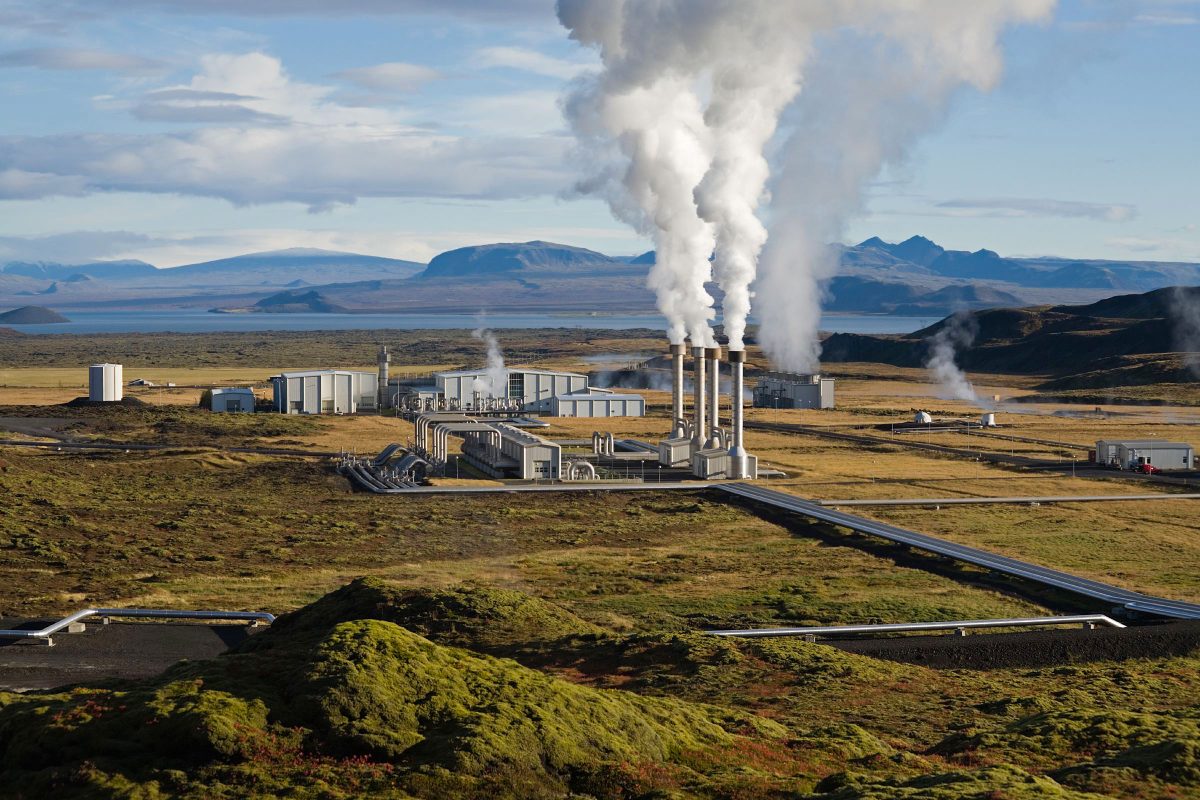
The underlying technology is a hybrid of geothermal science and modern drilling methods borrowed from the oil and gas industry. Fervo drills wells roughly 10,000 feet vertically, then turns them sideways for another 7,500 feet horizontally — a technique perfected in shale extraction. Water pumped through that subsurface network is heated above 400 degrees, returned to the surface as steam, and used to drive conventional electricity-generating turbines, with the water then recycled back underground. The system is closed-loop and carbon-free. CEO Tim Latimer, 36, described it simply: “The product offering we have is 24-7, carbon-free, and can be built quickly.”
Cape Station and what comes next
Fervo’s flagship project is Cape Station in Beaver County, Utah — a 500-megawatt facility contracted to Southern California Edison that the company expects to begin generating power by the end of 2026 and reach full-scale production by 2028. At 500 megawatts, it will be the world’s largest next-generation geothermal installation. The company holds leases across roughly 600,000 acres in the western United States, enough to eventually generate an estimated 40 gigawatts — a figure that would make geothermal a meaningful share of the US grid rather than a niche contributor.
The IPO arrives in the context of an energy market under acute stress. As two simultaneous shocks — the Iran war and the rapid growth in AI power demand — reshape the global energy economy, the case for technologies that generate power without fuel supply chains becomes more tangible. Google, one of Fervo’s backers, is also Cape Station’s customer for some of its output — a relationship that blurs the line between investor and offtaker in ways that reflect how seriously hyperscalers are taking the reliability problem. The Fortune profile of the IPO described the dynamic plainly: AI’s hunger for power is meeting earth’s heat at exactly the right moment.