
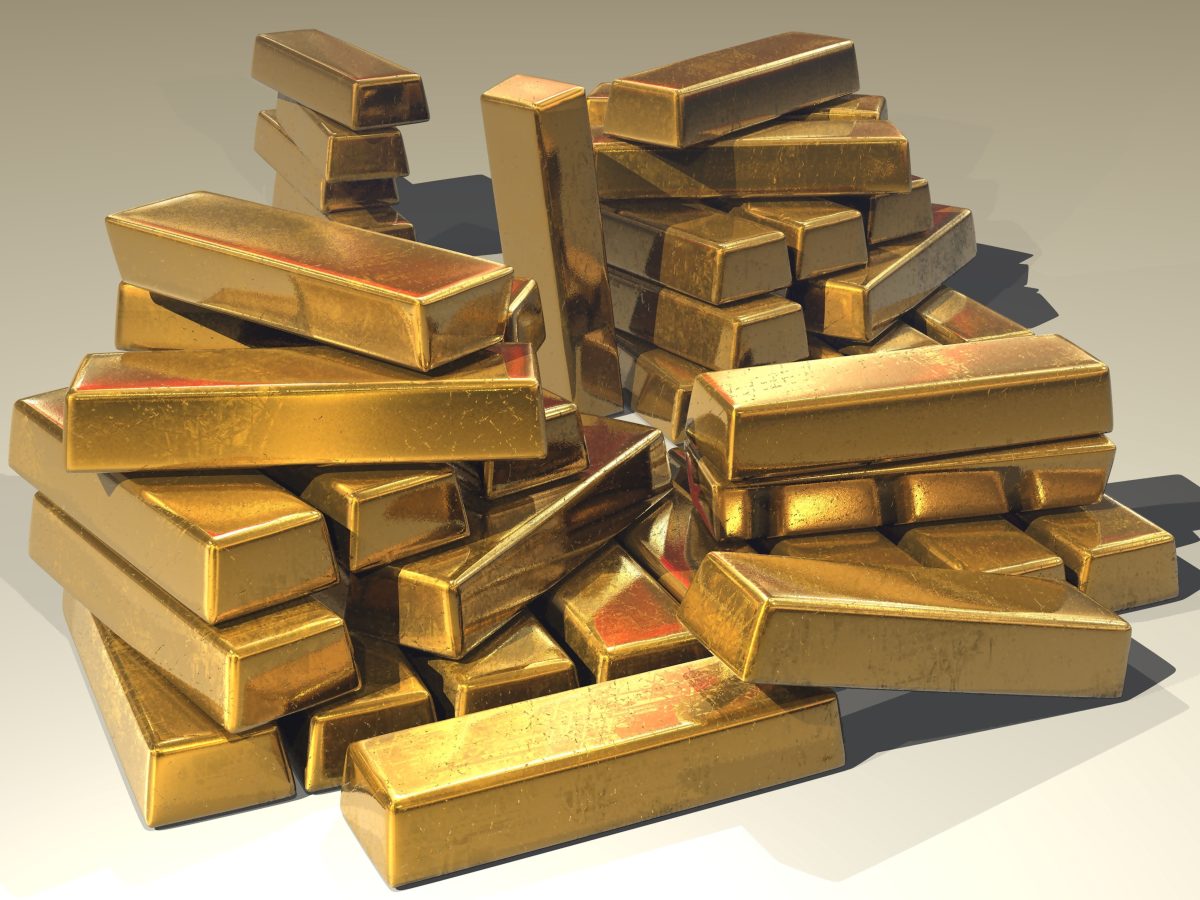
- New high. Spot gold rose to $4,712.60 per troy ounce on the morning of August 24 — the highest level since mid-May — extending a month-long rally of nearly 15% and a one-year gain of roughly 39.5%.
- Treasury trigger. The proximate catalyst was the US Treasury’s decision to double its long-term bond buyback programme to $4 billion per session, a move that triggered short-covering and speculative buying across precious metals markets, according to analysis published by Yahoo Finance.
- Structural floor. Beyond the buyback announcement, gold’s sustained elevation reflects two persistent supports: the ongoing Iran conflict, which has reinforced its safe-haven status, and global inflation that remains above most central bank targets.
Gold opened the week of August 24 at $4,673.40 per troy ounce in futures trading and quickly climbed higher, reaching $4,712.60 spot by mid-morning Eastern time — a gain of 1.23% in the prior 24 hours alone. The price represents a recovery to levels last seen in mid-May and extends a rally that has added approximately 14.9% in a single month.
The Treasury Buyback Catalyst
The move that most directly preceded last week’s surge was the US Treasury’s expansion of its long-term bond buyback programme to $4 billion per daily session, double the previous pace. The buybacks, part of a broader Treasury liquidity management strategy connected to the national debt topping $40 trillion, are interpreted by markets as dollar-weakening and inflation-permissive — both conditions that historically benefit gold.
Brian Sozzi, Yahoo Finance’s executive editor, cited the buyback expansion as having generated “short-covering and speculative buying across precious metals markets” in the days immediately following the announcement. The dollar index has weakened in tandem, removing another headwind for the metal, which is priced in dollars and tends to appreciate when the currency depreciates.
Geopolitical Floor and Inflation Premium
Beneath the tactical buyback catalyst sits a more durable support structure. Gold has held above $4,400 since late July, with the Iran conflict serving as the primary geopolitical premium. The Strait of Hormuz disruption, elevated Brent crude prices, and the broader uncertainty around the conflict’s trajectory have reinforced gold’s standing as the primary global safe-haven asset — a function that has attracted sustained institutional and retail demand through the summer.
Persistent global inflation adds a third layer. Core PCE in the United States is expected to average 3.3% in the second half of 2026, and the eurozone’s headline inflation reached 2.9% in July, both above central bank targets. Real yields — nominal yields minus inflation — have been suppressed enough to keep gold competitive with bonds as a store of value. Analysts cited by Yahoo Finance expect the metal to “remain hot through the end of the month, and perhaps even beyond,” with the Federal Reserve’s Jackson Hole symposium — beginning Thursday, August 27 — the next event capable of materially shifting the rate-expectations backdrop.
What Could Interrupt the Rally
A hawkish signal from Fed Chair Kevin Warsh at Jackson Hole — or any sign that the September FOMC meeting will result in a rate hike — could strengthen the dollar and weigh on gold. Currently 69% of fund managers surveyed by Bank of America expect a neutral tone from Warsh, which would leave the current safe-haven premium intact. An Iran ceasefire, while considered unlikely in the near term, would remove the most visible geopolitical floor under the price. Until one of those catalysts materialises, gold’s positioning data, options skew, and momentum indicators suggest the path of least resistance remains higher.