
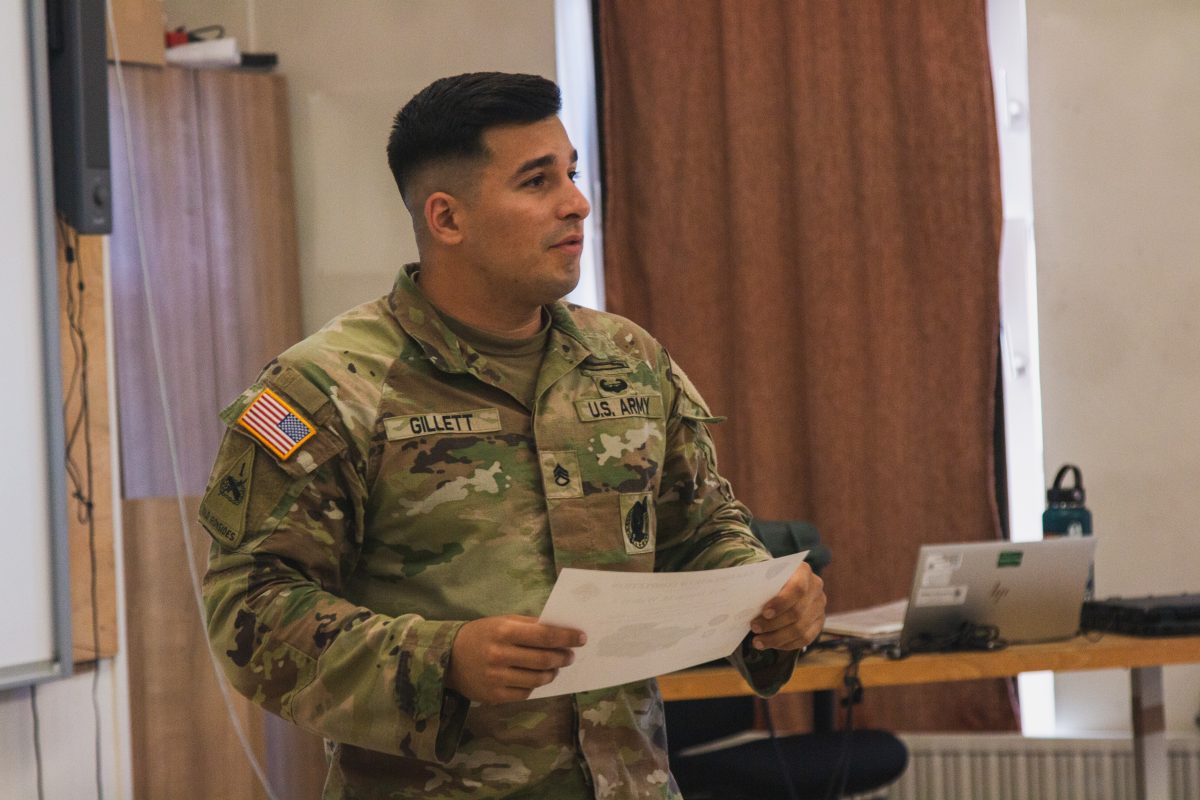
- Scale. President Trump has ordered the withdrawal of approximately 5,000 troops from Germany — affecting the Stryker Brigade at Rose Barracks in Vilseck, Bavaria — and signalled the number could rise significantly further, telling reporters the U.S. would cut “a lot further than 5,000.”
- Local impact. Soldiers and their dependants account for 12,000 to 13,000 people in a town whose civilian population is roughly half that; the garrison generates more than $800 million in local revenue annually.
- Alliance signal. The move follows German Chancellor Friedrich Merz publicly criticising Washington’s handling of the Iran conflict, and arrives as NATO members are already renegotiating burden-sharing commitments under persistent U.S. pressure.
The announcement, made around May 1–2, set a timeline of six to twelve months for the withdrawal of the first brigade. Pentagon officials identified the 2nd Cavalry Regiment’s Stryker formation at Vilseck as the unit in scope. The garrison, formally Rose Barracks, has hosted American soldiers continuously since the post-World War II occupation and today functions as one of the largest U.S. Army installations in Europe.
A town built around the base
Vilseck, a small Bavarian market town of around 6,500 residents, has long structured its economy around the American presence. Local businesses — hotels, restaurants, car dealers, housing providers — depend heavily on the roughly 5,000 soldiers and their roughly 7,000 family members. A withdrawal at that scale would effectively halve the town’s population, threatening hundreds of jobs and collapsing property values in a housing market that has long charged premium rents to service personnel.
Town officials who spoke to NPR described a mixture of disbelief and contingency planning, noting that the municipality has received no formal notification from Berlin or Washington about timelines or any transition support. “People are asking: what do we do?” one local official said.
NATO’s structural dilemma
The strategic stakes extend well beyond Bavaria. Analysts at the Council on Foreign Relations and Responsible Statecraft have noted that the withdrawal eliminates forward-deployed forces positioned to counter Russia’s growing arsenal of Oreshnik intermediate-range hypersonic missiles. Removing the brigade without extracting concessions from Moscow also weakens any future U.S. negotiating hand on Ukraine-related security guarantees.
The decision has intensified discussions among European governments about continental defence architecture. France’s ongoing proposal to extend nuclear deterrence eastward has gained new urgency, as Paris opens nuclear umbrella talks with Eastern Europe amid broader NATO fractures. Several allied capitals have privately questioned whether the United States remains committed to Article 5 in any operationally meaningful sense.
Berlin’s response
Chancellor Merz, who triggered a diplomatic chill by saying Tehran had “humiliated” Washington in the Strait of Hormuz standoff, has sought to avoid direct confrontation with Trump while rallying EU partners toward a more autonomous European defence posture. German Defence Ministry officials have confirmed they were not consulted before Trump’s announcement, according to reporting by CNBC.
With Trump hinting at further cuts beyond 5,000 — potentially affecting multiple installations — the Pentagon has yet to provide a comprehensive list of affected units or a formal basing review. That ambiguity may be deliberate: the threat of deeper cuts functions as leverage in ongoing negotiations over European defence spending targets, which Trump has pushed toward three percent of GDP.