
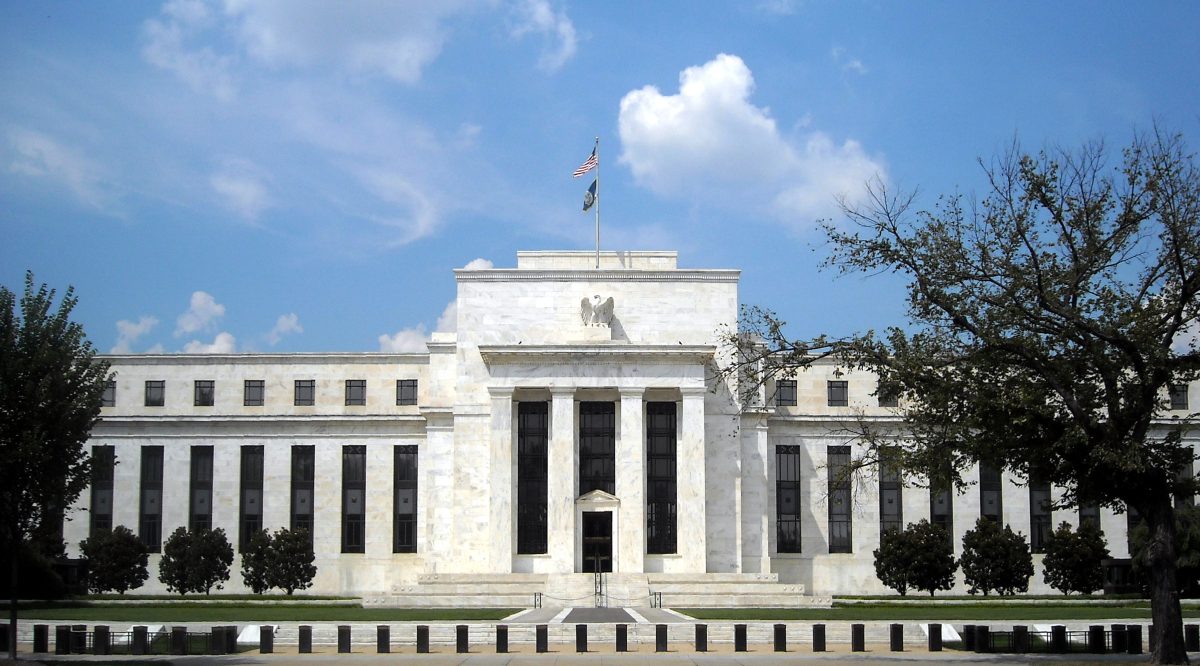
- Lead. The US economy added 115,000 jobs in April and unemployment held at 4.3 percent, a result strong enough to complicate the rate-cutting ambitions of prospective Federal Reserve Chair Kevin Warsh ahead of his Senate confirmation.
- Fact. Healthcare led hiring with 37,000 new positions, while the information sector shed another 13,000 jobs — a category now down 342,000 since November 2022.
- Stake. With core PCE running at 3.2 percent and energy inflation still elevated by the Iran conflict, the Fed’s next chair will inherit a policy environment that offers little room for the easing cycle he has signaled interest in pursuing.
The Bureau of Labor Statistics released its April employment situation on May 8, and the headline figure — 115,000 nonfarm payroll additions against a backdrop of 4.3 percent unemployment — landed squarely in the zone economists describe as “solid footing without acceleration.” It exceeded analyst forecasts. March was revised up to 185,000. But the data’s implications for monetary policy are more constraining than the headline suggests, a dynamic described in detail by the Washington Post’s economics desk.
What the numbers show
Hiring concentrated in sectors tied to domestic consumption and essential services. Healthcare added 37,000 positions; transportation and warehousing 30,000; retail trade 22,000; and social assistance 17,000. These are not sectors responding to a credit or investment cycle — they reflect baseline demographic demand and logistics pressure from rerouted trade flows. Federal government employment continued to decline, extending a trend driven partly by administrative restructuring under the current administration.
The labor force participation rate held at 61.8 percent, and the employment-to-population ratio at 59.1 percent, both effectively unchanged. The fragile equilibrium — where slow hiring is balanced by slow labor supply growth — has kept the unemployment rate pinned in a 4.3 to 4.5 percent range for several months. It is neither a tight labor market demanding restraint nor a loosening one justifying easing.
Warsh’s narrow lane
The April data arrived at a sensitive moment. Jerome Powell’s term as Federal Reserve Chair ended May 15, and Kevin Warsh — the Reagan-era Fed governor and longtime Wall Street figure Trump nominated to succeed him — is zeroing in on Senate confirmation. Warsh has expressed interest in cutting interest rates, but the conditions Powell left behind give him limited political and economic cover to act quickly.
The Fed funds rate sits at 3.5 to 3.75 percent, held there by a committee that registered one dissent in favor of a 25-basis-point cut and three dissents against any statement language that implied an easing bias. Core inflation — at 3.2 percent on the PCE measure and 2.6 percent on CPI — remains above the 2 percent target. Energy costs, elevated by the Iran conflict, have pushed overall inflation projections sharply higher for the second quarter. Oil has risen nearly 60 percent since the conflict began.
What comes next
Warsh will inherit a Fed that is divided, data-dependent, and operating under energy price uncertainty that no domestic policy tool can resolve. A strong employment report narrows the argument for preemptive cuts and strengthens the hand of hawkish committee members who have argued that the inflation problem is not yet solved. The next major data points — May CPI and the second-quarter GDP advance estimate — will arrive before the Federal Open Market Committee’s June meeting, giving Warsh, if confirmed, his first real test of whether the labor market’s apparent stability holds under sustained energy pressure.