
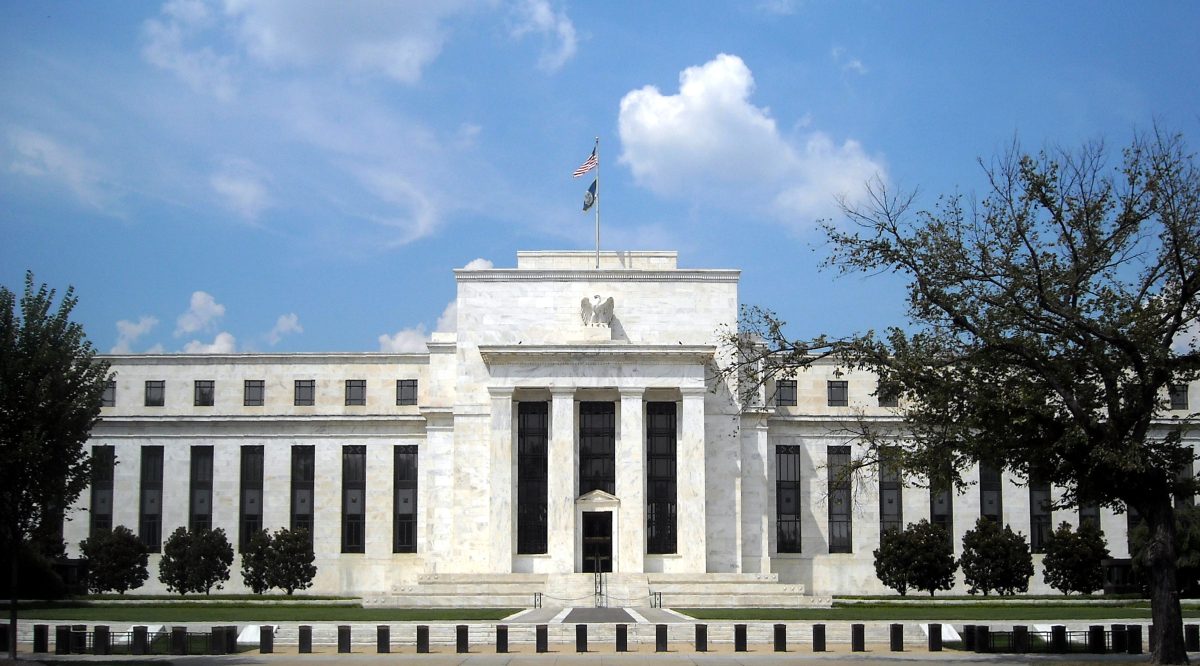
- Lead. Federal Reserve Chair Kevin Warsh delivered his first keynote at the Jackson Hole Economic Symposium on Friday, warning that inflation remains too elevated and refusing to signal whether rates would rise or fall in September.
- Fact. July PCE inflation, the Fed’s preferred gauge, came in at 3.3% annually — above the Fed’s 2% target and above Wall Street’s expectation of 3.2%; Warsh said recent readings were “better than expected” but do not show that “underlying trends have meaningfully improved.”
- Stake. By breaking with the Jackson Hole tradition of telegraphing policy shifts, Warsh introduced a new era of deliberate opacity: a “quieter” Fed that investors can no longer read like a roadmap, with direct consequences for bond markets, mortgage rates and corporate borrowing costs.
The speech, delivered Friday morning at the annual gathering of central bankers in Jackson Hole, Wyoming, was Warsh’s first major address as chair of the Federal Reserve, and it departed markedly from the practice of his predecessors. According to Forbes, which reviewed the prepared text, Warsh explicitly rejected the tradition of using Jackson Hole to steer market expectations. “The Fed should not indulge a regime in which market participants are looking primarily to the Fed for their next trade,” he said.
The Inflation Assessment
The Fed has held its benchmark rate at 3.50%–3.75% for five consecutive meetings. Warsh’s comments suggested that run of inaction could end, without specifying in which direction. The July PCE reading of 3.3% — released earlier this week and discussed by Warsh as the latest available data — remains 1.3 percentage points above the Fed’s stated 2% objective. “We must be confident that underlying inflation is moving to our objective, clearly and at sufficient speed,” Warsh said. “Otherwise, we have work to do.”
The remark was received by markets as a conditional threat of tightening. Futures markets, as tracked by anticipated ahead of the speech, had priced a roughly 35% probability of a September rate increase before Warsh spoke; that probability jumped to 57% after his remarks concluded, according to data from the CME FedWatch tool.
A Quieter Fed, Fewer Meetings
Beyond the inflation message, Warsh used the speech to propose structural changes to how the Fed communicates. He advocated reducing the number of Federal Open Market Committee meetings from eight per year to six — meaning interest-rate votes would come approximately every two months rather than every six weeks. The proposal, if adopted, would significantly reduce the volume of Fed statements and press conferences that markets currently use to anticipate policy direction.
The suggestion is consistent with Warsh’s broader philosophy of a central bank that acts deliberately rather than reactively. He has argued in past writings that the Fed’s post-financial-crisis practice of forward guidance — essentially pre-announcing rate moves — encouraged excessive risk-taking and distorted asset prices. Reducing meeting frequency would force both the Fed and markets to think in longer time horizons.
Context: Inflation’s Sticky Persistence
The inflationary backdrop that Warsh inherited is partly structural and partly geopolitical. Energy prices, driven higher by the conflict in the Middle East and the associated disruption to Gulf shipping, have kept headline inflation elevated even as goods prices moderated. The Bank of England and the European Central Bank face similar dynamics, having each held rates steady at their most recent meetings as they weigh Middle East risk against domestic economic weakness.
The most recent PCE data also showed consumer spending stalling in July, which ordinarily would argue for rate cuts. That contradiction — stubborn inflation alongside softening demand — is the core policy dilemma Warsh faces, and his Jackson Hole speech did not resolve it so much as acknowledge it with deliberate ambiguity.