
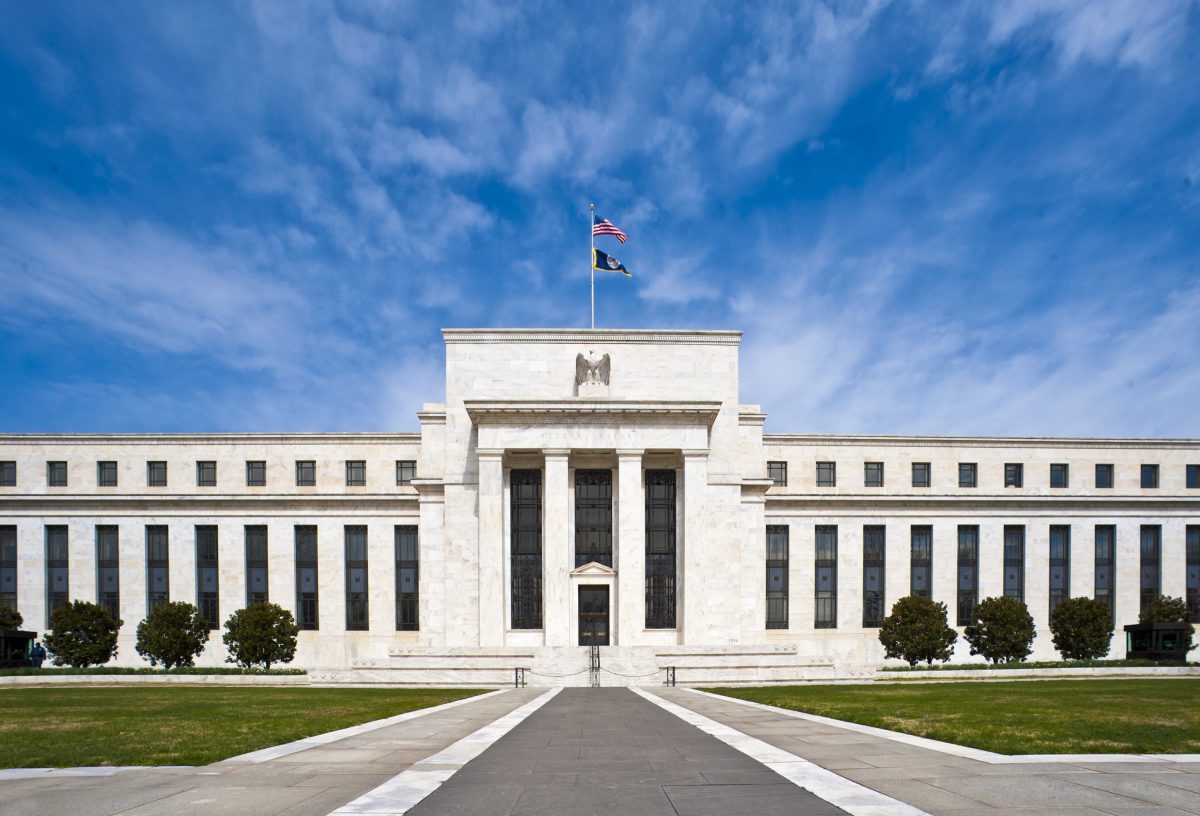
- Lead. Federal Reserve Governor Christopher Waller told CNBC on November 18 that the Fed should raise rates by 50 basis points at the December 8–9 meeting, arguing that incremental moves would put the central bank’s credibility at risk.
- Fact. Waller’s exact words: “You might need to, like, shock people.” He said going with only 25 basis points in December “would put our credibility at risk” unless the Fed paired the smaller move with an explicit January hike signal — a signal that Chairman Kevin Warsh has opposed.
- Stake. Markets are fully pricing a 25-basis-point move in December, leaving a potential 50-basis-point surprise as a significant unknown heading into the year’s final meeting.
The Fed has raised rates once since the energy shock that followed the late-February US strikes on Iran — a quarter-point hike in September ended more than three years of steady policy. The October meeting produced no move, with two dissenting governors calling for a hike. Now, as inflation data for the autumn months comes in above target, Waller is pushing for a sharper adjustment at the final 2026 meeting. Speaking to CNBC on November 18, he said he was “very, very concerned about inflation” and that the September move had not been enough.
The 50-Point Case
Waller framed the choice in December as binary: either the Fed goes 50 basis points, or it goes 25 and pairs that with an unambiguous commitment to hiking again in January. The problem, he said, is that Chairman Kevin Warsh has resisted forward guidance of that kind. Without the signal, a quarter-point move would leave the market underestimating what comes next. “…you have to go 50 [basis points] in December to put it in place and get it done,” Waller said.
Waller also said the Fed needed to reverse all three of the quarter-point cuts made in 2025 — which had brought the federal funds rate down before the Iran energy shock pushed inflation back above 3 percent — and might need to go further. He cited the October CPI reading, which came in above his stated threshold of 0.3 percent month-on-month core inflation, as the trigger for escalating his public push. US 10-year Treasury yields topped 5 percent after October’s hot CPI data put December hike odds at 86 percent; since then, the data have continued to run warm.
Market Pricing vs. Fed Division
CME FedWatch futures at mid-week priced in roughly a 92-to-96 percent chance of at least a 25-basis-point hike in December, but only around 5 percent odds of the half-point move Waller wants. St. Louis Fed President Alberto Musalem went further, suggesting as many as four hikes by spring 2027 — a path that would take the federal funds rate above 5 percent for the first time since before the 2025 cuts. New York Fed President John Williams disagreed, saying the situation does not “call for dramatic action.”
That internal division is itself a signal. The October FOMC minutes put a December hike firmly on the table, but left the size unresolved. With the Bureau of Economic Analysis due to release October Personal Consumption Expenditures data before the December 8 meeting, the final input that could break the internal debate is still incoming. If PCE runs hot again, Waller’s case for 50 basis points will carry more weight.
Energy Inflation’s Structural Role
Waller’s comments make explicit what the Fed’s official communications have implied: the energy price surge driven by the Iran conflict is no longer being treated as a temporary supply shock. With inflation holding above 3 percent across multiple readings, the Fed’s models are struggling to separate the energy channel from broader price pressure. That difficulty reinforces the case — in Waller’s view — for a larger upfront move that sends a clear signal to expectations rather than a smaller move that leaves the question open.